Table of Contents
Table of Contents
If you have ever googled the Mediterranean diet, you have probably seen the pyramid.
It looks simple. Almost too simple. Lots of plants at the bottom, a little fish and dairy in the middle, and sweets and red meat way up at the top like a tiny warning label.
But the pyramid is not just a “foods to eat” graphic. It is more like a lifestyle map. It’s what people in traditional Mediterranean regions tended to do naturally, over time, without tracking macros or drinking neon pre workout or whatever.
So let’s break it down properly. What each level means. What to actually eat. And how to make it work in real life, in a normal kitchen, on a normal weeknight.
Note: This content is based on personal research and general nutrition information about the Mediterranean diet pattern. It is intended for educational and lifestyle purposes only and does not constitute medical or dietary advice. Individual nutrient needs and appropriate serving sizes vary by age, activity level, and health status. Always consult a doctor or registered dietitian before making significant dietary changes, especially if you have diabetes, heart disease, or other conditions requiring tailored nutrition guidance.
What is the Mediterranean Diet Pyramid, exactly?
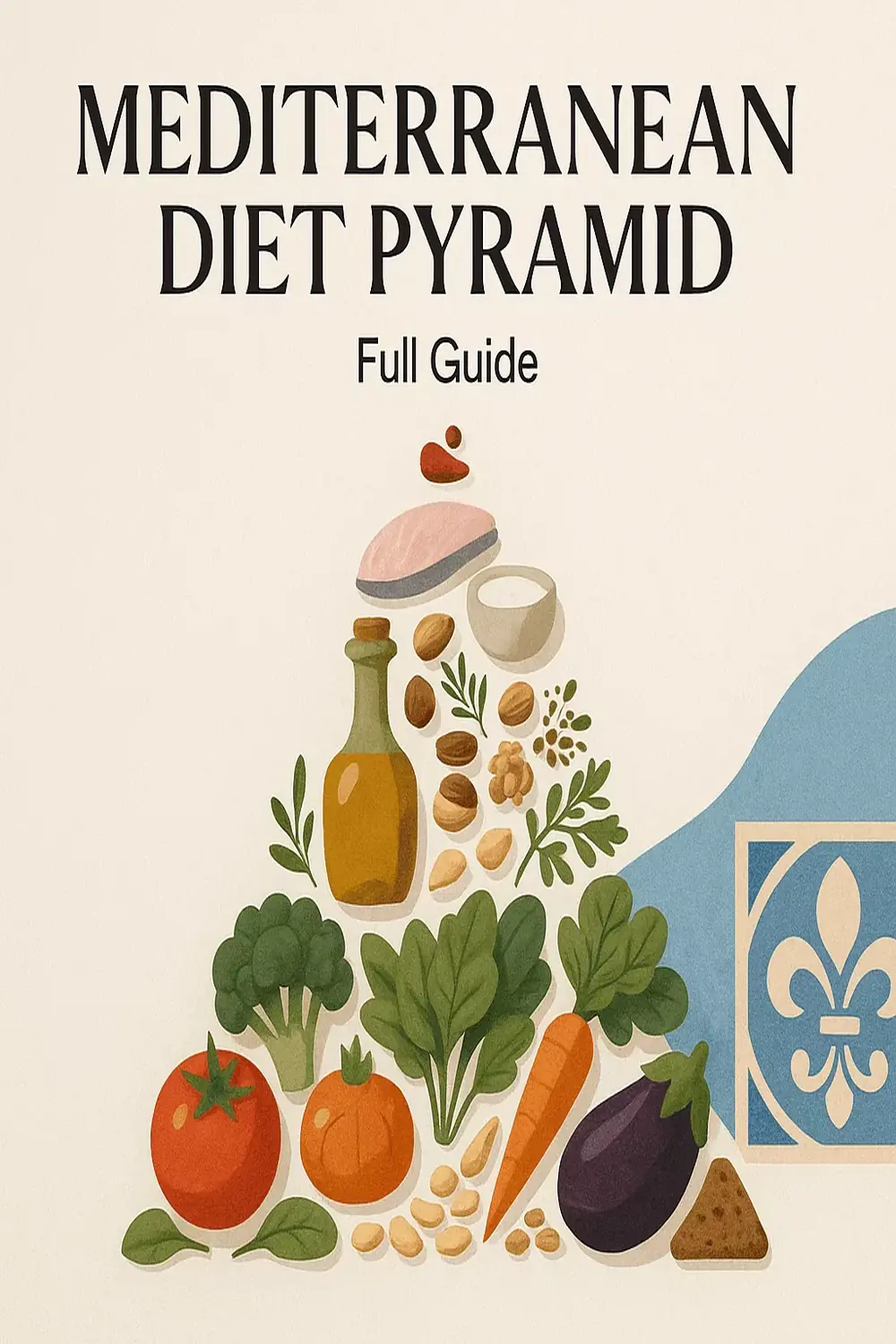
The Mediterranean Diet Pyramid is a visual guide that shows:
- What to eat most often (bottom of the pyramid)
- What to eat sometimes (middle)
- What to eat rarely (top)
- And, importantly, how to live around food (movement, social meals, water, cooking at home)
Different organizations publish slightly different versions, but the core pattern stays the same.
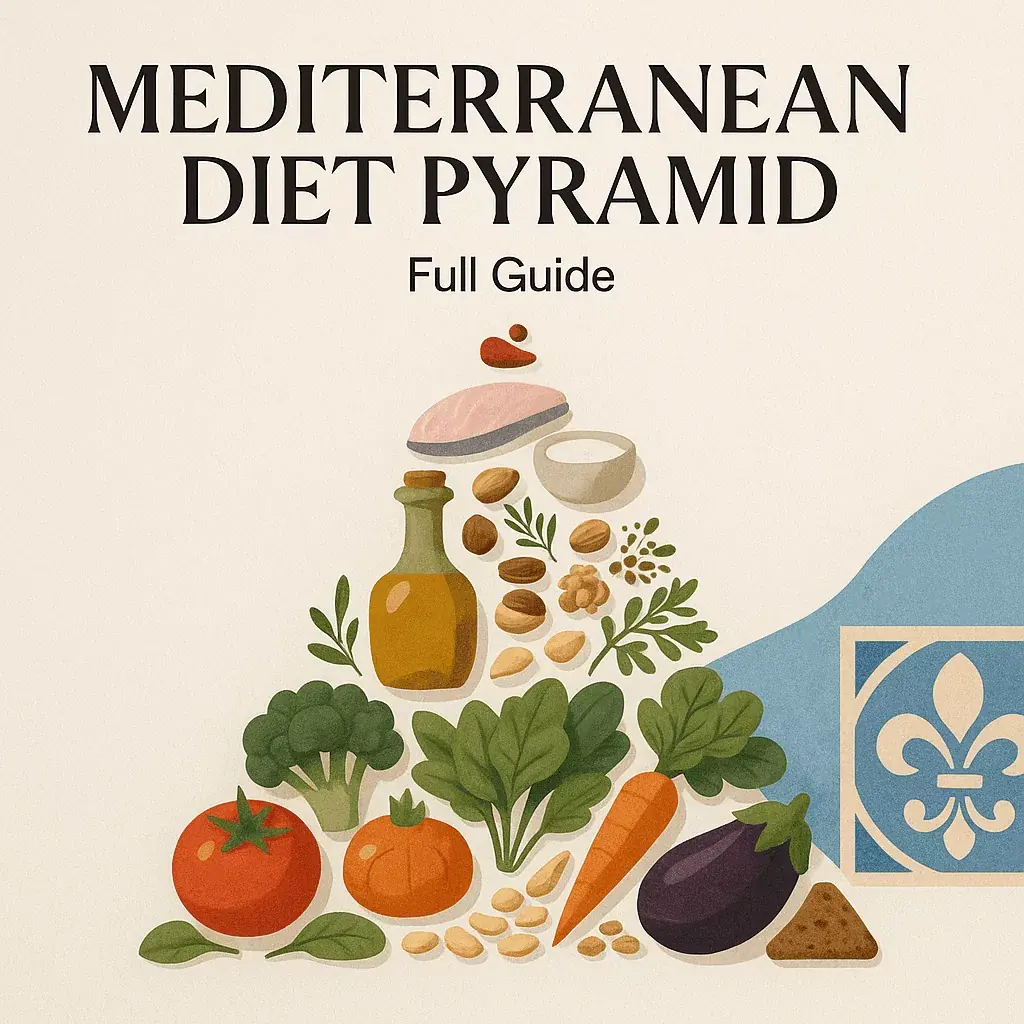
At the bottom, you will see vegetables, fruits, whole grains, beans, nuts, olive oil. The stuff you build meals from. The top is red meat, processed meat, sweets. The “not never” foods, just not daily foods.
Now you might be wondering how this compares with other popular diets like the Atkins or Keto. While these diets focus more on low-carb intake and high protein consumption such as in the case of the Keto diet plan, the Mediterranean diet promotes a balanced consumption of various food groups while emphasizing healthy fats and whole foods.
Why the pyramid works (and why people stick with it)
A lot of diets feel like a temporary project. Start Monday. End… whenever life happens.
The Mediterranean approach is different. It is built around:
- Satisfying meals (olive oil, nuts, fish, bread, potatoes, legumes)
- High fiber foods that keep you full
- Simple cooking that does not require special products
- Flexibility so you can eat out, travel, still live your life
Also, it tastes good. That matters more than people admit.
The Mediterranean Food Pyramid (from bottom to top)
Let’s go level by level, and translate the pyramid into “what do I buy and what do I cook.”
1) Foundation: Lifestyle habits (yes, really)
Most pyramids quietly include lifestyle at the base. It matters.
Core habits:
- Move daily. Walking counts. Gardening counts. Taking the stairs counts.
- Eat meals with people when you can. Slower eating, more enjoyment, better portion sense.
- Cook more often. Not gourmet. Just more often than not.
- Sleep and stress management. Not glamorous, but it affects hunger and cravings.
- Water as the main drink. Coffee and tea are common too.

2) Eat the most: Vegetables + fruits (daily, lots)
This is the biggest visual chunk for a reason.
Vegetables are basically the “main course” in many traditional meals, not the sad side salad.
Aim for:
- Leafy greens (spinach, arugula, kale)
- Tomatoes, cucumbers, peppers
- Zucchini, eggplant
- Onions, garlic (these show up constantly)
- Crucifers (broccoli, cauliflower)
- Frozen veg counts, by the way
Fruits are often dessert. Or breakfast.
Good staples:
- Berries, oranges, apples, grapes
- Melon in season
- Dried fruit sometimes (watch the portions, it adds up fast)
How this looks on a plate: half your plate is veg most days. Not every meal has to be perfect. But over the week, that’s the vibe.
3) Eat daily: Whole grains, legumes, nuts, seeds
This is where the Mediterranean diet Pyramid starts feeling really doable because it’s not low carb. It’s just… better carb choices most of the time. If you're interested in exploring low carb options further, check out this low-carb keto diet.
Whole grains and starchy foods
- Oats
- Brown rice, wild rice
- Whole wheat pasta
- Whole grain bread
- Barley, farro, bulgur
- Potatoes (often included in Mediterranean patterns, just not deep fried daily)
Legumes (beans and lentils)
- Chickpeas
- Lentils
- Cannellini beans
- Black beans (not traditional in every region, but totally compatible)
- Split peas
Legumes are huge here. They are cheap, filling, high fiber, and they replace some meat naturally.
Nuts and seeds
- Almonds, walnuts, pistachios
- Sesame (tahini)
- Sunflower seeds, pumpkin seeds
- Chia and flax are modern additions but fit the pattern
A small handful is enough. Nuts are healthy, but they are still calorie dense. No need to eat half a bag while watching Netflix. I have done it. Regretted it.

4) The main fat: Extra virgin olive oil (daily)
If the pyramid had a mascot, it would be olive oil.
The Mediterranean diet is not low fat. It is more like “choose unsaturated fats, and use them to make vegetables taste incredible.”
Use extra virgin olive oil for:
- Salad dressings
- Drizzling on roasted vegetables
- Sautéing at moderate heat
- Dipping bread (occasionally, not every meal unless that’s your thing)
Other fats show up too (nuts, seeds, olives, avocado), but olive oil is the anchor.
Tip that actually helps: keep a decent olive oil visible on the counter. If it is hidden in a cabinet, you forget it, and suddenly you are back to random sauces and butter heavy everything.
5) Daily or weekly: Herbs, spices, garlic, onions (the flavor engine)
Not always drawn as its own level, but it should be.
This eating style is flavorful because of:
- Oregano, basil, rosemary, thyme
- Cumin, coriander, paprika
- Cinnamon (yes, even in savory dishes sometimes)
- Lemon juice and zest
- Vinegars
- Garlic and onion in basically everything
This matters because it makes “healthy food” feel like normal food.
6) A few times per week: Fish and seafood
Fish is one of the major protein sources in the classic Mediterranean pattern.
Aim for:
- Salmon
- Sardines
- Anchovies (small amounts, huge flavor)
- Trout
- Mackerel
- Shrimp, mussels, etc.
Fatty fish is often highlighted because of omega 3s, but any seafood can fit. If you hate fish, you can still do Mediterranean style eating. It just means leaning more on legumes, and maybe some poultry, and talking to your clinician if you are trying to hit specific nutrition goals.
7) Moderate: Dairy (often fermented)
Dairy is usually present, but not as the main event.
Common choices:
- Greek yogurt
- Kefir
- Cheese in smaller amounts (feta, parmesan, pecorino)
It is typically not “drink a huge glass of milk with every meal.” It is more like yogurt at breakfast, a sprinkle of cheese on a salad, that kind of thing.
8) Weekly: Poultry and eggs
Poultry and eggs are common, just not usually piled up in massive servings daily.
Examples:
- Chicken in stews, soups, sheet pan meals
- Eggs as quick protein (omelets with vegetables, shakshuka style meals)
A helpful mental switch: in Mediterranean meals, the protein is often supporting the vegetables, not replacing them.
9) Sometimes: Red meat and processed meat
This is near the top for a reason.
Red meat can be included, but it tends to be:
- Less frequent
- Smaller portions
- More “ingredient” than “centerpiece” (like a bit in a stew)
Processed meats (sausage, deli meats) are generally minimized.
You do not have to be perfect. But if your current baseline is “deli sandwich daily,” this is one of the biggest upgrades you can make.
10) Rare: Sweets, refined grains, ultra processed foods
This is the tiny top of the pyramid.
Not banned. Just not the daily default.
Think:
- Pastries, cookies, candy
- Sugary drinks
- White bread and refined snacks as staples
- Chips, packaged desserts, etc.
The Mediterranean approach is more like, enjoy sweets intentionally. Not mindlessly.
Mediterranean Diet Pyramid servings (simple weekly rhythm)
People always ask for exact servings, but the honest answer is, it depends. Calories, age, activity, preferences.
Still, a simple rhythm helps. Here is a practical, not obsessive framework:
Daily
- Vegetables (at least 2 to 3 servings, more is better)
- Fruit (1 to 2 servings)
- Whole grains or starchy veg (1 to 3 servings depending on needs)
- Olive oil (as your main added fat)
- Nuts or seeds (small handful)
- Herbs, spices, garlic, onion
- Water
Weekly
- Legumes (3+ times per week, even better if more)
- Fish/seafood (2+ times per week)
- Poultry (1 to 3 times per week)
- Eggs (up to you, often a few times per week)
- Yogurt/cheese (moderate)
Occasionally
- Red meat
- Sweets
- Processed meats (ideally rare)
If you are coming from a typical Western diet, you do not need to flip everything overnight. Start with two changes. Like. Add beans twice a week and switch to olive oil. That already moves the needle.
What to eat on the Mediterranean diet (a realistic day)
Here are a few “normal life” day examples, not influencer meals.
Option A (super simple)
- Breakfast: Greek yogurt + berries + walnuts + drizzle of honey
- Lunch: Chickpea salad with cucumber, tomato, red onion, feta, olive oil and lemon
- Snack: Apple + a few almonds
- Dinner: Sheet pan salmon with roasted broccoli and potatoes, olive oil, garlic, lemon
Option B (more comfort food)
- Breakfast: Oatmeal with cinnamon, chopped dates, pistachios
- Lunch: Lentil soup + whole grain bread + side salad
- Snack: Carrots and hummus
- Dinner: Chicken and vegetable skillet with olives, served over brown rice
Option C (if you do not like fish)
- Breakfast: Veggie omelet with spinach and tomatoes + fruit
- Lunch: White bean and kale stew
- Snack: Yogurt + seeds
- Dinner: Whole wheat pasta with tomato sauce, sautéed zucchini, herbs, parmesan

Mediterranean diet shopping list (the stuff that makes it easy)
If your kitchen is set up for Mediterranean style eating, weeknights get easier. Here’s a solid starter list.
Produce
- Garlic, onions, lemons
- Tomatoes, cucumbers, peppers
- Leafy greens
- Zucchini, eggplant, broccoli
- Fresh herbs (or dried)
Pantry
- Extra virgin olive oil
- Canned chickpeas, lentils, beans
- Canned tomatoes
- Whole wheat pasta, brown rice, farro, oats
- Olives, capers (optional but amazing)
- Vinegar
- Nuts (walnuts or almonds are a good start)
Fridge / freezer
- Greek yogurt
- Feta or parmesan
- Eggs
- Frozen vegetables (for backup)
- Fish (fresh or frozen)
Common mistakes people make with the Mediterranean pyramid
Mistake 1: Thinking it is just “add olive oil”
Olive oil is part of it. But the bulk is plants, legumes, whole grains, and the overall pattern.
Mistake 2: Going heavy on pasta and bread, light on vegetables
Pasta can fit. Bread can fit. But the Mediterranean pattern is not “carbs with a side of carbs.” It is produce forward.
Mistake 3: Treating it like a strict set of rules
This is not keto. Or Whole30. It’s a spectrum. You are aiming for a consistent pattern, not perfection.
Mistake 4: Buying “Mediterranean” packaged foods and calling it a day
Mediterranean flavored chips do not count. Sorry.
Mistake 5: Skipping protein planning entirely
Yes, it is plant heavy. But you still need enough protein for your goals. Beans, lentils, yogurt, eggs, fish, and poultry help a lot here.
Quick Mediterranean meal formulas (so you stop overthinking)
When you are tired, you need a template. Here are a few.
The “big salad that actually fills you up”
- Greens + chopped veg
- 1/2 cup beans or lentils
- Optional: tuna, feta, or chicken
- Olive oil + lemon + salt + pepper
The “Mediterranean bowl”
- Whole grain (farro, brown rice) or roasted potatoes
- Roasted vegetables
- Chickpeas or grilled chicken
- Yogurt sauce or tahini lemon sauce
- Herbs on top
The “pantry pasta”
- Whole wheat pasta
- Canned tomatoes + garlic + olive oil
- Add: white beans or sardines
- Finish: parsley, chili flakes, parmesan
Honestly you can rotate these and not get bored for a while.
Remember to incorporate more plant-based foods into your meals as they form the bulk of the Mediterranean diet pyramid.
FAQs
What is the Mediterranean Diet Pyramid and how does it guide eating habits?
The Mediterranean Diet Pyramid is a visual guide that illustrates what foods to eat most often (at the bottom), sometimes (middle), and rarely (top). It emphasizes a lifestyle approach including movement, social meals, hydration, and home cooking, with a core focus on vegetables, fruits, whole grains, beans, nuts, and olive oil as daily staples.
How does the Mediterranean diet differ from popular diets like Atkins or Keto?
Unlike low-carb focused diets such as Atkins or Keto that emphasize high protein intake, the Mediterranean diet promotes balanced consumption of various food groups. It highlights healthy fats like olive oil and whole foods, encouraging fiber-rich vegetables and fruits rather than restricting carbohydrates.
Why do people find the Mediterranean diet pyramid sustainable and easy to stick with?
The Mediterranean diet pyramid offers satisfying meals rich in olive oil, nuts, fish, legumes, and bread that keep you full due to high fiber content. Its simple cooking methods require no special products and provide flexibility for eating out or traveling. Plus, its delicious flavors make it enjoyable long-term rather than a temporary project.
What lifestyle habits form the foundation of the Mediterranean Diet Pyramid?
Core lifestyle habits include daily movement such as walking or gardening, eating meals socially to encourage slower eating and better portion control, cooking at home more often without needing gourmet skills, managing sleep and stress to reduce cravings, and drinking water primarily while optionally enjoying coffee, or tea with meals.
Which vegetables and fruits should I prioritize daily on the Mediterranean diet pyramid?
Aim to fill half your plate with vegetables like leafy greens (spinach, kale), tomatoes, cucumbers, peppers, zucchini, eggplant, onions, garlic, and cruciferous veggies (broccoli, cauliflower). Fruits such as berries, oranges, apples, grapes, seasonal melons and occasional dried fruit can be enjoyed as dessert or breakfast staples.
What whole grains and legumes are recommended in the Mediterranean diet pyramid?
The diet encourages daily consumption of whole grains like oats alongside legumes such as beans. These provide better carbohydrate choices compared to refined carbs. Including nuts and seeds also adds healthy fats and protein. This approach supports balanced nutrition without restricting carbs excessively.