Table of Contents
Table of Contents
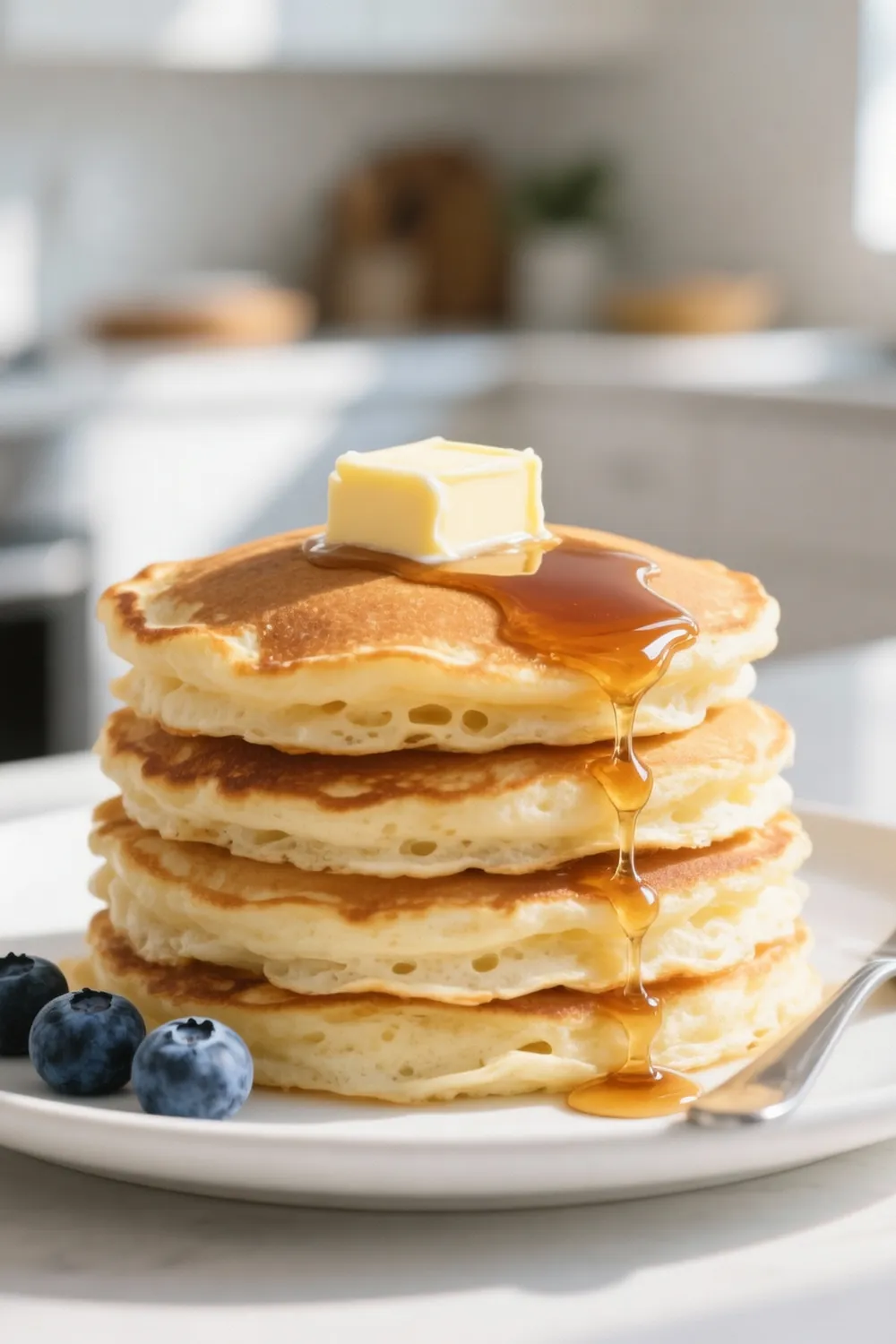
These Pancakes Without Buttermilk are exactly what people mean when they say ‘fluffy.' You know that specific texture, not just flat cakes, but thick, airy clouds that actually soak up syrup.
Not just cooked through. Not just “not flat.” I mean the ones that puff up a little, feel light when you cut into them, and somehow stay tender even after they’ve been sitting on the plate for a minute. The diner stack vibe. The Saturday morning cartoon vibe. That.
And then you look up a recipe and it’s like: buttermilk required.
Which is fine. But a lot of us do not keep buttermilk in the fridge. Or we bought it once, used half a cup, and the rest turned into a science project.
So here’s the real secret. You don’t need buttermilk to get fluffy pancakes.
You need the same job buttermilk does, done in a different way.
And once you understand that, fluffy pancakes without buttermilk become… honestly kind of easy.
Building out a full brunch spread? Pair this stack with some protein-packed Cottage Cheese Egg Bites on the side, a bowl of Easy Fruit Salad for something fresh, and a mug of Creamy Hot Chocolate to finish it off right

What buttermilk actually does (and why Without Buttermilk become get fluffy)
Buttermilk isn't magic. It's just acidic dairy
That acidity does two useful things:
- It reacts with baking soda and creates bubbles (carbon dioxide). Those bubbles expand on the hot pan. That’s lift.
- It tenderizes the batter a bit so the pancakes without buttermilk don’t turn chewy.
So if you don’t have buttermilk, you just need:
- an acid (lemon juice, vinegar, yogurt, sour cream, etc.)
- a leavener setup that makes sense (baking soda plus baking powder, or just baking powder depending on your swap)
- a batter technique that doesn’t crush the bubbles you worked for
That’s the actual secret. The rest is details.
The easiest buttermilk substitute (works every time)
If you want the simplest swap that behaves like buttermilk, do this:
“Fake buttermilk” in 5 minutes
- 1 cup milk (whole milk is best, 2 percent is fine)
- 1 tablespoon lemon juice OR white vinegar
Stir them together and let it sit for 5 minutes. It’ll look a little curdled. That’s good. That’s what you want.
This is the substitute I use most because it’s cheap, fast, and you probably have it already. And for pancakes, it’s nearly perfect.
The fluffy pancake formula (no buttermilk needed)
Here’s the core recipe. This makes about 8 to 10 medium pancakes. You can scale it up, just keep the ratios.
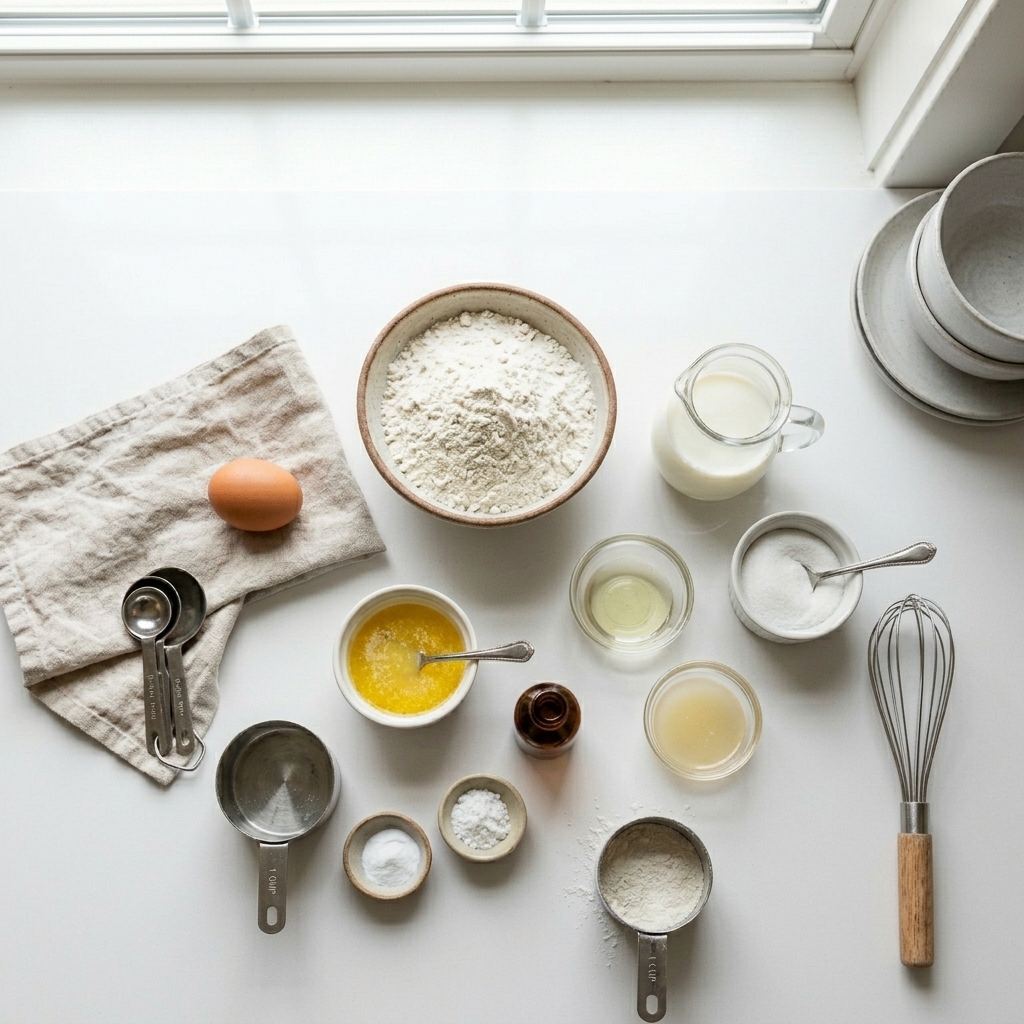
Ingredients
Dry
- 1 1/2 cups all-purpose flour (180g)
- 2 tablespoons sugar
- 2 teaspoons baking powder
- 1/2 teaspoon baking soda
- 1/2 teaspoon salt
Wet
- 1 1/4 cups milk (or your fake buttermilk, see above)
- 2 tablespoons lemon juice or vinegar (only if you’re making the fake buttermilk, otherwise skip)
- 1 large egg
- 3 tablespoons melted butter (or neutral oil)
- 1 teaspoon vanilla extract (optional but very good)
Quick notes before you start
- If you use the milk plus lemon juice trick, you’re basically mimicking buttermilk, so the baking soda has something to react with.
- If you skip the acid entirely and just use plain milk, you can still make pancakes, but you’ll want to remove baking soda and bump baking powder a little. (I’ll show that option below.)
Step by step: how to make them actually fluffy
1. Make your “buttermilk” (if using)
Mix milk and lemon juice or vinegar. Let it sit while you measure everything else.
2. Mix dry ingredients well
In a big bowl, whisk flour, sugar, baking powder, baking soda, and salt. Don’t just stir lazily. Whisking evenly matters more than people admit.
3. Mix wet ingredients separately
In another bowl, whisk the egg, then whisk in the milk mixture, melted butter, and vanilla.
4. Combine wet + dry, but stop early
Pour wet into dry. Use a spatula or wooden spoon and mix until just combined.
There should still be small lumps. Like, you notice them. This is not cake batter. Overmixing is how fluffy pancakes turn into polite rubber disks.
5. Let the batter rest (this is part of the secret)
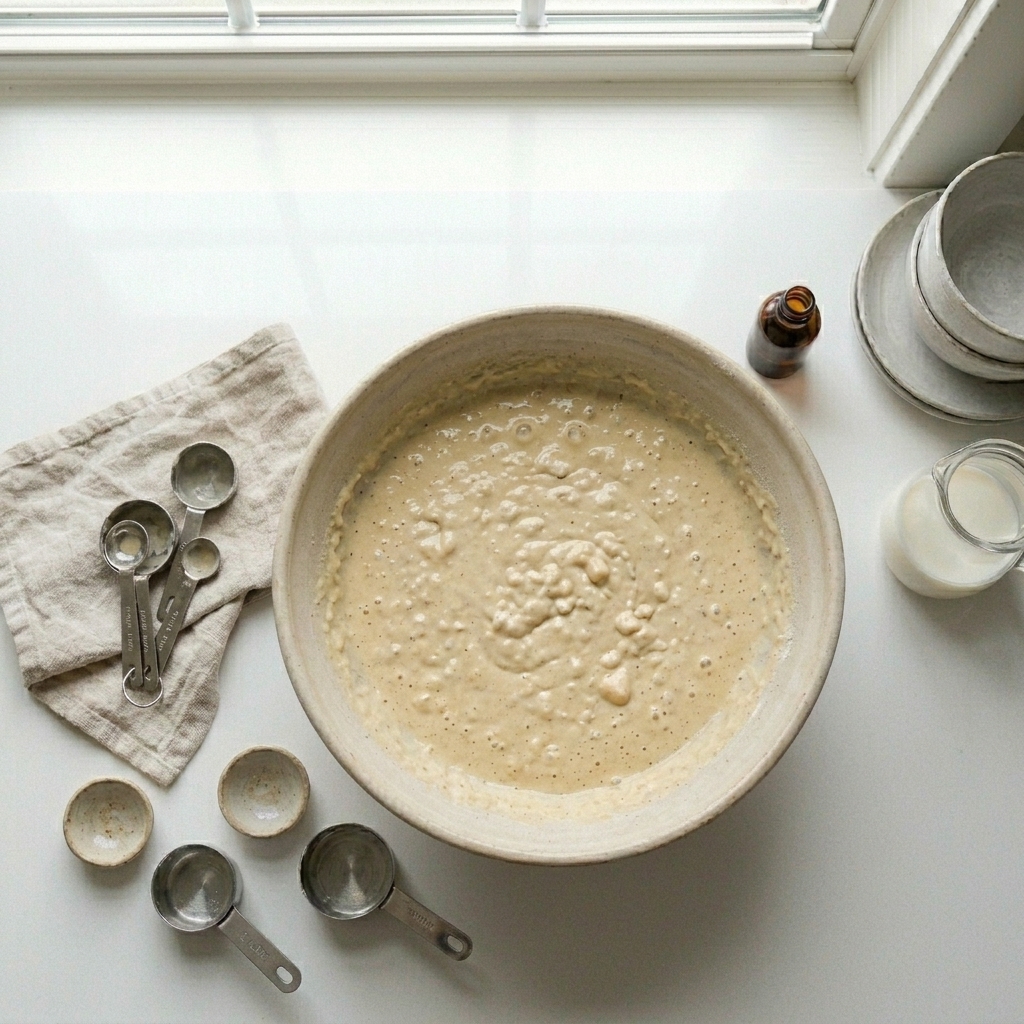
Let it sit 7 to 10 minutes.
This rest:
- hydrates the flour so it cooks up tender
- lets bubbles start forming and stabilizing
- gives baking powder time to do its first activation
Don’t skip it if fluff is the goal.
6. Cook on a medium heat pan, not screaming hot
Medium to medium-low. Lightly grease the pan.
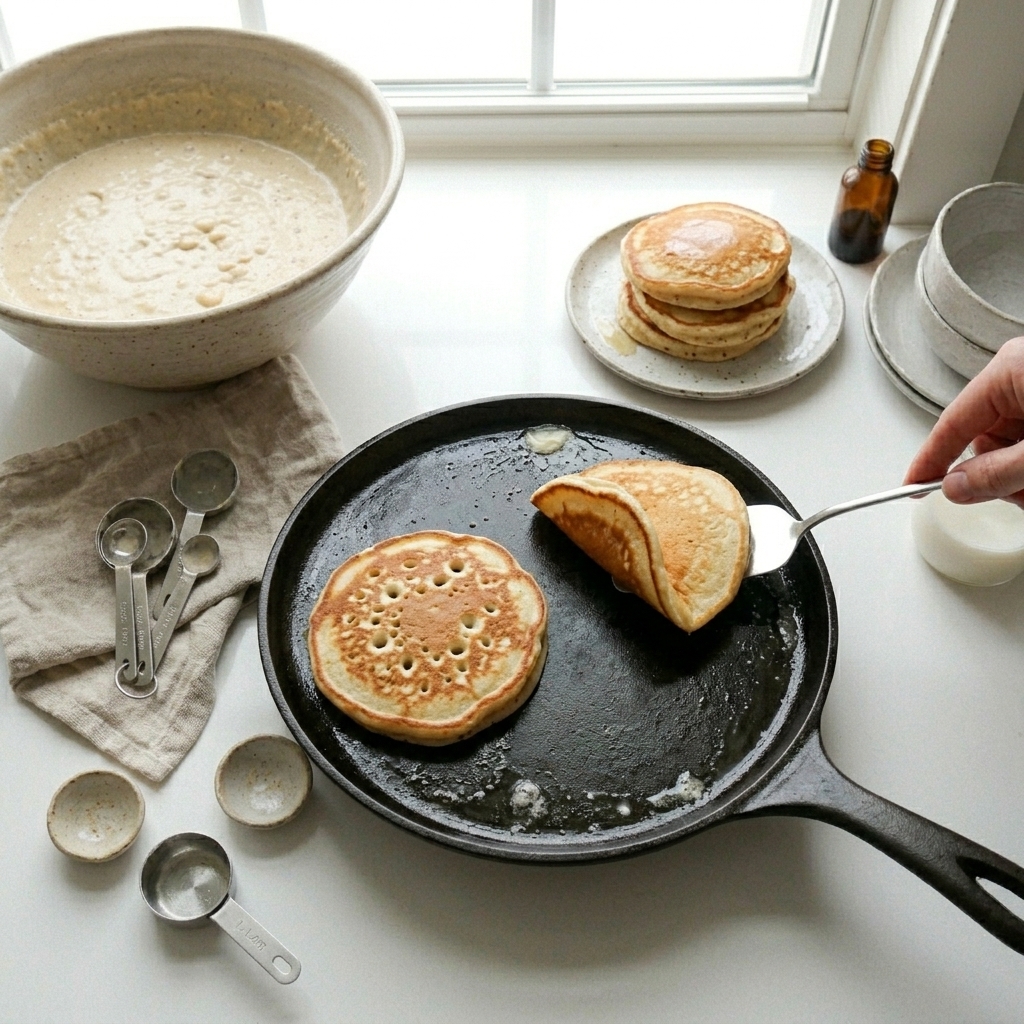
Scoop batter (about 1/4 cup each). Cook until you see bubbles on top and the edges look set, usually 2 to 3 minutes. Flip once. Cook another 1 to 2 minutes.
And don’t press them down with the spatula. I know it’s tempting. But it literally pushes the air out.
The real secret is: acid + the right leavener + gentle mixing
If you want the one sentence version, it’s this:
Use an acidic liquid (even DIY), pair it with baking soda plus baking powder, and don’t overmix.
But since real kitchens are messy, here are the common situations.
If you don’t have lemon juice or vinegar either
It happens. So here are other options that give you that acidity and tenderness.
Option 1: Yogurt pancakes (super tender)
Swap the milk for:
- 3/4 cup plain yogurt (not sweetened)
- 1/2 cup milk (to thin)
Still keep:
- 1/2 teaspoon baking soda
This makes thick, plush pancakes. Almost like the inside of a muffin. In a good way.
Option 2: Sour cream pancakes (rich and fluffy)
Swap for:
- 1/2 cup sour cream
- 3/4 cup milk
Same idea, keep the baking soda.
Option 3: Kefir (if you happen to have it)
Use kefir 1:1 instead of buttermilk. It’s already acidic and works great.
If you only have plain milk (no acid at all)
You can still make fluffy pancakes. You just adjust the leavening.
Use the same recipe but:
- remove baking soda
- increase baking powder to 3 teaspoons
This won’t have that subtle tang, but you can still get lift. The texture is a bit different, slightly more “cakey,” but still fluffy if you handle the batter gently.
The 6 mistakes that kill fluff (even with the perfect recipe)
This is the part people don’t want to hear because it’s not ingredients. It’s technique.
1. Overmixing the batter
You develop gluten. You knock out air. You end up with chewy pancakes.
Stop mixing when the flour is just barely incorporated.
2. Skipping the rest
Resting the batter is not chef nonsense. It’s structure. It’s hydration. It’s bubbles forming.
3. Pan too hot
Too hot browns the outside before the inside rises and sets. That’s how you get flat pancakes that are weirdly dark.
4. Old baking powder
If yours has been in the cupboard for years… yeah. Pancakes tell on you.
A quick test: add a little baking powder to hot water. It should fizz strongly.
5. Pressing them down after flipping
This one hurts. But it’s true. Pressing them makes them dense.
6. Flipping too early or too often
Flip once. When you see bubbles and the edges look set. That’s it.
Want them even fluffier? Add one small thing
This is a little extra, but it works.
Separate the egg
- Mix the yolk in with the wet ingredients.
- Whip the egg white to soft peaks.
- Fold it in at the end, gently.
This adds a little soufflé energy to pancakes. It’s not necessary for a Tuesday. But if you’re trying to impress someone, yep.
A few flavor add-ins that don’t ruin the texture
If you load pancakes pancakes without buttermilk with heavy add-ins, they flatten. So keep it reasonable.
Good options:
- Blueberries (toss in a tiny bit of flour so they don’t bleed as much)
- Mini chocolate chips
- Lemon zest (especially good with the DIY buttermilk thing)
- Cinnamon (1/2 teaspoon)
- Mashed banana (but reduce liquid slightly)
Pro move: sprinkle add-ins onto the pancake right after you pour the batter on the pan, instead of mixing everything into the bowl. Less stirring, more fluff.
Quick troubleshooting (because pancakes pancakes without buttermilk are moody)
Batter too thick?
Add milk 1 tablespoon at a time until it slowly pours.
Batter too thin?
Add flour 1 tablespoon at a time. Rest 5 minutes again.
Pancakes not rising?
Check baking powder freshness. Also make sure you didn’t skip the baking soda if you used an acidic liquid.
They taste bitter or soapy?
Too much baking soda, or not enough acid to balance it.
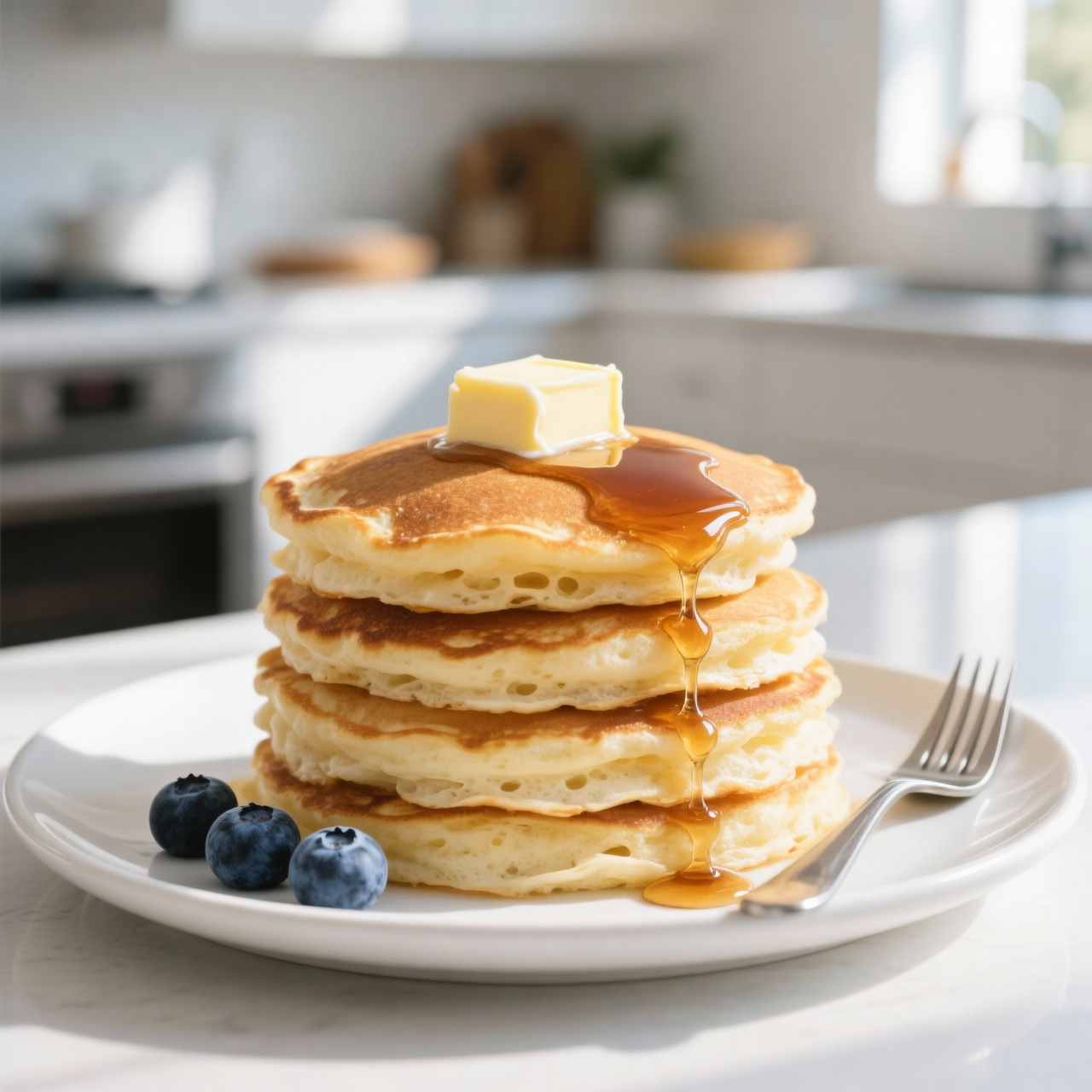

The Secret to Fluffy Pancakes Without Buttermilk
Ingredients
Equipment
Method
- Make DIY “buttermilk” (if using): Mix milk + lemon juice/vinegar and let sit while you measure everything else.
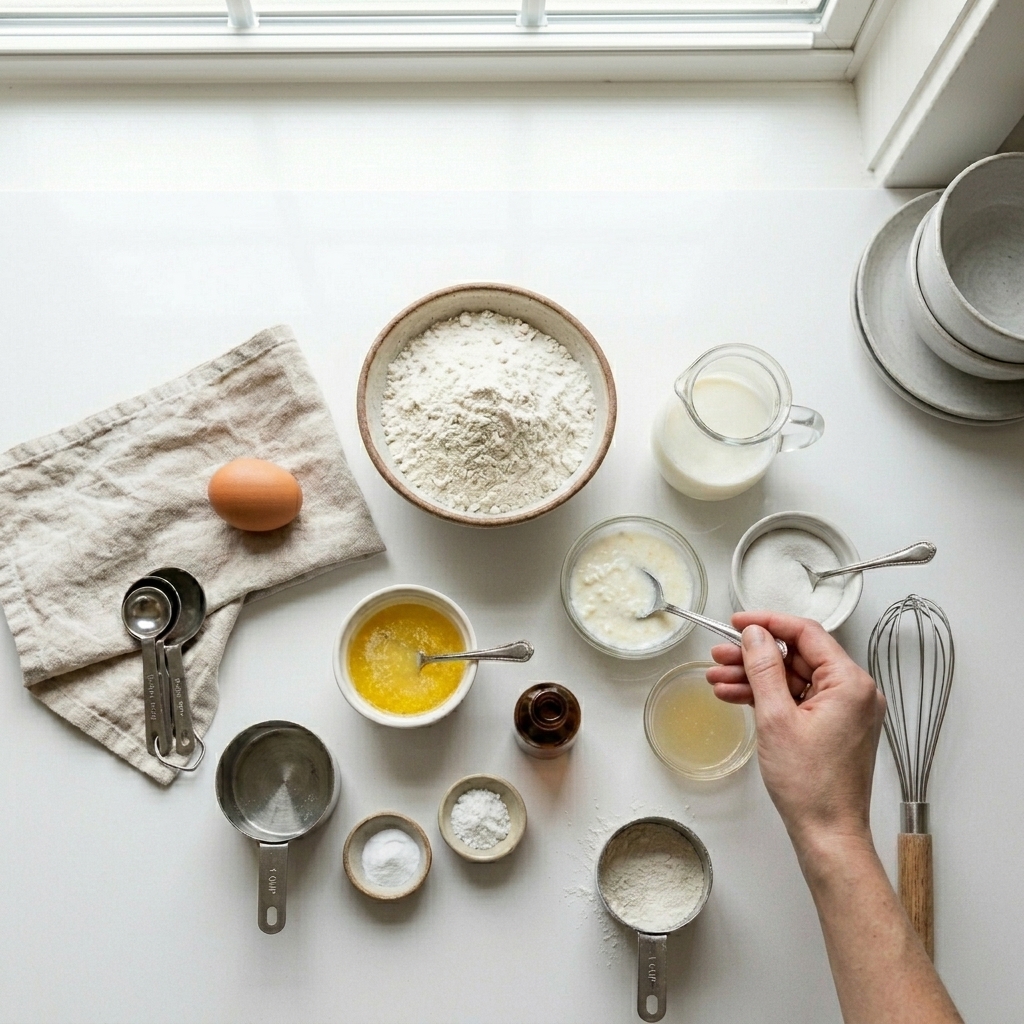
- Mix dry ingredients: In a large bowl, whisk flour, sugar, baking powder, baking soda, and salt until evenly combined.
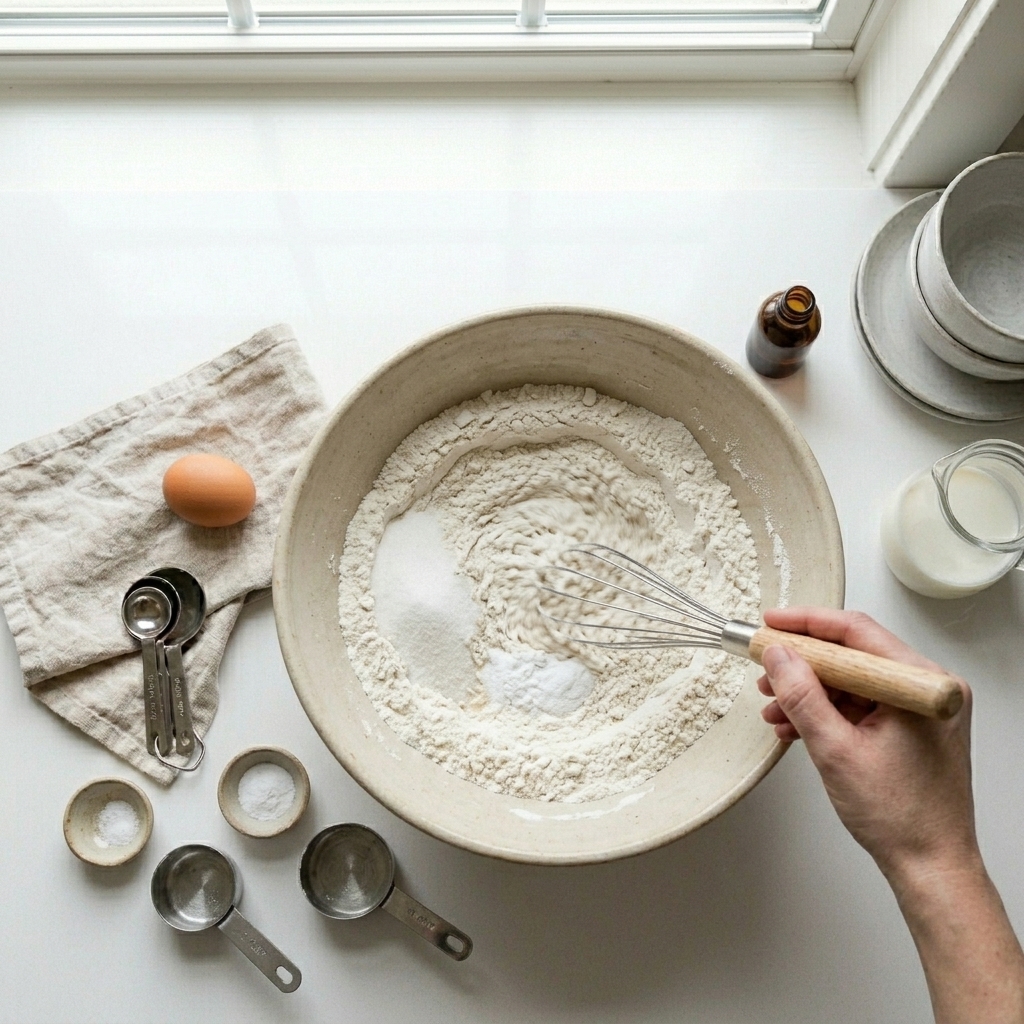
- Mix wet ingredients: In another bowl, whisk the egg, then whisk in milk mixture (or plain milk), melted butter/oil, and vanilla.

- Combine wet + dry: Pour wet into dry and mix just until combined. Small lumps are good, don’t overmix. Rest batter: Rest 7–10 minutes.
- Cook: Heat lightly greased pan over medium to medium-low. Scoop ~1/4 cup batter each. Cook 2–3 minutes until bubbles form and edges set. Flip once, cook 1–2 minutes more. Don’t press pancakes down.
Nutrition
Notes
- Plain milk option (no acid): Remove baking soda and increase baking powder to 3 teaspoons. Texture will be slightly more cakey but still fluffy if you don’t overmix.
- Other acidic options (keep baking soda):
- Yogurt: 3/4 cup plain yogurt + 1/2 cup milk (to thin)
- Sour cream: 1/2 cup sour cream + 3/4 cup milk
- Kefir: Use kefir 1:1 instead of buttermilk
- The milk + lemon juice/vinegar trick mimics buttermilk, giving baking soda something to react with for extra lift.
- 6 mistakes that kill fluff: overmixing; skipping rest; pan too hot; old baking powder (test in hot water, should fizz strongly); pressing after flipping; flipping too early/too often.
- Even fluffier: separate the egg, whip white to soft peaks, fold in gently at the end.
- Add-ins that won’t ruin texture: blueberries (toss with a little flour), mini chocolate chips, lemon zest, cinnamon (~1/2 tsp), mashed banana (reduce liquid slightly). Pro move: sprinkle add-ins on top right after pouring batter.
- Troubleshooting:
- Too thick: add milk 1 tbsp at a time
- Too thin: add flour 1 tbsp at a time + rest 5 minutes
- Not rising: check baking powder freshness; include baking soda when using acidic liquid
Tried this recipe?
Let us know how it was!A small note from Easy Recipes Dash kitchen life
This is the kind of recipe I love sharing on Easy Recipes Dash because it’s real life cooking. Not “go buy a specialty ingredient” cooking. More like, use what you have and still get the good result.
The takeaway (so you remember it next time)
If you forget everything else, remember this:
- Buttermilk = acidity + tenderness.
- You can recreate that with milk plus lemon juice or vinegar.
- Fluff comes from the reaction (bubbles) and from not overmixing them into oblivion.
- Rest the batter. Medium heat. Flip once. No smashing.
That’s the secret. Not fancy, just reliable.
And honestly… once you make fluffy pancakes without buttermilk one time, you stop stressing about it forever.
FAQs
What makes pancakes ‘fluffy' instead of just cooked through or not flat?
Fluffy pancakes are characterized by their slight puffiness, light texture when cut into, and a tender feel even after sitting on the plate for a while. This fluffiness comes from bubbles created during cooking that expand in the hot pan, giving the pancakes lift and a tender crumb.
Why is buttermilk often required in fluffy pancake recipes?
Buttermilk is an acidic dairy product that reacts with baking soda to create carbon dioxide bubbles, which help pancakes rise and become fluffy. Additionally, its acidity tenderizes the batter, preventing the pancakes from becoming chewy.
Can I make fluffy pancakes without buttermilk?
Yes! You can replicate the effect of buttermilk by using an acid like lemon juice or vinegar combined with milk to create ‘fake buttermilk.' This mixture mimics the acidity needed to react with baking soda and tenderize the batter, resulting in fluffy pancakes without buttermilk.
How do I make a simple buttermilk substitute at home?
To make a quick buttermilk substitute, mix 1 cup of whole or 2% milk with 1 tablespoon of lemon juice or white vinegar. Let it sit for about 5 minutes until it curdles slightly. This homemade ‘fake buttermilk' works perfectly for fluffy pancake recipes.
What is the key technique to ensure pancakes stay fluffy when mixing the batter?
When combining wet and dry ingredients, mix until just combined, there should still be small lumps visible. Overmixing breaks down bubbles and gluten structure, leading to dense or rubbery pancakes rather than light and fluffy ones.
Why should pancake batter rest before cooking?
Allowing pancake batter to rest for 7 to 10 minutes hydrates the flour, helps bubbles form and stabilize, and gives baking powder time to activate properly. Skipping this step can result in less tender and less fluffy pancakes.