Table of Contents
Table of Contents
If you’ve ever googled “anti-inflammatory diet” at 11:47 pm because your joints are cranky, your stomach feels off, your skin is doing something weird, or you’re just tired of feeling… puffy, same.
Also, a quick reality check. “Inflammation” isn’t automatically the villain. Acute inflammation is your body doing its job. Like when you cut your finger and it gets red and swollen. That’s the immune system showing up.
The issue is chronic, low grade inflammation. The kind that hangs around quietly. It can be tied to things like heart health concerns, insulin resistance, certain autoimmune conditions, digestive issues, and just generally feeling run down. Food can’t fix everything. But it can absolutely nudge the needle.
So let’s talk about what an anti-inflammatory diet actually looks like in real life. Not in a perfect Instagram fridge way. More like. What do I buy. What do I cook on a Tuesday. What do I eat when I’m hungry and annoyed.
Note: This content is based on personal research and general nutrition information. It is intended for educational and lifestyle purposes only and does not constitute medical or dietary advice. “Anti-inflammatory” foods and eating patterns are supportive lifestyle habits, not a treatment or cure for any medical condition. Always consult a doctor or registered dietitian before making significant dietary changes, especially if you have an autoimmune condition, diabetes, heart disease, IBD, or take medications such as blood thinners.

What is an anti-inflammatory diet, really?
An anti-inflammatory diet is less of a strict “diet” and more of a pattern of eating that emphasizes foods linked with lower inflammation markers and better overall health outcomes.
The general vibe:
- more whole foods
- more plants
- more fiber
- more omega 3 fats
- more herbs and spices
- fewer ultra processed foods
- less added sugar
- fewer refined carbs (especially when they crowd out nutrient dense meals)
If you’ve heard of the Mediterranean style of eating, you’re basically already in the neighborhood. And if you’ve browsed any of the wellness leaning recipes on Easy Recipes Dash, you’ve probably noticed that same theme. Simple meals, big flavor, real ingredients. Not punishment food.
However, if you're looking for something different yet still beneficial for your health, you might want to explore options like the Atkins diet or the Keto diet. Both diets focus on low-carb intake but have different approaches and guidelines, for instance, the Keto diet plan has specific macronutrient ratios to follow.
On the other hand, if weight loss is your primary goal alongside managing inflammation, incorporating elements from a Bariatric seed diet recipe could be beneficial as well.
Signs your current diet might be adding fuel (not always obvious)
Not medical advice, just common stuff people notice when their diet is heavy on ultra processed foods and light on fiber and micronutrients.
- you crash hard after meals
- bloating and irregular digestion
- constant cravings for sweet or salty snacks
- low energy even after sleep
- skin feels more reactive
- frequent headaches
- you feel stiff, especially in the morning
None of these automatically mean “inflammation.” But they are often the nudge that gets people to clean up their meals and then go, oh… I feel better.
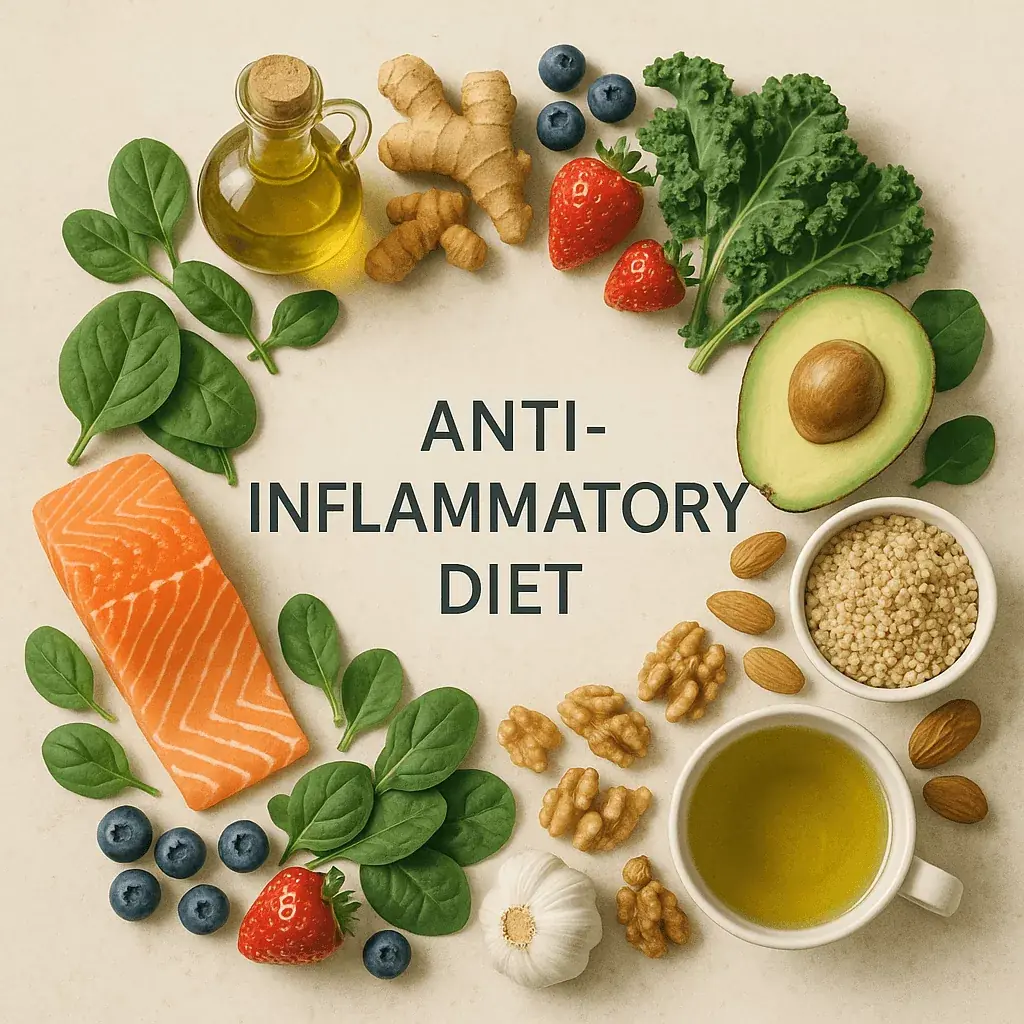
The big anti-inflammatory foods list (the ones worth building around)
You do not need to eat all of these every day. Think of them like a rotation.
1) Fatty fish (omega 3s)
Salmon, sardines, trout, mackerel, anchovies. Omega 3 fatty acids (EPA and DHA) are consistently linked with lower inflammation.
If you’re not a big fish person, don’t force it daily. Even 2 times a week is a solid goal.
2) Extra virgin olive oil
A staple for a reason. It’s one of the easiest swaps that actually matters.
Use it for:
- salad dressings
- finishing vegetables
- sautéing on moderate heat
- dipping bread (yes, bread can be part of this)
Incorporating low-carb keto diets or experimenting with a pink salt diet could also provide some interesting avenues to explore in your dietary journey towards reducing inflammation.
3) Berries and colorful fruit
Blueberries, strawberries, raspberries, cherries, oranges. These are rich in polyphenols and antioxidants.
Also they’re just an easy snack that doesn’t feel like a “wellness task.”
4) Leafy greens and cruciferous vegetables
Spinach, kale, arugula, broccoli, cauliflower, Brussels sprouts. Fiber plus micronutrients plus plant compounds that your body tends to like.
Tip: If raw kale makes your stomach furious, cook it. No one is grading you.
5) Beans and lentils
One of the most underrated anti-inflammatory moves is just… eating more fiber. Beans are fiber plus protein plus minerals. Cheap, too.
Try:
- lentil soup
- chickpeas in salads
- black beans in tacos
- white beans blended into sauces (sounds strange, works)
6) Whole grains (the right ones for you)
Oats, quinoa, brown rice, barley, farro. Whole grains can be anti-inflammatory, especially compared to refined grains, because of fiber and nutrients.
But. If you personally don’t tolerate certain grains well, listen to that. There’s no one size fits all here.
7) Nuts and seeds
Walnuts, almonds, chia, flax, hemp, pumpkin seeds. Great fats, minerals, and more fiber.
Easy add ons:
- chia in yogurt
- ground flax in oatmeal
- walnuts on salads
- tahini dressing on roasted veggies
8) Spices and herbs (small amounts, big impact)
Turmeric, ginger, garlic, cinnamon, rosemary, oregano. They add flavor and they bring beneficial compounds.
Pro tip: Turmeric works better in the body when paired with black pepper and a fat source. Like olive oil. Or avocado. Or salmon. You get the idea.
Foods that are commonly pro inflammatory (or just not helping)
This is where people get dramatic online. You don’t have to be dramatic.
Most of the time, it’s about frequency and dose.
- sugary drinks (soda, sweet coffee drinks, energy drinks)
- lots of refined carbs with low fiber (white bread, pastries, many packaged snacks)
- highly processed meats (hot dogs, many deli meats)
- deep fried fast food
- “snack foods” that replace meals (chips for lunch, again)
You can still have treats. The anti-inflammatory diet is not “never eat a cookie again.” It’s more like. Cookies don’t get to be breakfast three days in a row.
A simple plate formula that makes this easy
When you don’t want to think, use this:
- Half plate: vegetables (cooked or raw)
- Quarter plate: protein (fish, chicken, tofu, beans, eggs)
- Quarter plate: fiber rich carbs (beans, lentils, whole grains, starchy veg)
- Add fat: olive oil, nuts, avocado
- Add flavor: herbs, spices, citrus, vinegar
This automatically pulls you into a more anti-inflammatory pattern without obsessing over “superfoods.”
Sample 1 day anti-inflammatory meal plan (realistic, not perfect)
Breakfast options
- Greek yogurt + berries + chia + cinnamon
- Oatmeal with walnuts, blueberries, and a spoon of nut butter
- Eggs with sautéed spinach and tomatoes, plus whole grain toast
Lunch options
- Lentil soup + side salad with olive oil dressing
- Salmon (or canned sardines) over greens with quinoa and lemon vinaigrette
- Chickpea “tuna” salad wrap with crunchy veggies
Dinner options
- Sheet pan chicken with broccoli, red onion, and sweet potato, olive oil + garlic
- Stir fry tofu with mixed veggies, ginger, garlic, and brown rice
- Shrimp or salmon tacos with cabbage slaw and avocado
Snacks (if you need them)
- fruit + handful of nuts
- hummus + carrots
- dark chocolate (yes) + strawberries
- herbal tea + a piece of toast with tahini
Grocery list (anti-inflammatory basics you’ll actually use)
If you’re starting from scratch, don’t buy 47 ingredients. Start with repeatable staples.
Produce
- berries (fresh or frozen)
- leafy greens
- broccoli or cauliflower
- sweet potatoes
- onions, garlic, lemons
- avocado (when you can)
Protein
- salmon (fresh or frozen)
- canned sardines or salmon
- eggs
- beans and lentils (canned or dry)
- tofu or chicken (optional)
Pantry
- extra virgin olive oil
- oats
- quinoa or brown rice
- nuts and seeds
- vinegar
- turmeric, ginger, cinnamon, black pepper
Bonus
- plain Greek yogurt or kefir
- sauerkraut or kimchi (if you like it)

The underrated piece: gut health and inflammation
A lot of inflammation talk circles back to the gut. Not in a trendy way. In a pretty practical way.
Your gut bacteria thrive on fiber and a wide variety of plant foods. When you feed them well, they produce helpful compounds (like short chain fatty acids) that are linked with better gut barrier function and lower inflammation.
So if you do nothing else, do this:
- eat more beans and lentils
- eat more vegetables
- eat more whole grains you tolerate
- include fermented foods sometimes
- drink water
- don’t live on ultra processed snacks
That alone helps a lot of people.
Common questions (because everyone asks these)
Is coffee anti-inflammatory?
Coffee has polyphenols and may be associated with health benefits in many studies. The problem is usually what people put in it.
Coffee: fine for many people.
Coffee milkshake with syrup and whipped cream: less fine as a daily habit.
What about dairy?
Some people do great with yogurt and kefir, especially fermented dairy. Others feel worse. Try a simple test. Keep it, remove it, observe.
Is gluten inflammatory?
For people with celiac disease, yes, gluten is a problem. For others, it varies. Some people feel better reducing refined wheat products because they also reduce ultra processed foods. That’s the key confounder.
Do I need supplements like turmeric capsules?
Not usually. Start with food first. If you take supplements, talk to a clinician, especially if you’re on meds (turmeric can interact with some).
Easy anti-inflammatory recipe ideas (quick list)
If you want low effort meals that fit the anti-inflammatory pattern, here are reliable templates you can cook without much brainpower:
- Sheet pan salmon with broccoli + lemon + olive oil
- Lentil and veggie soup with garlic, turmeric, cumin
- Mediterranean bowl: quinoa + chickpeas + cucumbers + tomatoes + olives + tahini dressing
- Overnight oats with chia, berries, cinnamon
- Stir fry: tofu or shrimp + frozen mixed veg + ginger + garlic
How to start (without going all in and quitting)
Here’s a simple 7 day ramp that doesn’t feel like a personality change.
Day 1 to 2
- add berries or fruit daily
- use olive oil instead of whatever random oil you’ve got
Day 3 to 4
- add 1 bean meal (chili, lentil soup, chickpea salad)
- add 1 extra vegetable serving
Day 5 to 6
- eat fatty fish once
- swap one refined grain for a whole grain you like (oats, brown rice, quinoa)
Day 7
- cook one simple anti-inflammatory dinner from these science-backed recipes and repeat it next week
That’s it. Repetition beats intensity.
A quick note if you have a condition or take meds
If you have an autoimmune disease, diabetes, heart disease, IBD, or you’re on blood thinners or other medications, it’s smart to run bigger dietary changes by a qualified professional. Food is powerful, but also. Context matters.
Wrap up (what to remember)
The anti-inflammatory diet is not a cleanse. It’s not a set of magic foods. It’s a steady pattern:
- more plants and fiber
- more omega 3 fats
- olive oil as your default
- spices and herbs for flavor
- fewer ultra processed foods and added sugars
- meals you can actually cook and repeat
If you want a practical next step, pick one meal. Just one. Make it more anti-inflammatory this week. Then go from there.
FAQs
What is an anti-inflammatory diet and how does it help reduce chronic inflammation?
An anti-inflammatory diet is a pattern of eating that emphasizes whole foods, plants, fiber, omega-3 fats, herbs, and spices while reducing ultra processed foods, added sugar, and refined carbs. It helps lower chronic, low-grade inflammation linked to health issues like heart concerns and insulin resistance by promoting nutrient-rich meals that support overall health.
Which foods are considered the best for an anti-inflammatory diet?
Key anti-inflammatory foods include fatty fish like salmon and sardines (rich in omega-3s), extra virgin olive oil for cooking and dressings, colorful berries such as blueberries and strawberries packed with antioxidants, and leafy greens plus cruciferous vegetables like spinach, kale, broccoli, and Brussels sprouts that provide fiber and beneficial plant compounds.
How can I tell if my current diet might be contributing to inflammation?
Signs your diet may be fueling inflammation include crashing energy after meals, bloating or irregular digestion, constant cravings for sweet or salty snacks, low energy despite adequate sleep, reactive skin issues, frequent headaches, and morning stiffness. While not definitive medical symptoms of inflammation, these often improve when switching to a cleaner, nutrient-dense eating pattern.
Is all inflammation bad for the body?
No. Acute inflammation is a natural immune response essential for healing injuries like cuts or infections. The concern lies with chronic, low-grade inflammation that persists quietly over time and can contribute to various health problems such as autoimmune conditions and digestive issues. The anti-inflammatory diet aims to reduce this harmful chronic inflammation.
Can diets like Keto or Atkins also support reducing inflammation?
Yes. While the Mediterranean-style anti-inflammatory diet focuses on whole foods and balanced nutrition, low-carb diets like Keto or Atkins may also help by reducing refined carbs and sugars that can promote inflammation. Each has different guidelines; for example, the Keto diet follows specific macronutrient ratios. Exploring these options can complement your efforts to manage inflammation.
What practical tips can help me incorporate an anti-inflammatory diet into my daily life?
Focus on simple meals using real ingredients rather than aiming for perfection. Shop for a rotation of anti-inflammatory staples like fatty fish twice a week, use extra virgin olive oil liberally in cooking or dressings, snack on berries instead of processed treats, and include cooked leafy greens if raw ones upset your stomach. This approach makes healthy eating manageable even on busy days.