Table of Contents
Table of Contents
Protein gets talked about like it’s only for bodybuilders. But honestly, most of us just want the practical benefits.
Staying full longer. Fewer random snack attacks at 4 pm. Easier “what do I cook tonight” decisions. And if you are trying to hit a goal (fat loss, muscle gain, “I just want to feel better”), protein makes everything smoother.
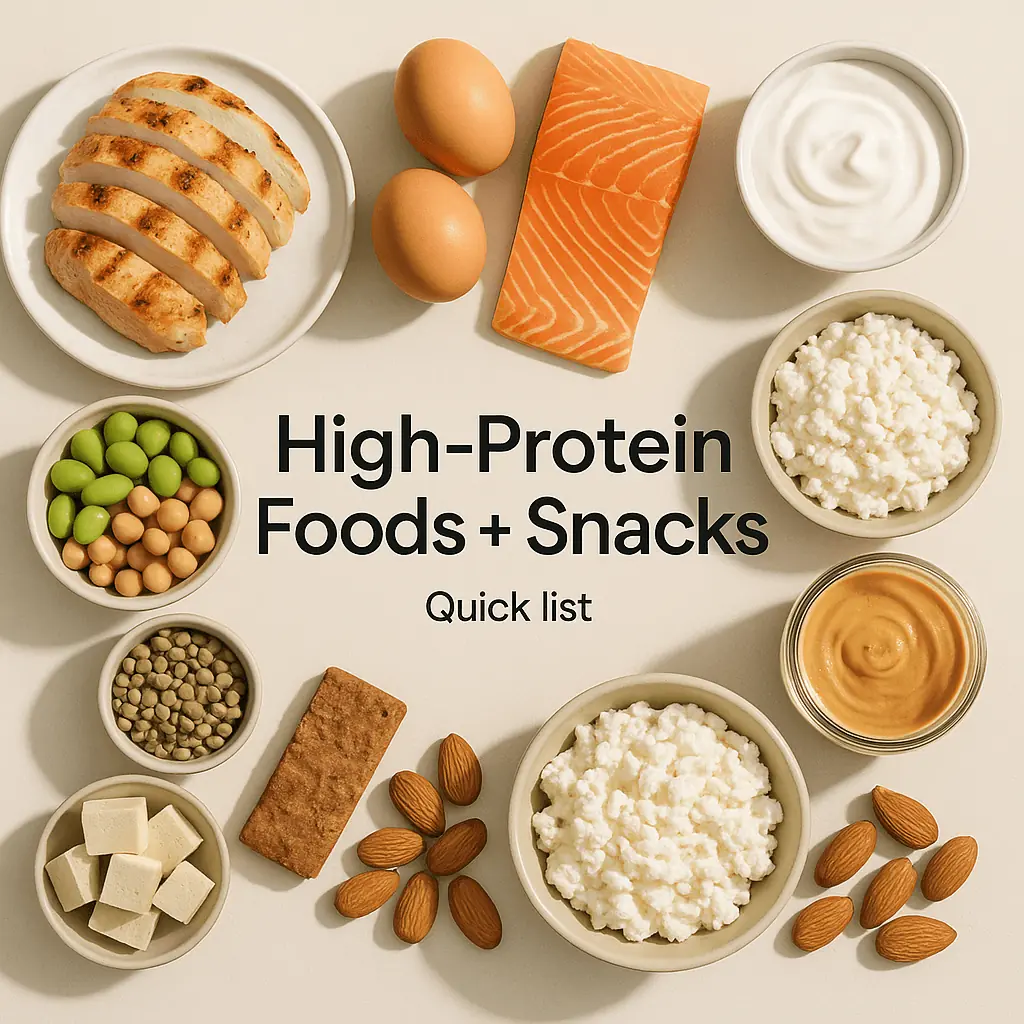
This is my big, no drama list of high protein foods and high protein snacks. I’ll also point out which ones are the easiest to keep around, which ones feel like real food, and a few quick ways to turn them into meals without overthinking it.
And if you want simple ways to actually use these in everyday cooking, that’s basically what we do over at Easy Recipes Dash. Quick, flavor-forward, normal ingredients. Not a “40-step meal prep lifestyle”.
Note: This content is based on personal research and general nutrition information. It is intended for educational and lifestyle purposes only and does not constitute medical or dietary advice. Individual protein needs vary based on age, activity level, weight, and health goals. Always consult a doctor or registered dietitian for personalized nutrition guidance, especially if you have kidney disease or another condition that affects protein metabolism.
First, what counts as “high protein”?
There’s no single perfect definition, but here’s the simple version that helps in real life:
- High protein foods: usually 15 to 30+ grams per serving
- High protein snacks: usually 10 to 20+ grams per snack
Also, protein “per calorie” matters. Some foods are high protein but come with a lot of extra fat or sugar. Not bad, just something to know so you can balance the day.
If you want a rough daily target, many people do well starting around:
- 25 to 35 grams per meal
- 10 to 20 grams per snack
Not medical advice. Just a very workable baseline.
However, it's also important to consider incorporating high-fiber foods into your diet. These foods not only complement your protein intake but also help in keeping you full for longer periods and aid in digestion.
High protein foods list (best staples)
1) Chicken breast
A classic for a reason.
- Protein: ~25 to 30g per 4 oz cooked
- Why it’s great: lean, easy, takes on any flavor
- Quick use: sheet pan chicken + veggies, chicken salad, tacos
If chicken breast makes you sad, you’re probably under-seasoning it. Or overcooking it. Or both.

2) Turkey (ground turkey, turkey breast)
- Protein: ~22 to 26g per 4 oz cooked (varies by fat %)
- Quick use: turkey chili, turkey burgers, lettuce wrap bowls
Ground turkey is a weeknight cheat code. Especially if you keep taco seasoning or a simple spice blend around.
3) Lean beef (top sirloin, flank, 90/10 ground beef)
- Protein: ~22 to 28g per 4 oz cooked
- Quick use: steak salad, stir fry, protein bowls
If you want high protein and iron in the same move, lean beef is hard to beat.
4) Eggs (and egg whites)
- Whole egg protein: ~6g each
- Egg whites: ~3 to 4g each (or ~25g per cup carton)
Eggs are not the “highest” protein food, but they are insanely useful. Want to bump protein without changing the whole meal? Add egg whites to scrambled eggs. You still get the taste of eggs, just more protein.
5) Greek yogurt (plain, nonfat or 2%)
- Protein: ~15 to 20g per 170g (6 oz) container
- Quick use: yogurt bowls, smoothies, savory yogurt sauces
Plain Greek yogurt is one of those foods that can be sweet or savory. Add berries and honey. Or add garlic, lemon, salt, pepper and use it like a sauce.

6) Cottage cheese
- Protein: ~12 to 15g per 1/2 cup (varies by brand)
- Quick use: on toast, blended into dips, with fruit, with tomatoes + pepper
If you hated cottage cheese once, try it again. Brands vary a lot. Some are creamy and mild, some taste… aggressively tangy.
7) Milk (especially ultra-filtered)
- Protein: regular milk ~8g per cup
- Ultra-filtered: often ~13g per cup
- Quick use: smoothies, oats, coffee, sauces
Ultra-filtered milk is an easy upgrade if you already drink milk.
8) Tuna (canned)
- Protein: ~20 to 25g per can (depending on size/brand)
- Quick use: tuna salad, rice bowl, pasta
Canned tuna is cheap protein. Keep a few cans, a jar of pickles, mustard, maybe some Greek yogurt. You can make lunch in 3 minutes.
9) Salmon
- Protein: ~22 to 25g per 4 oz cooked
- Bonus: omega-3 fats
- Quick use: bake with lemon + seasoning, salmon bowls, salads
More “expensive protein”, yes. But it brings flavor and healthy fats, so it can be worth rotating in.
10) Shrimp
- Protein: ~20 to 24g per 4 oz cooked
- Quick use: stir fry, tacos, shrimp salad
Frozen shrimp is one of the easiest “I have nothing in the house” proteins. Thaws fast, cooks fast.
11) White fish (cod, tilapia, pollock)
- Protein: ~18 to 24g per 4 oz cooked
- Quick use: fish tacos, baked fish + veg, bowls
Mild fish is great with bold seasoning. Cajun, garlic lemon, curry, whatever.
12) Tofu (firm or extra firm)
- Protein: ~10 to 15g per 1/2 cup (varies)
- Quick use: stir fry, crispy baked tofu, curry
Tofu is better when you press it (even a quick press) and season it like you mean it.
13) Tempeh
- Protein: ~15 to 20g per 3 oz
- Quick use: crumble into taco filling, pan fry strips, bowls
Nutty flavor, firmer texture. A solid plant protein if tofu isn’t your thing.
14) Beans + lentils (not the highest, but very useful)
- Protein: beans ~7 to 10g per 1/2 cup cooked
- Lentils: ~9g per 1/2 cup cooked
- Why they matter: fiber + protein combo keeps you full
- Quick use: chili, soups, salads, wraps
If you combine beans with a higher-protein food (chicken, tuna, eggs, Greek yogurt sauce), you get a more “complete” high-protein meal.
High protein snacks list (grab and go, no weird ingredients)
Let’s get into the good stuff. Snacks that actually hit.
1) Greek yogurt cup + toppings
- Protein: ~15 to 20g
Add: berries, chopped nuts, chia seeds, a little honey.
If you want it even higher: stir in a scoop of protein powder. It turns into a thick pudding situation.
2) Cottage cheese + fruit (or savory)
- Protein: ~12 to 18g depending on portion
Sweet: pineapple, peaches, berries
Savory: cucumber, tomatoes, everything bagel seasoning, black pepper
3) Jerky or meat sticks
- Protein: ~9 to 15g per serving (varies a lot)
Look for: lower sugar options if that matters to you.
Jerky is not cheap anymore. But it’s still a solid “in the car / at the airport” protein snack.
4) Tuna packet + crackers
- Protein: ~15 to 20g per packet
This is one of the most underrated desk snacks. Keep a few packets and a sleeve of crackers.
5) Hard-boiled eggs
- Protein: ~6g per egg
Two eggs gets you 12g fast. Add a piece of fruit and you’re good.
Pro tip: salt matters. A lot.
6) Edamame (frozen, microwaved)
- Protein: ~9 to 14g per cup (depending on portion)
Add: salt, chili flakes, garlic powder.
Edamame feels like a snack but eats like a mini meal.
7) Roasted chickpeas
- Protein: ~6 to 10g per serving (portion-dependent)
Crunchy, salty, portable. Not the highest protein ever, but a good “chips replacement” with actual nutrition.
8) Protein shake (ready-to-drink or homemade)
- Protein: commonly 20 to 30g
This is the easiest way to patch a low-protein day. Not glamorous, but effective.
If you make your own: milk + protein powder + banana + peanut butter is the basic template. Adjust from there.
9) High-protein smoothie (Greek yogurt base)
Use:
- Greek yogurt
- milk (or ultra-filtered milk)
- frozen fruit
- optional: protein powder, chia, peanut butter
You can easily hit 25 to 40g protein without trying too hard.
10) String cheese + turkey slices
- Protein: string cheese ~6 to 7g
- Turkey slices vary, often ~10g+ for a few slices
Together, it’s an easy 15 to 20g snack.
11) Peanut butter (paired wisely)
- Protein: ~7 to 8g per 2 tbsp
Pair it with Greek yogurt, milk, or a protein shake if you want a truly high-protein snack. Peanut butter alone is more “fat-forward” than protein-forward.
12) Nuts (again, paired wisely)
- Protein: ~5 to 8g per ounce
Nuts are healthy, but not super high protein per calorie. Great with yogurt, cottage cheese, or alongside a higher-protein snack.
13) Hummus + a higher protein add-on
Hummus by itself is moderate protein. But hummus + turkey slices, hummus + boiled eggs, hummus + tuna. That works.
14) Protein bars (the “read the label” category)
- Protein: often 10 to 20g
Some are basically candy bars with protein dusted on top. Still, a good emergency option.
A quick “best of” list (if you want the easiest options)
If you want the shortest shopping list that still covers you all week, I’d pick:
- Chicken breast or ground turkey
- Eggs + egg whites carton
- Greek yogurt
- Cottage cheese
- Tuna packets
- Frozen shrimp or frozen edamame
- A decent protein powder (optional, but useful)
That combo makes it hard to have a low-protein day.
Simple ways to build a high-protein snack in 30 seconds
If you don’t want to track anything, just use this little formula:
Pick 1 base protein:
- Greek yogurt
- cottage cheese
- tuna packet
- 2 boiled eggs
- shake
Add 1 “crunch or carb” (optional):
- fruit
- crackers
- oats
- toast
- granola
Add 1 flavor or fat (optional):
- nuts
- peanut butter
- olive oil drizzle (savory)
- seasoning blends
It’s not fancy. It works.
Ideas you can turn into real food (not just “eat plain chicken”)
A few easy high-protein meal ideas using the foods above:
- Greek yogurt + lemon + garlic sauce over chicken bowls
- Shrimp stir fry with frozen veggies
- Turkey taco skillet with beans
- Salmon + cucumber yogurt sauce + rice
- Tofu curry with extra firm tofu and chickpeas
Nothing complicated. Just good food that happens to be high protein.
Quick notes (because these questions always come up)
Is plant protein “as good” as animal protein?
You can absolutely build a high-protein diet with plant foods. It usually takes a bit more planning and larger portions. Tofu, tempeh, edamame, lentils, and beans help a lot.
Do I need protein powder?
No. It’s convenience, not magic.
What if I hate cooking?
Then lean on: Greek yogurt, cottage cheese, tuna packets, rotisserie chicken, jerky, ready-to-drink shakes, microwavable edamame. Or check out Low Calorie Meals That Actually Fill You Up for more no-fuss ideas.
Wrap up
High protein eating does not have to be intense. You just need a few staples you actually like, plus 5 or 6 snacks you can grab without thinking.
If you want, tell me what you normally eat in a day (breakfast, lunch, dinner, snacks), and I can point out the easiest swaps to get more protein without changing everything.
FAQs
What counts as a high protein food or snack?
High protein foods typically contain 15 to 30+ grams of protein per serving, while high protein snacks usually have 10 to 20+ grams per snack. Protein per calorie also matters for balancing your daily intake.
Why is protein important beyond bodybuilding?
Protein helps keep you full longer, reduces random snack attacks, makes meal decisions easier, and supports goals like fat loss, muscle gain, or simply feeling better overall.
What are some practical high protein food staples to keep at home?
Some great high protein staples include chicken breast (25-30g per 4 oz), ground turkey (22-26g per 4 oz), lean beef (22-28g per 4 oz), eggs, Greek yogurt, cottage cheese, milk (especially ultra-filtered), canned tuna, and salmon.
How can I easily incorporate these high protein foods into quick meals?
You can use sheet pan chicken with veggies, turkey chili or lettuce wrap bowls, steak salads or stir fry with lean beef, for sandwiches or wraps, add egg whites to scrambled eggs for extra protein, use Greek yogurt in smoothies or sauces, and make tuna salad with canned tuna for a fast lunch.
What is a simple daily protein target to aim for?
A workable baseline is about 25 to 35 grams of protein per meal and 10 to 20 grams per snack. This helps smooth out your day and supports various health or fitness goals.
Should I consider other nutrients along with protein?
Yes! Incorporating high-fiber foods alongside your protein intake helps keep you full longer and aids digestion. Balancing protein with fiber-rich foods makes your diet more effective and satisfying.