
Table of Contents
Table of Contents
Introduction
Middle Eastern spices have transformed my kitchen into a place of adventure and comfort. I’m Becky Masson, an Austin home cook who fell in love with cumin and cardamom in my grandmother’s kitchen and now enjoys experimenting with za’atar and baharat while my cat Miso looks on. This guide gathers every lesson and favorite in one place, your trusted resource for discovering Middle Eastern spices at home.
Essential Spice & Pantry Guide
Middle Eastern spices are the secret to both everyday comfort food and festive feasts. If you’re building a pantry, here’s a tour of the essentials that will give every dish a genuine touch of the region’s warmth, color, and aroma.
Essential Middle Eastern Spices and Pantry Ingredients
Each of these spices has its own flavor profile and best uses. Here’s what you’ll find in any well-stocked Middle Eastern kitchen:
| Spice/Ingredient | Flavor Profile | Signature Dishes & Pro Tips |
|---|---|---|
| Cumin | Earthy, nutty, warm | Baharat blends, Al Kabsa; toast whole seeds before grinding for extra depth. |
| Sumac | Tangy, lemony, slightly sour | Sprinkle on fattoush, hummus; adds brightness without acidity. |
| Cardamom | Floral, sweet, spicy | Great in coffee, desserts, baklava; use whole pods for freshest taste. |
| Turmeric | Warm, earthy, mildly bitter | Pilafs, stews; combine with black pepper for increased benefits. |
| Cinnamon | Sweet, woody, warming | Perfect in Moroccan tajine, sweet breads, or tea. |
| Coriander | Citrusy, nutty, floral | Spice blends, marinades; ground coriander pairs well with lemon and garlic. |
| Allspice | Warm, sweet, peppery | Kebabs, spice rubs; a little goes a long way. |
Pro Tip: Buy whole spices, grind as needed, and store in airtight containers away from light for maximum flavor.
Classic Middle Eastern pantries also feature rose water, orange blossom water, pomegranate molasses, tahini, and dried limes (loomi). These are key to both sweet and savory recipes.
Must-Have Blends and Pantry Staples
Signature blends like baharat, za’atar, and ras el hanout add instant depth and personality to your food. Here’s what you need to know:
| Blend | Main Flavors | Best Uses |
|---|---|---|
| Baharat | Warm, smoky, peppery | Beef, chicken, rice, hearty stews |
| Za’atar | Herbal, tangy, nutty | Bread, dips, roasted vegetables |
| Ras el Hanout | Complex, floral, spicy | Moroccan tajines, festive dishes |
| Shawarma Spice | Garlicky, spicy, earthy | Grilled meats, especially for shawarma |
| Harissa | Spicy, smoky | Stews, marinades, sauces |
| Dukkah | Nutty, crunchy, aromatic | Bread dipping, sprinkled on salads |
Want to know the difference between baharat and ras el hanout? Here’s a quick comparison:
| Blend | Typical Spices Included | Distinctive Qualities |
|---|---|---|
| Baharat | Black pepper, cumin, coriander, cinnamon, cloves, nutmeg, paprika | All-purpose, versatile, warm, peppery |
| Ras el Hanout | Cardamom, cinnamon, clove, coriander, cumin, mace, nutmeg, turmeric, rose petals (varies by maker) | Fragrant, complex, uniquely Moroccan |

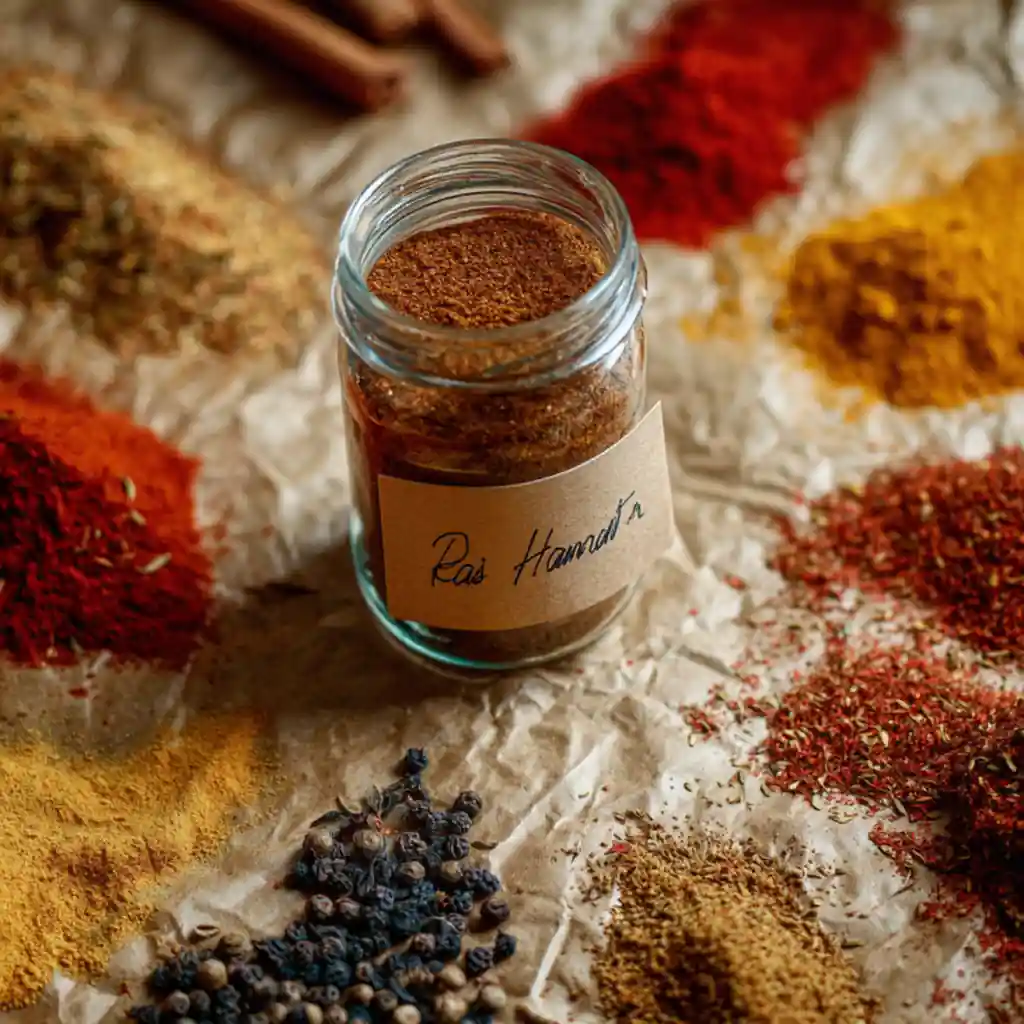

Middle Eastern Spice Blend
Ingredients
Method
- In a dry skillet over low heat, toast all spices (except rose petals) for 1–2 minutes, stirring until aromatic.

- Allow to cool, then transfer to a spice grinder or mortar and pestle. Grind to a fine powder.

- If using rose petals, crush gently and stir into the spice blend.

- Transfer to an airtight jar and store in a cool, dry place up to 6 months.

- Use 1–2 teaspoons per recipe or to taste in tajines, couscous, grilled meats, or roasted vegetables.

Nutrition
Video
Notes
Tried this recipe?
Let us know how it was!A Journey Through Time
Middle Eastern spices are more than pantry staples they’re centuries-old stories of trade, migration, and creativity. From ancient caravans loaded with saffron and frankincense to today’s modern kitchens, each spice carries history you can taste.
The History & Cultural Significance of Middle Eastern Spices
The Middle East is home to the world’s earliest spice routes, stretching from the Arabic Peninsula and North Africa to India and the Mediterranean. Arab traders once traveled for months to bring saffron, cinnamon, and cardamom to bustling markets. Spices weren’t just about flavor, they were symbols of hospitality, wealth, and even medicine.
Saffron, for example, became known as “red gold,” both for its vibrant color and its value. In ancient Persia, it was used not just for food, but in celebrations, rituals, and remedies. Sumac and cumin, two of the region’s most-loved flavors, were prized for both culinary and health purposes.
Even today, families in cities from Istanbul to Marrakech pass down spice blend recipes, connecting generations through food. Every blend, every sprinkle, is a bridge between past and present.
For a deeper dive into the Silk Road and the legacy of the spice trade, see the Metropolitan Museum of Art’s overview of the ancient spice routes.
Spices in Iconic Middle Eastern Dishes
Certain dishes simply wouldn’t exist without their signature spices. Here are four classics where the right blend makes all the difference:
| Dish | Signature Spices & Blends | Description / Internal Link |
|---|---|---|
| Al Kabsa | Cumin, cardamom, cinnamon, black lime | Saudi rice dish with layers of spice and tender meat. Al Kabsa recipe |
| Tajine | Cinnamon, saffron, ginger, turmeric | Moroccan slow-cooked stew with rich sauce. Tajine recipe |
| Shawarma | Allspice, coriander, paprika, garlic, cloves | Marinated meat, grilled and wrapped. Shawarma recipe |
| Hummus | Cumin, paprika, sumac | Creamy chickpea dip, finished with a dusting of spice. Hummus recipe |
Blends like baharat and za’atar aren’t just for one dish they show up everywhere, from salads to grilled meats. The balance of warm, earthy, and bright flavors defines Middle Eastern cuisine’s signature taste.
If you enjoy experimenting with bold, spice-forward marinades, you might also like this Burmese Marinated Beef recipe, which uses a different but equally aromatic spice profile.
Curious about the health benefits behind these spices? The next section reveals what modern science says about their wellness potential.
The Modern Apothecary
The power of Middle Eastern spices extends well beyond flavor they bring proven wellness benefits to your table. Ancient cooks may not have known the science, but they recognized the value of these ingredients in daily life. Today, researchers are confirming what tradition has always understood: these spices can help support health, digestion, and energy.
Health Benefits of Popular Middle Eastern Spices
Many Middle Eastern spices are packed with antioxidants, anti-inflammatory compounds, and micronutrients. Here’s what the latest studies reveal about a few standouts:
| Spice | Key Benefits | Reference / Tip |
|---|---|---|
| Za’atar | Rich in antioxidants; may improve memory and gut health | Sprinkle on salads for a healthy brain boost (more here). |
| Sumac | Can help regulate blood sugar and cholesterol | Adds tang without salt, ideal for heart-healthy meals (evidence). |
| Cardamom | Anti-inflammatory; may lower blood pressure | Try in tea or coffee for digestive support (study). |
| Turmeric | Anti-inflammatory, antioxidant, supports immune health | Best absorbed with black pepper; used in golden milk. |
| Cumin | Aids digestion, contains iron | Use in stews and soups for extra nutrition. |
Pro tip: Using whole or freshly ground spices can help preserve more of these healthful compounds, especially when storing blends for later use.
Kitchen Science: Storing and Using Spices for Maximum Flavor
The key to the most aromatic dishes isn’t just which spices you use, but how you store and prepare them. Here’s how to keep your spices fresh and powerful:
| Tip | Description |
|---|
| Store Airtight | Use sealed jars away from sunlight and heat. |
| Whole vs. Ground | Whole spices keep flavor longer. Grind right before use for boldest results. |
| Toast Before Use | Gently toasting spices in a dry pan unlocks deeper, nuttier notes, especially for cumin and coriander. |
| Label & Rotate | Write the date on your jars and replace spices every 6–12 months. |
Whole-to-Ground Chart Use this conversion for recipes:
| Whole Spice | Ground Equivalent |
|---|---|
| 1 Tbsp cumin seeds | ≈ 2 tsp ground cumin |
| 1 Tbsp coriander seeds | ≈ 2 tsp ground coriander |
| 1 stick cinnamon | ≈ 1 tsp ground cinnamon |
| 5 cardamom pods | ≈ 1 tsp ground cardamom |
Ready to put these lessons into practice? The next section will guide you through making your own blends and picking quality saffron, step by step.
The Home Cook’s Workshop
Your kitchen is where tradition and creativity meet. Middle Eastern spice blends are easy to make at home and once you try, you’ll never want to buy pre-mixed again. Plus, knowing how to identify high-quality saffron or the right blend for your recipe gives you a true cook’s confidence.
DIY Spice Blend Recipes: Baharat and Za’atar
There’s no substitute for the aroma of fresh, homemade blends. Here’s how to make two of the region’s essentials:
Baharat Blend (Basic Recipe)
- 2 tablespoons ground black pepper
- 2 tablespoons ground cumin
- 2 tablespoons ground coriander
- 1 tablespoon ground cinnamon
- 1 tablespoon ground cloves
- 1 tablespoon ground nutmeg
- 2 tablespoons sweet paprika
Mix all ingredients in a bowl. Store in an airtight jar for months.
Pro tip: Toast whole spices prior to grinding to enhance their depth of flavor.
Za’atar Blend (Basic Recipe)
- 2 tablespoons dried thyme
- 2 tablespoons ground sumac
- 1 tablespoon toasted sesame seeds
- 1 tablespoon dried oregano
- 1 teaspoon sea salt
Combine and store as above. Try sprinkled on bread with olive oil or as a rub for chicken.
How to Identify High-Quality Saffron and Blends Comparison
Not all saffron is equal. Here’s what to look for and how to test its purity:
| Checkpoint | What to Look For |
|---|---|
| Color | Vivid red threads (not orange or yellow) |
| Aroma | Sweet, hay-like, never metallic |
| Shape | Even, unbroken threads (not powder or bits) |
| Water Test | Place a thread in hot water, real saffron releases color slowly (not instantly) and smells floral |
If you’re buying online, choose reputable suppliers and beware of “bargain” saffron authentic saffron is always pricey for a reason.
Baharat vs. Ras el Hanout: Quick Comparison
| Blend | Typical Ingredients | Best Uses |
|---|---|---|
| Baharat | Black pepper, cumin, coriander, cinnamon, nutmeg, paprika | Grilled meats, rice, stews |
| Ras el Hanout | Cardamom, cinnamon, clove, turmeric, mace, rose petals (varies) | Moroccan tajines, couscous |
The Curated Buyer’s Guide
A well-stocked pantry starts with choosing the right source. With so many options online, it’s important to know what to look for and what to avoid when buying Middle Eastern spices.
Where to Buy Authentic Middle Eastern Spices Online
Quality matters more than ever with spices. Sourcing from reputable suppliers ensures you get maximum flavor, freshness, and health benefits. Here are three trusted online sources favored by home cooks and chefs alike:
| Supplier | What Makes Them Special | Website/Notes |
|---|---|---|
| Burlap & Barrel | Sells single-origin, sustainably sourced spices; direct from farmers | Burlap & Barrel Spices |
| Kalustyan’s | One of NYC’s best-loved global spice markets, ships nationwide | Kalustyans |
| Spice House | Focuses on freshness and heritage blends, excellent reputation | The Spice House |
Tip: Always check harvest date, packaging type, and country of origin. Avoid purchasing spices in large quantities unless you use them promptly freshness diminishes quickly once opened.
Expert Tips for Choosing, Storing, and Maximizing Flavor
- Buy whole, grind fresh: Whole spices keep longer and have better flavor. A small spice grinder or mortar and pestle makes a big difference.
- Check color and aroma: Vibrant color and a strong, pleasant scent are good signs of freshness.
- Store smart: Keep spices in tightly sealed containers, away from sunlight and heat. Label with purchase or grind date.
- Buy small quantities: Spices are best enjoyed fresh, so buy what you’ll use in 6–12 months.
- Explore local markets: Middle Eastern or international groceries often have great finds and inspiration for new blends
FAQ
What are the most common Middle Eastern spices?
Cumin, sumac, cardamom, turmeric, cinnamon, coriander, allspice, black pepper, and paprika are found in nearly every Middle Eastern kitchen. Blends like baharat, 7 spices, and za’atar also show up in countless recipes.
What’s in Baharat spice blend?
Baharat typically includes black pepper, cumin, coriander, cinnamon, cloves, nutmeg, and paprika, but recipes can vary by region.
How to make a Middle Eastern spices blend?
Start with whole spices when possible, toast briefly, then grind. Mix according to your preferred recipe
How to store homemade spice blends?
Store blends in airtight containers, away from heat and sunlight. Label with the date and try to use within six months.
What’s the difference between Baharat and Ras el Hanout?
Baharat is a versatile, peppery blend used across the Middle East, while Ras el Hanout is more complex and uniquely Moroccan, often including floral and exotic spices.
Where to buy authentic Middle Eastern spices?
Look for specialty spice shops online such as Burlap & Barrel, Kalustyan’s, and The Spice House. For local finds, check Middle Eastern groceries in your area.
How to identify high-quality saffron?
Look for vivid red threads (not yellow), a sweet hay-like aroma, and even, unbroken strands. Authentic saffron releases its color slowly in hot water and never tastes metallic or bitter.
Conclusion
Middle Eastern spices have the power to transform your kitchen and your cooking. Whether you’re blending baharat from scratch, searching for the freshest cumin, or learning the story behind saffron, each new spice brings another layer of tradition, comfort, and excitement to your table. Now that you’ve got the tools and tips to build an authentic pantry, why not try a new recipe or experiment with your own blend tonight?
Happy cooking may your meals always be colorful, fragrant, and full of flavor!