Table of Contents
Table of Contents
Sweet Potato Rolls: The Secret to Extra Fluff
I’m Becky Masson, a home cook in Austin, Texas, and if you’ve ever walked into my kitchen, you’ve probably seen my curious cat, Miso, supervising from the counter like a tiny, judgmental food critic. I started cooking in my grandmother’s warm, scent-filled kitchen, and later it became my therapy during university. These days I’m always testing new ideas, taking classes, playing with seasonal ingredients, and chasing that perfect bite of comfort. Sometimes things flop. But when they succeed and make people happy, that’s success.
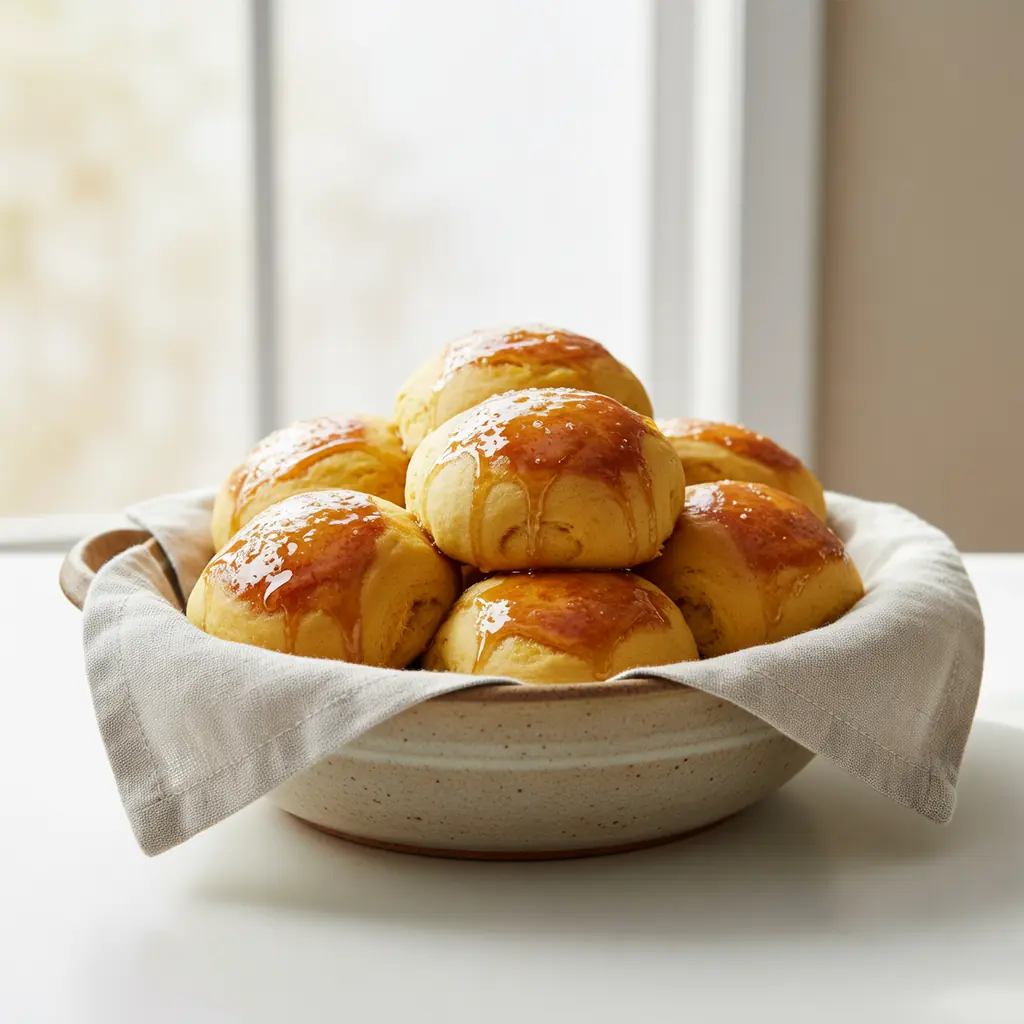
These sweet potato rolls are one of those “everyone gets quiet for a second” recipes. The big secret to extra fluff is simple: sweet potato adds moisture and subtle sweetness, and bread flour gives the dough structure so the rolls rise tall instead of turning heavy. It’s the cozy middle ground between tender and cloud-like.
A few expectations so you can plan (and not get hangry midway through the first rise): active time is about 30 minutes, total time is about 3 hours, and two rises are where the fluff happens. The vibe here is lightly sweet, golden, tender rolls finished with a cane-syrup butter glaze. You’ll get 15 rolls, which makes them perfect for holiday bread baskets, weeknight dinners, and make-ahead plans when you’d rather relax than scramble.
And yes, I’ll say it again because it matters: these sweet potato rolls are all about moisture, structure, and patience. That’s the trio.
Quick Recipe Overview (So You Can Plan Your Day)
Before you start, here’s the simple snapshot so you don’t underestimate the timeline. The mixing is quick, but the two rises do the real work.
At-a-glance timeline table
Part | Time / Temp |
Active time | 30 minutes |
Total time expected | 3 hr |
Cool sweet potato mixture | ~30 min |
Rise #1 | 1–1 1/2 hr |
Rise #2 | 45 min–1 hr |
Bake | 15–20 min |
Oven temp | 375°F |
Yield | 15 rolls |
Note: Rise times vary with room temperature. Don’t stare at the clock too hard, watch the dough. I’ll give you the visual cues later so your sweet potato rolls come out truly fluffy.
Why Sweet Potato Makes Rolls Softer (Without Making Them Heavy)
Sweet potato is doing a lot of quiet magic here. It brings moisture from its natural starch-and-water combo, plus it adds that warm orange-gold color that makes the crumb look like sunshine. Flavor-wise, it’s subtle. You’re not biting into “sweet potato bread,” you’re getting gentle sweetness that plays really nicely with the cane-syrup butter glaze.
The texture logic is the best part: mashed sweet potato helps keep the crumb tender and soft, while bread flour adds strength so the dough can trap gas and rise well. That’s how you get sweet potato rolls that are pillowy instead of dense.
The key temperature detail: cool the mash before it meets yeast
Step 2 is non-negotiable for fluff. The sweet potato and milk mixture needs to cool completely, about 30 minutes, before it goes anywhere near your yeast (and honestly, your eggs too). Too much heat can weaken yeast activity, which shows up later as rolls that don’t rise as high or bake up less tender.
My favorite workflow trick: while the mash cools, you can make the yeast mixture so you’re not just standing around in your kitchen, trying to keep Miso from sniffing the flour bag.
Ingredients (And What Each One Is Doing)

Below are the ingredients exactly as written in the recipe, and what each one is responsible for in these sweet potato rolls.
Ingredients
- 1 large sweet potato, about 12 ounces, peeled and cut into 1/2-inch cubes
- 2/3 cup whole milk
- 1/4 cup warm water, about 100°F to 110°F
You’ll also use (as written in the method): active dry yeast, sugar, eggs, melted butter, bread flour, salt, and cane syrup. Each one has a job, and when you understand the “why,” it’s easier to troubleshoot without messing with the recipe.
Ingredient purpose table (quick troubleshooting helper)
Ingredient | Main purpose in the dough/finish |
Sweet potato | Moisture + tender crumb + golden color |
Whole milk | Hydration + richness |
Warm water | Activates yeast (helps it wake up fast) |
Active dry yeast | Leavening (creates rise and fluff) |
Sugar | Feeds yeast + gentle sweetness |
Eggs | Structure + richness |
Butter | Tenderness + soft bite |
Bread flour | |
Salt | Flavor + strengthens dough |
Cane syrup | Sweet, glossy glaze |
When these are balanced, sweet potato rolls bake up soft and tall, with that glossy top you want to pull apart while they’re still warm.
Understanding the role of each ingredient is crucial. For instance, the sweet potato not only adds moisture but also contributes to a tender crumb and golden color. This starch-rich vegetable plays a significant part in the carbohydrate component of our diet, which is essential for energy.
Step-by-Step: How to Make Sweet Potato Rolls (Fluffy, Soft, and Tall)
This method follows 11 clear steps: cook and mash, cool, bloom yeast, mix and knead, two rises, bake, glaze. The main mindset: you’re aiming for a soft dough, so resist the urge to dump in extra flour too early.
1) Cook the sweet potato in milk (20 minutes)
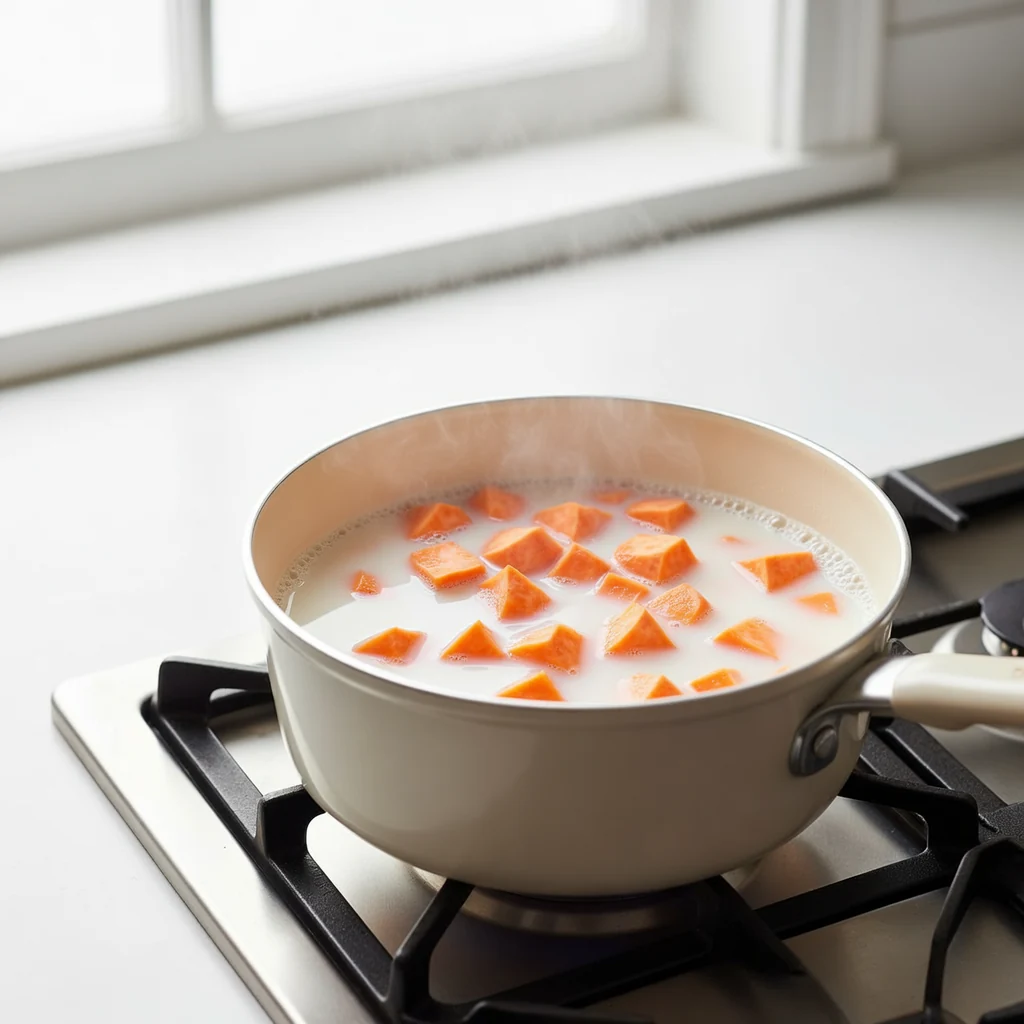
Add the diced sweet potato and whole milk to a pot. Bring it to a gentle boil, then cover and cook on medium-low for about 20 minutes, until the sweet potato is completely tender.
Stir occasionally. You’re building a mash that hydrates the dough and adds richness, which is a big reason these sweet potato rolls stay soft.
2) Mash until smooth, then cool completely (~30 minutes)
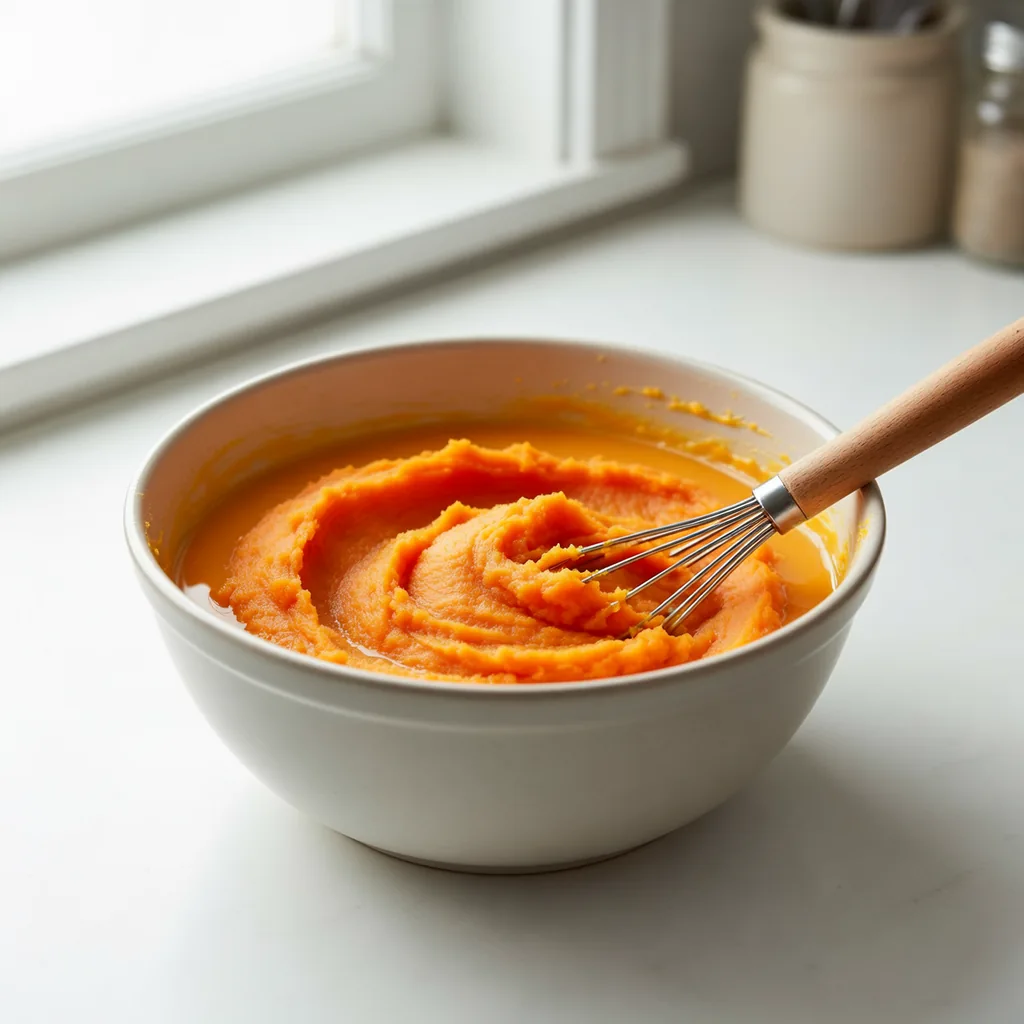
Mash the sweet potato directly into the milk until it’s smooth and creamy, then transfer it to a bowl and cool completely, about 30 minutes.
“Smooth” here means no big pieces. Little chunks can make the dough uneven, which can mess with the rise and the final texture. Cooling matters because warm mash can interfere with yeast activity and can also be rough on the eggs when you mix.
3) Activate the yeast (5 minutes)
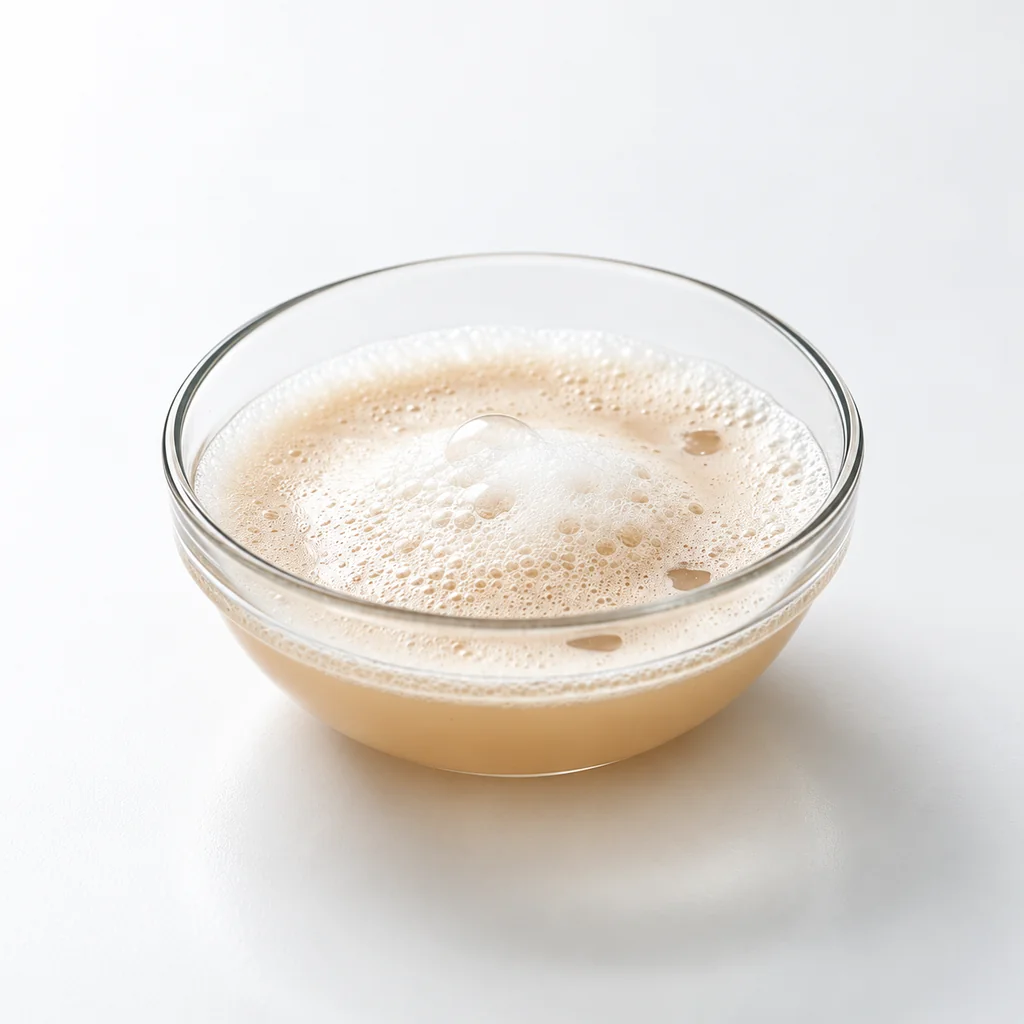
Combine the warm water (100°F–110°F) with active dry yeast and 1 teaspoon sugar, then let it rest about 5 minutes until foamy.
Foam cues: you’re looking for a creamy, bubbly layer on top. If it doesn’t foam, your rise will be weak, and your sweet potato rolls won’t get that extra fluff.
4-1) Mix ingredients & knead like you're making angel biscuits
Once your yeast is activated, mix it with your cooled sweet potato mash, some flour, salt, and any other ingredients in your recipe. Knead until you achieve that soft dough consistency we talked about earlier.
4-2) Mix the dough in a stand mixer (about 4 minutes)
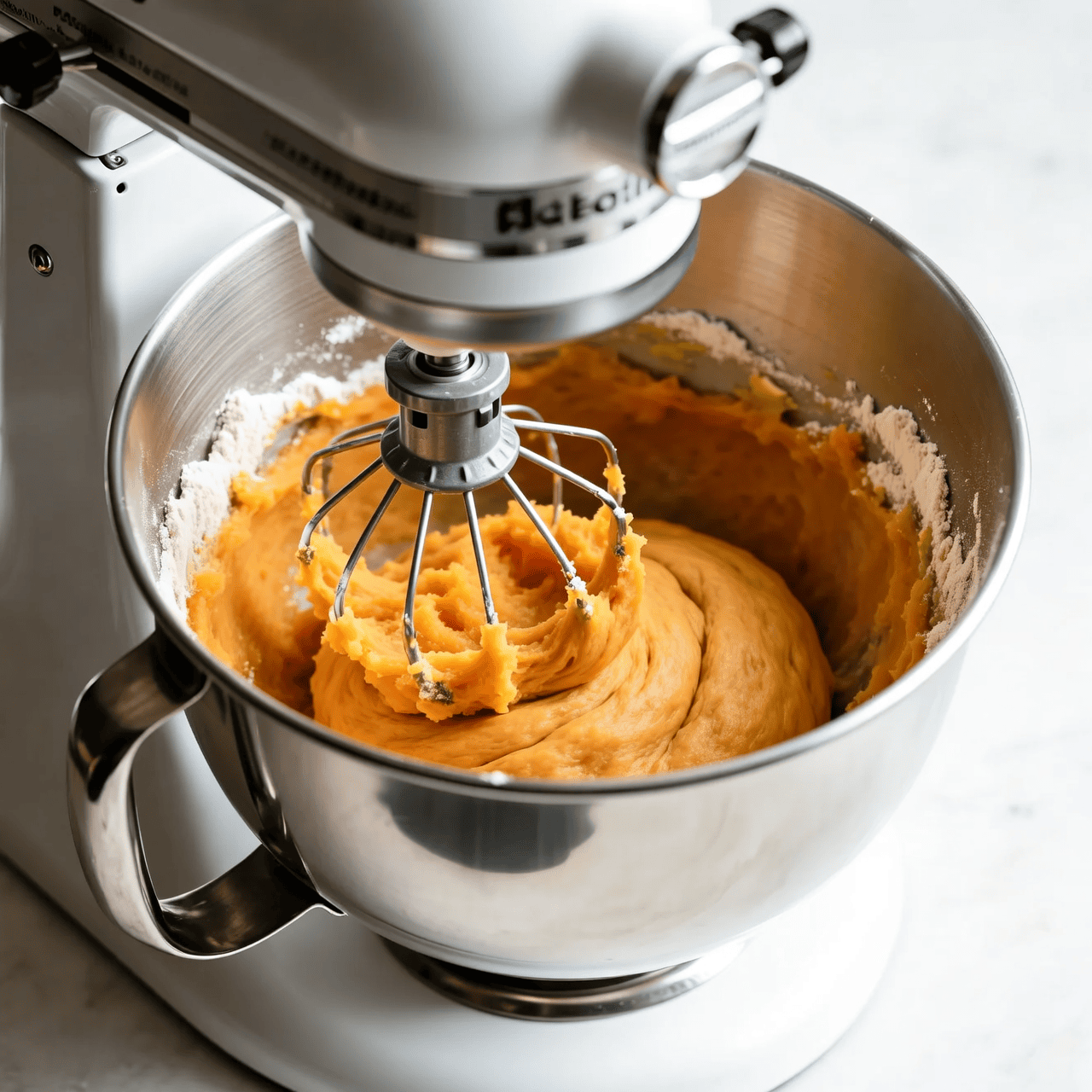
Add the cooled sweet potato mixture, activated yeast, eggs, 4 tablespoons melted butter, and the remaining 3 tablespoons sugar to the stand mixer bowl fitted with a dough hook. Mix on low until combined.
Gradually add 4 1/2 cups bread flour and salt while the mixer runs. Knead on low for about 4 minutes until a soft, smooth dough forms.
Texture cue: it should look cohesive and supple, not dry and craggy. You want soft dough because that softness translates into soft sweet potato rolls.
5) Hand-knead for elasticity (about 5 minutes) + manage stickiness
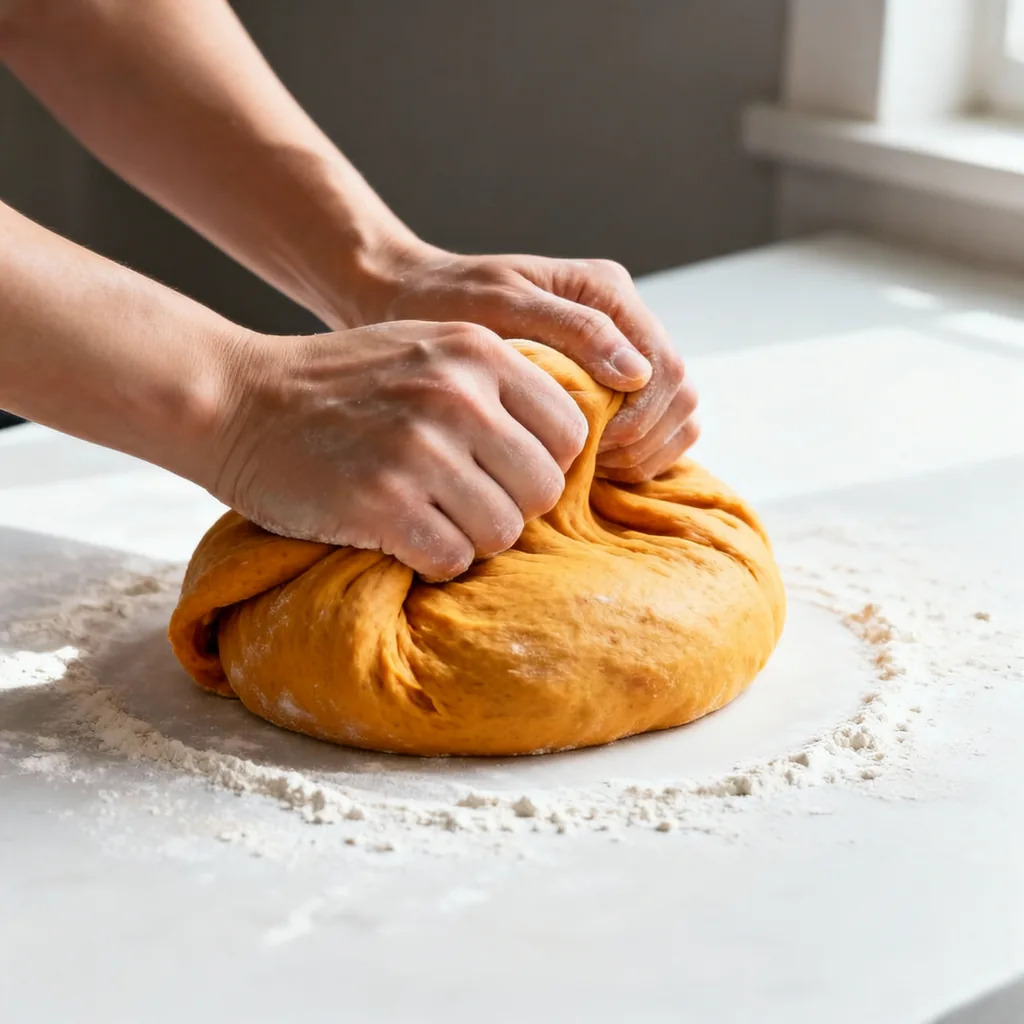
Transfer the dough to a lightly floured surface and knead about 5 minutes, until smooth and elastic.
If it’s excessively sticky, add additional flour gradually, up to about 1/3 cup as needed. This is where people accidentally “un-fluff” their rolls. Too much flour tightens the dough and can make rolls denser instead of light.
6) First rise: 1 to 1 1/2 hours (how to tell it’s ready)
Place the dough in a lightly greased bowl, cover, and let it rise at room temperature for 1 to 1 1/2 hours, until doubled.
Visual cues: it should look expanded and airy. If you press it lightly, it should slowly spring back, not snap back immediately. Cooler kitchens take longer, so don’t rush. Fluff comes from a proper rise.
7) Prep the oven + dish
Preheat the oven to 375°F. Grease a 13-by-9-inch baking dish with cooking spray or butter.
Timing note: preheating at the right moment helps prevent over-proofing while the oven comes to temperature.
8) Shape into 15 rolls (even sizing = even bake)
Turn the dough onto a lightly floured surface and divide it into 15 equal portions. Shape each portion into a smooth ball and arrange them evenly in the baking dish.
Shaping cue: create surface tension by tucking the edges underneath. Smooth tops tend to bake taller and more uniform, which is exactly what you want in sweet potato rolls.
9) Second rise: 45 minutes to 1 hour + mix the glaze
Cover and let the rolls rise at room temperature for 45 minutes to 1 hour, until noticeably puffy and almost doubled.
While they rise, mix the cane syrup with the remaining 2 tablespoons melted butter, then set it aside.
Readiness cues: the rolls should look swollen and touch or nearly touch. A gentle press should leave a slight indent that slowly fills back.
10) Bake 15–20 minutes at 375°F
Uncover and bake for 15–20 minutes, until the tops are lightly golden brown and the rolls are cooked through.
Doneness cues (without changing the recipe): evenly golden tops, rolls feel set, and they’ll often pull slightly from the edges of the dish.
11) Brush with glaze
Brush the rolls immediately with the cane syrup-butter mixture.
Serving/storage note: serve warm, or cool on a wire rack for about 30 minutes before storing.

Sweet Potato Rolls: The Secret to Extra Fluff
Ingredients
Equipment
Method
- Add the diced sweet potato and whole milk to a small saucepan. Bring the mixture to a gentle boil over medium-high heat. Reduce the heat to medium-low, cover, and cook for about 20 minutes, stirring occasionally, until completely tender.
- Mash the cooked sweet potato directly into the milk until smooth and creamy. Transfer to a bowl and allow to cool completely, about 30 minutes.
- Combine the warm water, active dry yeast, and 1 teaspoon of sugar in a small bowl. Stir gently and let rest for about 5 minutes, or until foamy.
- Add the cooled sweet potato mixture, activated yeast, eggs, 4 tablespoons melted butter, and remaining 3 tablespoons sugar to the bowl of a stand mixer fitted with a dough hook. Mix on low until combined. Gradually add the bread flour and salt. Knead on low speed for about 4 minutes, until a soft, smooth dough forms.
- Transfer the dough to a lightly floured work surface. Knead by hand for approximately 5 minutes, or until smooth and elastic. If excessively sticky, gradually add up to about 1/3 cup additional flour as needed.
- Place the dough in a lightly greased large bowl and cover. Let rise at room temperature for approximately 1 to 1 1/2 hours, or until doubled in size.

- Preheat the oven to 375°F. Lightly grease a 13-by-9-inch baking dish.

- Turn the risen dough onto a lightly floured surface and divide into 15 approximately equal portions. Shape each portion into a smooth ball and arrange in the prepared baking dish.

- Cover and allow the shaped rolls to rise for another 45 minutes to 1 hour, until noticeably puffy and almost doubled in size. Mix the cane syrup with the remaining 2 tablespoons melted butter.

- Bake at 375°F for 18 to 22 minutes, or until lightly golden brown and cooked through.

- Immediately brush the warm rolls with the cane syrup and melted butter mixture. Serve warm or cool on a wire rack before storing.

Nutrition
Notes
Tried this recipe?
Let us know how it was!Troubleshooting: When Rolls Aren’t Fluffy (And What to Do Next Time)
If your sweet potato rolls aren’t as fluffy as you wanted, it’s usually one of three things: flour handling, kneading, or proofing. No ingredient swaps needed. Just small technique tweaks.
- Sticky dough hard to handle: This dough is meant to be soft. High hydration and warm hands can make it feel extra sticky. Lightly flour your surface and hands, and only add flour gradually if it’s excessively sticky (up to about 1/3 cup).
- Rolls spread more than rise: Often under-kneaded or over-proofed. Knead until smooth and elastic in Step 5, and in the second rise, watch for “puffy, almost doubled,” not “huge and collapsing.”
- Dense rolls: Usually too much added flour or not enough rising time. Let it truly double in both rises. That patience shows up as fluff.
If you want to practice the same yeast-and-proofing basics with another homemade bread, try my garlic Parmesan focaccia bread, which also relies on a soft dough and a proper rise for its texture.
Troubleshooting table: symptom → likely cause → fix
Symptom | Likely cause | Fix (tied to the steps) |
Dense/heavy rolls | Too much added flour or under-proofed dough | Add flour only as needed (up to ∼1/3 cup). Let dough truly double in Rise #1 and get puffy in Rise #2 (Steps 6 and 9). |
Sticky dough hard to handle | High hydration + warm hands | Lightly flour surface/hands. Add flour gradually only if “excessively sticky” (Step 5). |
Rolls spread more than rise | Under-kneaded or over-proofed | Knead until smooth/elastic (Step 5). For Rise #2, stop when rolls are puffy and almost doubled, not overblown (Step 9). |
Make-Ahead, Storage, Freezing, and Reheating (Works With This Exact Recipe)
These sweet potato rolls are very make-ahead friendly, which is exactly what I want when I’m juggling dinner plans (and trying to keep Miso from sitting on the warm dish towel).
- You can bake them up to 3 days ahead.
- You can freeze baked rolls up to 3 months.
- You can refrigerate the dough overnight after kneading (Step 5), then bring it back to room temperature before continuing.
If you’re planning a holiday meal ahead of time, these rolls also work beautifully alongside my classic stuffing balls, another make-ahead-friendly side for a big family dinner.
Storage & make-ahead table (choose the option that fits)
Option | How to do it | How long | Best tip |
Freeze baked rolls | Cool completely, then freeze | Up to 3 months | Thaw, then rewarm gently so they stay soft. |
Overnight dough | After kneading (Step 5), refrigerate dough; bring to room temp before continuing with shaping/rising | Overnight | Once it’s workable again, continue with Step 6 onward. |
Reheating tips to keep them soft
Reheat gently, just until warm and soft. Overheating can dry bread out fast. If you have any glaze left, you can brush a little on after warming for that just-baked shine (using what you already made).
For a cozy dinner, serve the reheated rolls alongside this loaded potato soup for an easy bread-and-soup pairing.
What to Expect When You Nail It (Texture, Flavor, and Look)
When these sweet potato rolls are perfect, you’ll see tall, evenly browned tops and feel that soft, fluffy interior when you pull one apart. The sweet potato flavor is subtle and cozy, not loud. The cane-syrup butter glaze makes them glossy and lightly sweet that keeps you reaching for “just one more.”
If you remember only two things, make it these: use the visual rise cues, and stop adding flour early. Those two choices drive the final texture more than anything.
Wrap-Up: The Small Details That Make These Extra Fluffy
The “secret” is really a handful of small, practical details:
- Mash the sweet potato smooth, then cool completely.
- Make sure the yeast foams.
- Knead until the dough feels smooth and elastic.
- Don’t over-flour. Soft dough equals soft rolls.
- Let both rises get properly puffy.
Bake, glaze right away, and serve warm if you can. These sweet potato rolls are comfort food at its fluffiest, and they’re even easier to love when you make them ahead for a gathering. For a full comfort-food dinner, pair them with this cowboy casserole recipe.
FAQs
What makes sweet potato rolls extra fluffy compared to regular rolls?
The secret to extra fluff in sweet potato rolls is the combination of sweet potato, which adds moisture and subtle sweetness, and bread flour, which provides the dough with structure. This balance allows the rolls to rise tall and become tender yet cloud-like instead of heavy or dense.
Why is it important to cool the sweet potato mixture before adding yeast?
Cooling the sweet potato and milk mixture completely (about 30 minutes) before mixing it with yeast is crucial because too much heat can weaken yeast activity. If the yeast is weakened, the dough won't rise properly, resulting in rolls that are less tender and don't achieve their characteristic fluffiness.
How long does it take to make sweet potato rolls from start to finish?
The total time for making sweet potato rolls is approximately 3 hours. This includes about 30 minutes of active preparation time, around 30 minutes for cooling the sweet potato mixture, two rises totaling roughly 1 hour 45 minutes to 2.5 hours, and baking time of 15 to 20 minutes at 375°F.
What role does each ingredient play in making soft, fluffy sweet potato rolls?
Each ingredient has a specific purpose: Sweet potato adds moisture, tenderness, and golden color; whole milk hydrates and enriches; warm water activates yeast; active dry yeast leavens the dough; sugar feeds yeast and adds gentle sweetness; eggs contribute structure and richness; butter adds tenderness; bread flour creates gluten structure for a tall rise; salt enhances flavor and strengthens dough; cane syrup forms a sweet glossy glaze.
How many sweet potato rolls does this recipe yield and what occasions are they suitable for?
This recipe yields 15 sweet potato rolls, making them perfect for holiday bread baskets, weeknight dinners, or make-ahead plans when you want to relax rather than scramble in the kitchen.
What visual cues should I watch for during the rising stages instead of just relying on timing?
Since rise times vary with room temperature, it's best to watch the dough itself: during rises, look for the dough to roughly double in size and appear puffy. Avoid staring solely at the clock; observing these visual cues ensures your sweet potato rolls develop their signature fluffiness.