
Table of Contents
Table of Contents
Story & Introduction
A Personal Journey with Burmese Marinated Beef
Cooking Burmese marinated beef has become one of my favorite ways to bring comfort and creativity together. I’m Becky Masson, a home cook in Austin, Texas, where my cat Miso insists on supervising every simmering pot. Cooking drew me in as a child in my grandmother’s kitchen, where the fragrance of slow-cooked food created a warmth that lingered throughout the home. Later, during college, experimenting with recipes became a kind of therapy. Some attempts failed, but when a recipe like this one succeeded, it was pure joy. That joy is exactly what this dish, also known as Amè Hnat, represents for me comfort food infused with heritage and discovery.
This curry isn’t just about flavor; it’s about connection. The beef is marinated with aromatic spices, then slowly simmered until it turns fork-tender. The result is a dish that feels familiar yet thrilling, deeply rooted in Burmese tradition but adaptable to any table.
Why You’ll Love This Amè Hnat Recipe
What makes Amè Hnat special is the balance of bold spices and slow cooking. Unlike heavier Indian curries or coconut-rich Thai stews, Burmese marinated beef highlights freshness and earthiness. A traditional technique known as hsi frying the spice blend in oil before simmering gives the curry its distinctive depth and aroma. The sauce finishes rich and velvety, ideal for ladling over steamed rice or mopping up with warm flatbreads.
The ingredients are straightforward ginger, garlic, turmeric, paprika, and coriander form the base, layered with fresh herbs like curry leaves and cilantro. This blend makes the dish accessible for home cooks while staying true to authentic Burmese flavors.
For readers curious about Myanmar’s food culture, Britannica’s overview of Myanmar cuisine offers helpful context. And if you’re looking for other hearty comfort food ideas after this, you can explore the Ground Turkey and Zucchini Skillet for inspiration.
Cooking, to me, is about comfort, love, and a touch of playfulness. This Burmese marinated beef recipe captures all of that rich flavors, tender meat, and the joy of sharing a dish that feels both exotic and deeply familiar.
What Makes Burmese Marinated Beef Unique?
The Secret of Amè Hnat in Burmese Cuisine
At the heart of Burmese marinated beef lies a cooking technique that transforms simple ingredients into something extraordinary. Known locally as Amè Hnat, this dish is all about layering flavors slowly. One of the defining methods is called hsi frying a spice paste in oil before adding the meat. This step may seem small, but it unlocks a deep aroma and helps build a base that clings beautifully to the beef. The result is a curry that feels lighter than Indian versions yet more complex than many Southeast Asian stews.
The mix of bold spices, fresh herbs, and gentle slow cooking results in a dish that feels both soothing and lively. While turmeric, paprika, coriander, and chili bring warmth and color, the addition of curry leaves and cilantro adds a brightness you don’t always find in neighboring cuisines.
This marriage of fragrance and technique is what makes Amè Hnat so distinctive a dish that carries the essence of Myanmar’s food culture while staying wonderfully approachable for home cooks.
Burmese Beef Curry vs. Indian, Thai, and Malaysian Curries
What sets Burmese beef curry apart is its careful balance of richness and restraint. Unlike Indian curries, which often rely on heavy cream or ghee, Burmese versions are lighter and more herbal, leaning on fresh aromatics and slow simmering for depth. Compared to Thai curries, which highlight coconut milk and heat from chilies, Burmese marinated beef emphasizes earthy spices and a more savory profile. And while Malaysian Massaman curry comes close with its silky, reduced gravy, Amè Hnat delivers a slightly thicker, clingier sauce that feels hearty without being overwhelming.
This distinction matters because it helps cooks appreciate Burmese cuisine on its own terms, not just as a “cousin” to more familiar curries. The flavors are bold yet balanced, making it perfect for those who want something comforting but still full of character. If you’re interested in exploring more variations, you might also enjoy the Burmese chicken or turkey curry recipe, which uses similar techniques with a lighter protein.
Together, these differences highlight why Burmese marinated beef deserves recognition as one of Myanmar’s most flavorful comfort foods. It’s unique, versatile, and proof that the simplest techniques can create unforgettable meals.
Here’s a quick comparison of how Burmese beef curry stands apart from other popular Asian curries:
| Cuisine | Key Features | Flavor & Texture |
|---|---|---|
| Burmese Beef Curry (Amè Hnat) | Uses spice blooming (hsi), fresh herbs, slow simmering | Earthy, aromatic, savory with a thick, clingy gravy |
| Indian Curry | Often cooked with heavy cream, yogurt, or ghee | Rich, hearty, sometimes heavy; layered spice depth |
| Thai Curry | Coconut milk base, chilies, lemongrass, and kaffir lime | Creamy, spicy, bright, and citrusy; lighter broth-like |
| Malaysian Massaman Curry | Silky, slow-braised with potatoes, peanuts, and coconut milk | Mildly spiced, slightly sweet, gravy is smooth and reduced |
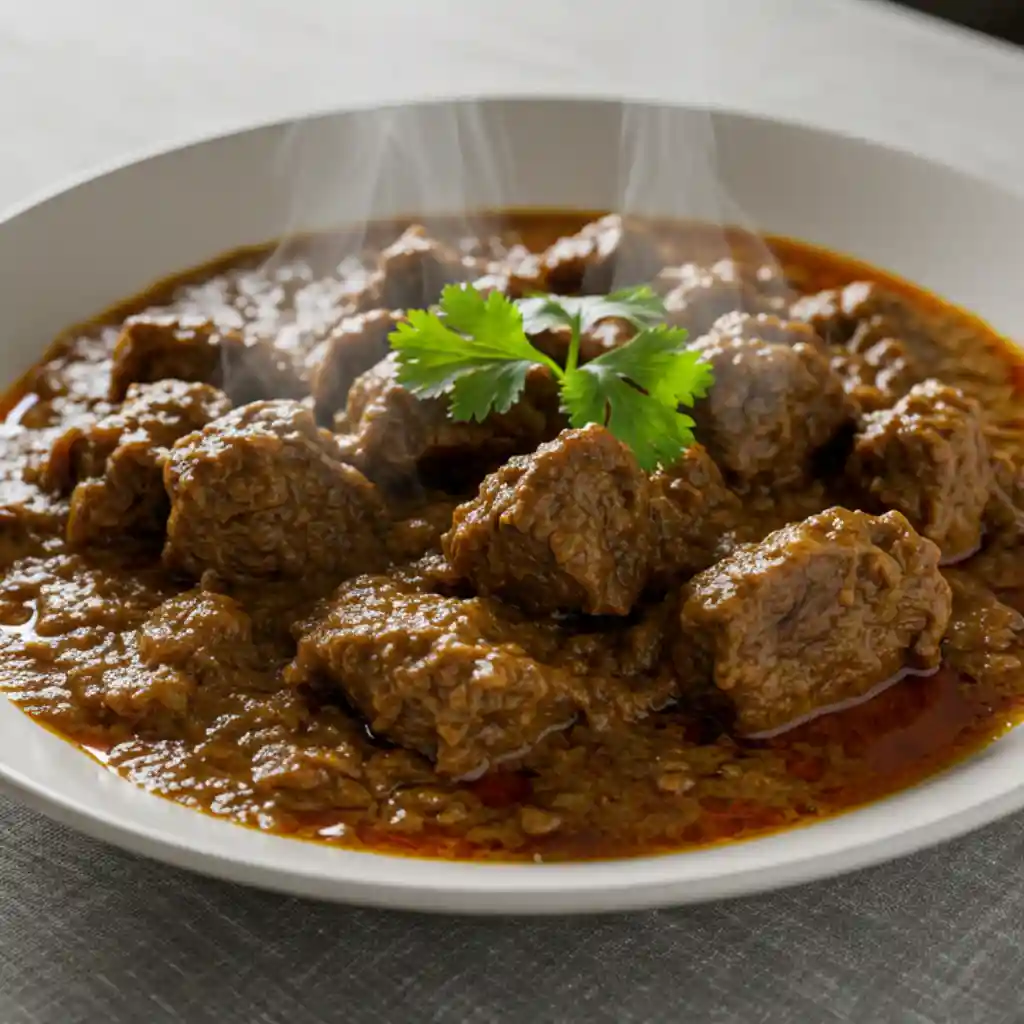
Burmese Marinated Beef (Amè Hnat)
Ingredients
Method
- Prepare the Blend: Blend tomatoes, onions, spring onions, green chilies, coriander, curry leaves, and ginger until smooth.Marinate the Beef: Place beef chunks in a bowl. Add salt, chili powder, paprika, turmeric, coriander powder, garlic paste, and ginger paste. Mix well to coat evenly.

- Sear the Beef: Heat oil in a heavy-bottomed pan. Add the marinated beef and stir for 5 minutes until browned and aromatic.

- Build the Curry Base: Add the blended mixture to the pan. Stir until combined with the beef.

- Slow Simmer: Bring to a gentle boil. Cover and cook on low heat for 2 hours until beef is fork-tender.Adjust the Gravy: Uncover and simmer to thicken the sauce. Add water or broth if too thick.

- Garnish & Serve: Top with fresh chopped coriander and serve hot with steamed rice or flatbreads.

Nutrition
Video
Notes
Tried this recipe?
Let us know how it was!
Ingredients & Preparation
Essential Ingredients for Burmese Marinated Beef
The beauty of Burmese marinated beef lies in its balance of pantry spices with fresh aromatics. Here’s what you’ll need:
- Beef Cuts: Chuck roast, brisket, or stew meat are ideal. These cuts become fork-tender with long, slow cooking. If you’re unsure which cut works best, the USDA guide to beef cuts offers a clear breakdown.
- Spices: Chili powder, paprika, turmeric, and coriander powder provide the earthy, bold base.
- Aromatics: Fresh onions, garlic paste, ginger paste, and curry leaves bring depth and fragrance.
- Fresh Herbs: Cilantro (with stalks) brightens the dish, while green chilies add heat that can be adjusted to taste.
- Flavor Builders: A splash of fish sauce or soy deepens the umami and rounds out the sauce.
Each ingredient plays a role in creating the thick, luscious gravy that clings to every piece of beef. Pairing a combination of dried spices and fresh herbs ensures the curry has both depth and freshness.
Ingredient Notes and Substitutions
While this recipe stays true to Amè Hnat, you can make smart substitutions without losing its character:
- Beef Substitutions: Lamb or chicken work well. Just adjust cooking time chicken takes about 45 minutes instead of two hours.
- Curry Leaves: If fresh leaves aren’t available, dried versions can be found at South Asian markets, or you can substitute with a bay leaf and a little lime zest for a citrusy touch.
- Paprika: Sweet paprika brings vibrant color without heat, while smoked paprika offers a richer, smoky depth..
- Cilantro Stalks: Don’t skip the stalks they hold as much flavor as the leaves. If cilantro isn’t to your taste, flat-leaf parsley offers a gentler alternative with a fresh touch.
For readers interested in experimenting further, check out the herbs and spices collection for more flavor ideas.
Using fresh ingredients can make a big difference. If you can, visit a local Asian grocery store for curry leaves, fresh chilies, or spice blends. Online retailers also carry many of these harder-to-find ingredients, making it simple to cook this dish no matter where you are.

Cooking Burmese Marinated Beef Step by Step
Marinating and Searing the Beef for Maximum Flavor
The journey to tender, flavor-packed Burmese marinated beef begins with the spices. Place the beef chunks in a large mixing bowl and coat them with chili powder, paprika, turmeric, coriander powder, garlic paste, and ginger paste. Mix until every piece is well covered in the spice blend. Toss everything well until the meat is coated evenly. This quick marination ensures that the flavors cling to the surface, infusing the beef from the very first stage of cooking.
Once seasoned, heat a good splash of oil in a sturdy pan and add the spiced beef. Sear for a few minutes, stirring often, until the meat develops a rich color and the spices release their aroma. Stir frequently for about five minutes, allowing the meat to develop a deep golden color. This step is crucial the caramelization not only locks in flavor but also builds a rich foundation for the curry. As chefs often note, browning meat is key to achieving complexity in slow-cooked dishes.
With the meat fragrant and sizzling, you’re ready to move on to building the curry base.
Slow Simmering to Achieve the Perfect Thick Gravy
After searing, add the blended mixture of tomatoes, onions, spring onions, green chilies, fresh coriander, curry leaves, and ginger. Stir well so the paste combines with the beef and spices. Stir to coat the beef thoroughly, ensuring the paste blends with the spices already clinging to the meat. Allow the pot to come to a light boil, cover it, and reduce the heat.
Cook gently for two hours, stirring now and then. During this time, the meat breaks down, becoming fork-tender while the sauce reduces into a thick, flavorful gravy. If the curry reduces too much, a splash of water or beef broth can bring it back to the right consistency. Conversely, if it feels too thin, uncover the pan and let it cook a little longer to allow the liquid to evaporate naturally.
Toward the end, raise the heat briefly to concentrate the flavors. The finished sauce should cling to the beef hearty, rich, and aromatic, with just enough spice to warm you without overwhelming the palate. Garnish with freshly chopped coriander before serving, and you’ll have an authentic Amè Hnat ready for the table.
FAQs
What makes Burmese marinated beef different from Indian curry?
While both are rich and comforting, Burmese marinated beef (Amè Hnat) relies more on fresh herbs and earthy spices rather than cream or ghee. Indian curries often have heavier bases, whereas Burmese curries use techniques like hsi frying spices in oil to create a lighter, more aromatic sauce with a thick, clingy consistency.
How long should I marinate beef for Amè Hnat?
This recipe uses a quick marination process, meaning the beef only needs to be coated with spices right before cooking. However, if you prefer a deeper infusion of flavor, you can let the beef rest in the spice mix for up to 2 hours in the fridge before searing.
What are the best cuts of beef for Burmese curry?
Chuck roast, brisket, or stew meat are the most reliable cuts for Burmese marinated beef. They hold up well to slow cooking and become wonderfully tender after simmering for two hours.
Can I make Burmese marinated beef with chicken or lamb?
Yes! This recipe adapts beautifully to other proteins. Chicken cooks much faster about 45 minutes while lamb needs a similar cooking time to beef, often around two hours. Adjust spices and liquid levels slightly to match the protein’s texture and flavor.
Conclusion
Bringing Authentic Burmese Flavors to Your Table
Cooking Burmese marinated beef (Amè Hnat) is more than following a recipe it’s about experiencing a piece of Myanmar’s food culture in your own kitchen. With its fork-tender beef, aromatic spices, and luscious gravy, this dish brings both comfort and adventure to the table. The slow simmering process may take time, but every minute is worth it once you taste the balance of richness and freshness on your plate.
Try, Share, and Celebrate Amè Hnat at Home
Now that you have the steps, it’s your turn to bring this dish to life. Enjoy it alongside steamed rice or fresh flatbreads, then share the meal together as the spices unfold their tale. Don’t forget to garnish with fresh coriander that final sprinkle ties the whole dish together.
If you enjoyed this recipe, you might also like exploring more Asian-inspired recipes to keep your kitchen full of bold and comforting meals. And if you try this Burmese marinated beef, share your results cooking is always better when the joy is passed around.


