Table of Contents
Table of Contents
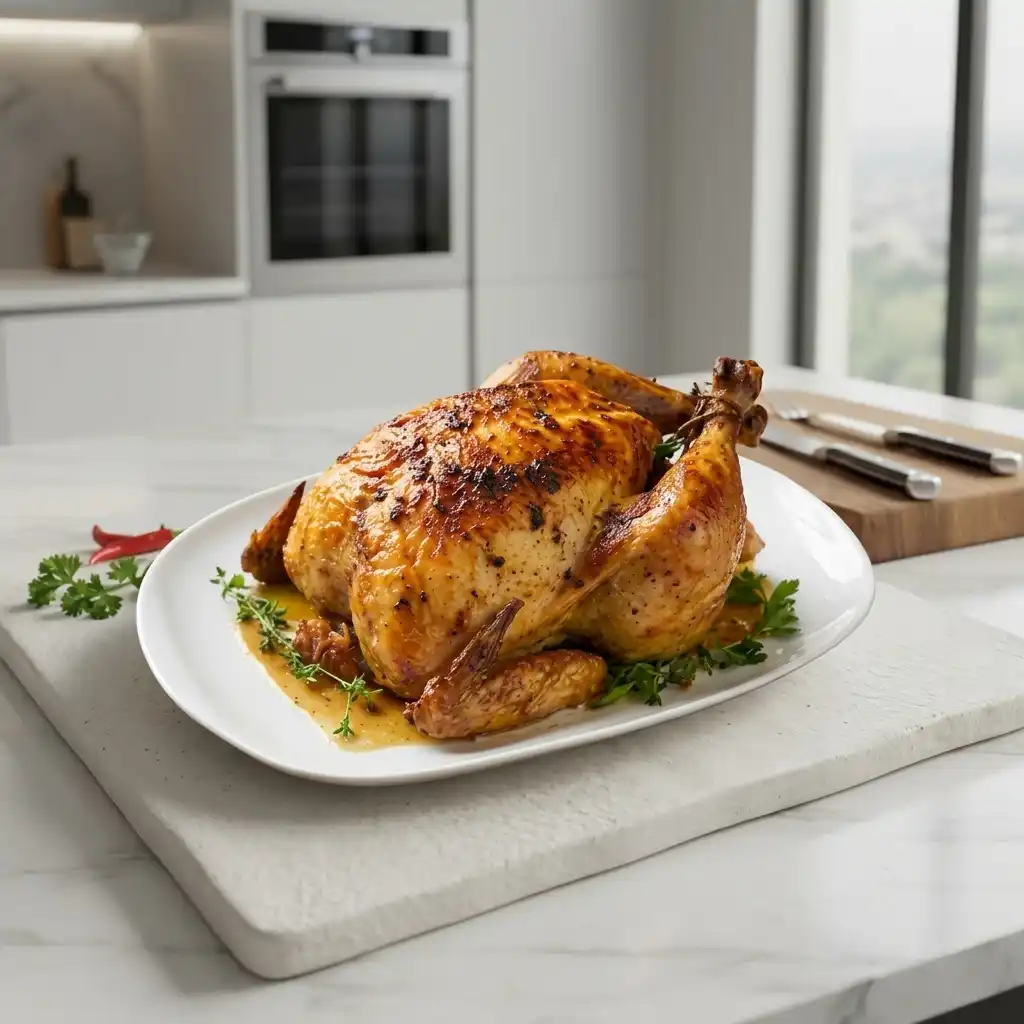
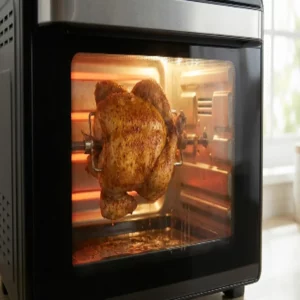
Rotisserie chicken is a whole chicken that's been cooked on a rotating spit, allowing the bird to baste itself continuously as it turns beside or over a heat source. This rotisserie cooking method creates that distinctive golden-brown, crispy skin you see glistening under the heat lamps at your local grocery store.
The technique works through constant rotation, the chicken spins slowly while exposed to direct heat, ensuring every inch of the bird cooks evenly. As the chicken rotates, its own juices drip down and coat the meat, keeping it moist while the exterior develops that irresistible crackly texture. The heat source can be electric, gas-powered, or infrared, but the principle remains the same: rotation plus heat equals perfectly cooked roasted chicken.
You've probably grabbed one of these golden birds on your way home from work. Rotisserie chicken has become a go-to meal solution for busy households across America. The convenience factor is undeniable, you get a fully cooked, ready-to-eat protein that feeds a family of four without turning on your oven or spending an hour in the kitchen. At price points typically ranging from $5 to $8, these pre-cooked chickens offer exceptional value compared to raw poultry once you factor in cooking time, energy costs, and the expertise required to achieve similar results at home.
However, it's important to remember that while rotisserie chicken is convenient, maintaining a balanced diet is crucial. Incorporating options like a sugar-free electrolyte drink can aid in hydration and recovery, especially if you're balancing a hectic schedule.
Lastly, if you're looking to add some fun to your beverage choices at home, consider implementing some soda bar ideas which can provide refreshing alternatives without compromising your dietary goals.
The Allure of Rotisserie Chicken: A Culinary Journey
The history of rotisserie chicken in America tells a story of transformation from specialty item to household staple. The 1990s marked a turning point when this golden-skinned delicacy began appearing in grocery stores and dedicated restaurant chains across the nation. What was once a dish reserved for special occasions became an everyday convenience that busy families could rely on.
The Rise of Rotisserie Chicken
Boston Market played a pivotal role in bringing rotisserie chicken to the mainstream American palate. Founded in 1985 as Boston Chicken, the chain built its entire identity around freshly roasted birds, introducing millions of customers to the appeal of ready-to-eat rotisserie chicken. The company's success sparked a revolution in the prepared foods industry, proving that consumers craved quality convenience meals.
Home-Cooked Meals vs. Convenience
However, the allure of rotisserie chicken doesn't diminish the charm of home-cooked meals. For those who enjoy experimenting in the kitchen, there are plenty of options available beyond, you could try making a sugar-free lemon blueberry pudding cake for dessert or whip up some refreshing Italian sodas to accompany your meal.
The Art and Science Behind Perfectly Cooked Rotisserie Chicken
The rotisserie cooking process transforms an ordinary chicken into a golden, succulent masterpiece through a combination of physics and culinary technique.
How Rotisserie Cooking Works
- Self-Basting Effect: The constant rotation of the bird on a spit creates a self-basting effect as the chicken turns, its natural juices continuously flow over the meat, keeping it moist while the exterior develops that signature crispy, caramelized skin.
- Even Cooking: The direct heat source positioned strategically around the rotating chicken ensures every inch receives consistent exposure, eliminating the hot spots and uneven cooking you might encounter with traditional roasting methods.
The Heat Sources Behind Rotisserie Cooking
The heat sources powering these rotisseries vary significantly in their approach:
- Electric heating elements provide steady, controllable heat that's perfect for home countertop units and commercial operations. You can set precise temperatures and maintain them throughout the cooking cycle, making this option reliable for consistent results.
- Gas-powered heating delivers intense, adjustable flames that many professional chefs prefer. You'll notice faster cooking times and the ability to create varying heat zones around the chicken, allowing for customized browning and crisping.
- Infrared heat represents the cutting-edge technology in rotisserie cooking. This method uses electromagnetic radiation to penetrate the meat directly, cooking from the inside out while simultaneously crisping the exterior. You'll achieve remarkably juicy results with reduced cooking times compared to conventional methods.
Enhancing Your Rotisserie Chicken Experience
To complement your perfectly cooked rotisserie chicken, you might want to try making some bread stuffing balls which would pair wonderfully with your rotisserie chicken!
Making Rotisserie Chicken at Home: A Step-by-Step Guide
You don't need a commercial rotisserie oven to create restaurant-quality rotisserie chicken in your own kitchen. Learning how to cook rotisserie chicken at home opens up a world of culinary possibilities while giving you complete control over the ingredients and flavors. The process is straightforward, and with the right preparation, you'll achieve that coveted crispy skin and juicy meat that makes rotisserie chicken irresistible.
The beauty of homemade rotisserie chicken lies in its simplicity. You can customize the seasonings to match your preferences, ensure the quality of every ingredient, and save money compared to store-bought options. Whether you're using a countertop rotisserie oven, a grill with a rotisserie attachment, or even an air fryer with rotisserie capabilities, the fundamental principles remain the same.

Ingredients You'll Need: A Flavorful Foundation for Your Dish
The ingredients for rotisserie chicken are refreshingly simple, yet they combine to create complex, satisfying flavors. Here's what you'll need:
The Main Event:
- 1 whole chicken (3-5 pounds, depending on your needs and equipment capacity)
Essential Seasonings:
- 2 tablespoons olive oil or melted butter
- 2 teaspoons salt or pink salt
- 1 teaspoon black pepper
- 2 teaspoons paprika (smoked or sweet)
- 1 teaspoon garlic powder
- 1 teaspoon onion powder
- 1 teaspoon dried thyme or rosemary
Optional Flavor Enhancers:
- Fresh lemon (halved, for cavity)
- Fresh herbs (rosemary, thyme, or sage sprigs)
- Whole garlic cloves
- 1/2 teaspoon cayenne pepper for heat
You can adjust these ingredients for rotisserie chicken based on your taste preferences. Some people prefer a Mediterranean blend with oregano and lemon zest, while others opt for a spicy Cajun rub or a simple salt-and-pepper approach.
Lastly, if you're looking for light side dishes to complement your main course, a Carrot Ribbon Salad could be an excellent choice. It's quick, healthy and has various flavorful versions including Asian and Mediterranean twists.
Step 1: Preparing the Chicken for Cooking Perfection
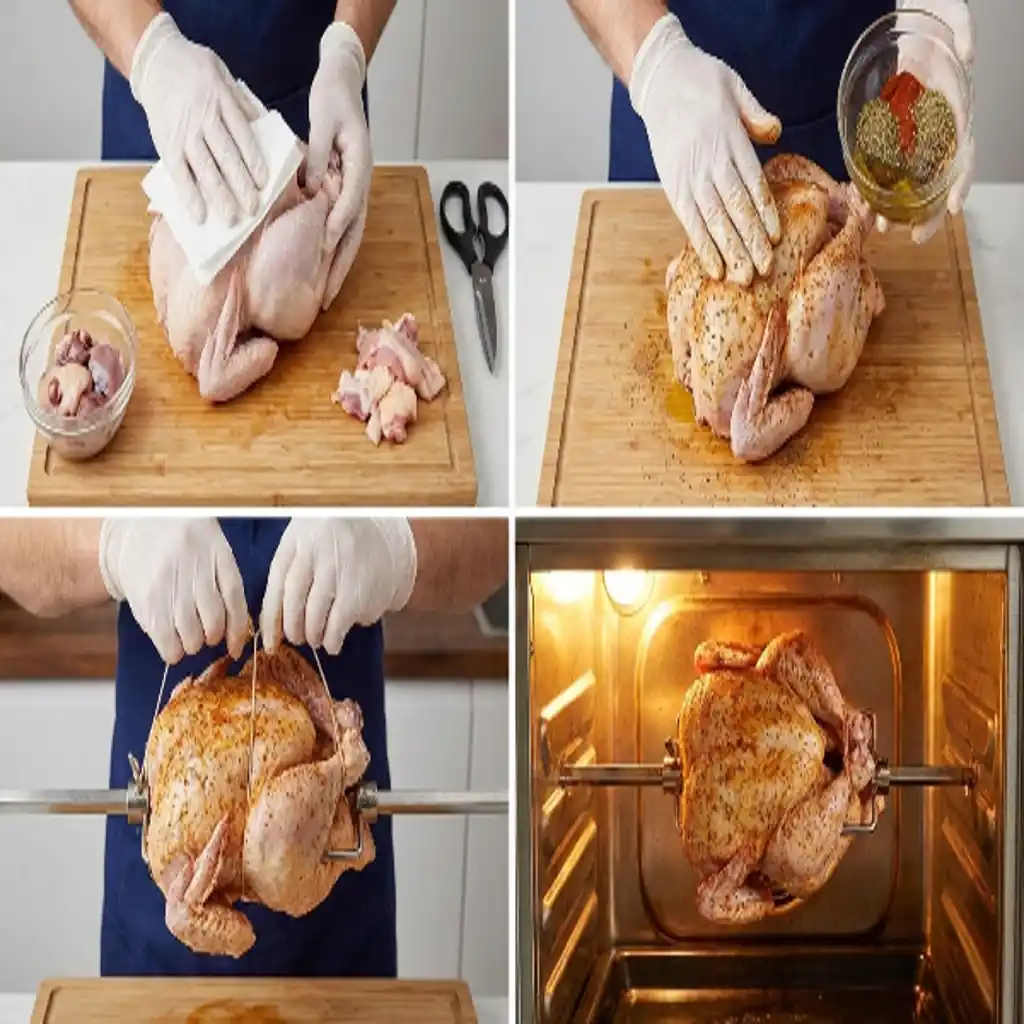
Before you can master how to cook rotisserie chicken at home, proper preparation sets the stage for exceptional results. Start by removing your whole chicken from the refrigerator and letting it sit at room temperature for 30-45 minutes. This step ensures even cooking throughout the bird.
1. Remove giblets and neck: If your chicken comes with giblets and a neck in the cavity, make sure to take them out.
2. Pat the chicken dry: Use paper towels to thoroughly dry the entire chicken, including the cavity and skin. Moisture is the enemy of crispy skin, so you want the surface as dry as possible.
3. Check for feathers: Look for any leftover feather quills or pin feathers on the chicken and remove them using tweezers if needed.
4. Trim excess fat: Cut away any extra fat around the cavity opening and neck area. This fat can cause flare-ups during cooking.
5. Tuck or remove wing tips: For preparing chicken for rotisserie cooking, you'll want to tuck the wing tips behind the back of the chicken to prevent burning during rotation. Alternatively, some cooks prefer to remove the wingtips entirely, which is also an option.”
Step 2: Infusing Flavor into Every Bite with Seasoning Magic
Seasoning chicken for rotisserie cooking transforms an ordinary bird into a flavor-packed masterpiece. You'll want to create a robust seasoning blend that penetrates the meat while forming a delicious crust during rotation.
Dry Ingredients Mix
Start by mixing your dry ingredients in a small bowl:
- 2 tablespoons paprika
- 1 tablespoon garlic powder
- 1 tablespoon onion powder
- 2 teaspoons dried thyme
- 2 teaspoons dried rosemary
- 1 tablespoon salt
- 1 teaspoon black pepper
- 1 teaspoon cayenne pepper (optional for heat)
Apply the seasoning generously both inside the cavity and all over the exterior of your prepared chicken. Use your hands to massage the spices into the skin, ensuring every surface gets coated. Don't forget to lift the skin gently and rub some seasoning directly onto the breast meat for deeper flavor penetration.
Moisture and Flavor Enhancement
For enhanced moisture and flavor, you can combine 2 tablespoons of olive oil with your spice mixture to create a paste before application. This technique helps the seasonings adhere better and promotes that coveted golden-brown, crispy skin you expect from rotisserie chicken.
While you're at it, why not explore some unique beverage pairings to complement your flavorful rotisserie chicken? You could experiment with Dirty & Italian Soda Recipes, which offer a variety of flavor combos perfect for any gathering.
Step 3: Trussing and Securing the Chicken for Even Cooking Results
Trussing chicken for rotisserie cooking ensures your bird maintains its shape and cooks evenly throughout. You'll need kitchen twine to secure the legs and wings close to the body, preventing them from burning or drying out during rotation.
Here's how to truss your chicken:
- Cut a 3-foot length of kitchen twine.
- Position the chicken breast-side up and tuck the wing tips behind the shoulders.
- Cross the legs at the ankles and wrap the twine around them, pulling tight to bring the drumsticks together.
- Loop the twine around the tail end, then bring both ends of the string along the sides of the breast, catching the wings against the body.
- Tie a secure knot at the neck cavity.
The compact shape you've created allows the rotisserie spit to support the chicken properly while ensuring consistent heat exposure. This technique prevents loose appendages from interfering with the rotation mechanism and guarantees that every part of your rotisserie chicken reaches the ideal temperature simultaneously. You can also use metal skewers to pin the wings flat against the breast for additional security.
Step 4: The Final Touch – Skewering the Chicken onto the Rotisserie Spit Rod
Skewering chicken onto the rotisserie spit rod requires precision to ensure balanced rotation and even cooking. You'll want to insert the spit rod through the cavity of your trussed chicken, entering from the tail end and pushing it through until it exits near the neck opening. The goal is to center the chicken on the rod, this balance prevents wobbling during rotation.
Key steps for proper skewering:
- Push the spit rod straight through the backbone, keeping it as centered as possible
- Secure the chicken with the provided forks or prongs, inserting them firmly into both ends
- Tighten the screws on the forks to lock them in place against the chicken
- Test the balance by rotating the spit rod in your hands, the chicken should spin smoothly without heavy spots pulling downward
You may need to adjust the positioning slightly if one side feels heavier. A well-balanced chicken on the rotisserie spit rod ensures the motor doesn't strain and your bird cooks evenly on all sides.
Step 5: Preheating Your Rotisserie Oven or Grill to Perfection
Preheating your equipment is critical to achieving that restaurant-quality rotisserie chicken at home. You need to set your rotisserie oven or grill to medium-high heat, typically between 325°F and 375°F (163°C to 190°C). This temperature range ensures the chicken cooks through while developing that coveted crispy, golden-brown skin.
For Gas Grills
- Turn on the burners and close the lid.
- Allow 10-15 minutes for the grill to reach the target temperature.
For Electric Rotisserie Ovens
- Plug it in and set the temperature dial.
- Give it about 10 minutes to heat up completely.
For Infrared Rotisserie Burners
- Note that these heat up faster, usually within 5-7 minutes.
- However, it's still important to ensure the entire cooking chamber reaches the proper temperature before inserting your prepared chicken.
Check your thermometer to verify the internal temperature of your cooking space has stabilized. This step prevents uneven cooking and guarantees your chicken will rotate in a consistently hot environment, creating that perfect balance of juicy meat and crispy skin you're aiming for when learning how to cook rotisserie chicken at home. Additionally, it's beneficial to understand how to properly heat your pan so food won't stick, as this knowledge can be applied when using any grilling or roasting equipment.
Step 6: The Waiting Game – Cooking Time and Temperature Guidelines
Your rotisserie chicken needs 1 hour and 15 minutes to 1 hour and 30 minutes of cooking time for a 4-5 pound bird. You'll want to calculate approximately 15-20 minutes per pound when determining your total cooking time. The ideal cooking temperature for rotisserie chicken sits between 325°F and 375°F (163°C to 190°C).
You need to monitor the internal temperature carefully. Insert a meat thermometer into the thickest part of the thigh without touching bone. Your chicken reaches food-safe perfection when the internal temperature hits 165°F (74°C). For optimal juiciness and texture, you can aim for 170°F (77°C) in the thigh and 160°F (71°C) in the breast.
Watch for these visual cues that indicate doneness:
- Golden-brown, crispy skin across the entire surface
- Clear juices running from the thigh when pierced
- Legs moving freely in their sockets when wiggled
The rotation speed typically runs at 3-6 RPM, ensuring even heat distribution throughout the cooking process.
Step 7: Letting It Rest – The Key to Juicy and Tender Meat
You've reached the internal temperature of 165°F and removed your rotisserie chicken from the heat. Now comes a step you absolutely cannot skip: resting the chicken.
Transfer your cooked rotisserie chicken to a clean cutting board and tent it loosely with aluminum foil. You need to let it rest for 15 to 20 minutes before carving. This resting period allows the juices that have been pushed to the center of the meat during cooking to redistribute throughout the entire chicken.
If you cut into your rotisserie chicken immediately after cooking, you'll watch all those flavorful juices run out onto your cutting board instead of staying in the meat where they belong. The result? Dry, disappointing chicken that doesn't live up to the effort you put into preparing it.
During this resting period, the internal temperature will actually continue to rise by about 5°F due to carryover cooking. The meat fibers also relax, making your rotisserie chicken easier to carve and significantly more tender. You can use this time to prepare your side dishes or make a quick pan sauce from the drippings collected in your drip pan.


How to Cook Perfect Rotisserie Chicken at Home: Step Guide
Ingredients
Equipment
Method
- Remove giblets and neck, pat the chicken dry, check for feathers, trim excess fat, and tuck or remove wing tips.

- Mix all dry ingredients and combine with olive oil or melted butter to form a seasoning paste. Infusing Flavor into Every Bite with Seasoning Magic

- Truss the chicken and secure it tightly. Skewer the chicken on the rotisserie spit rod, ensuring it is balanced and centered.
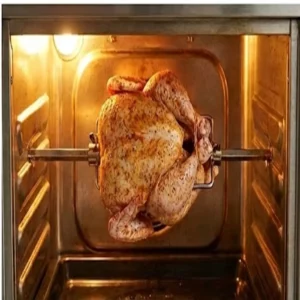
- Preheat your grill or rotisserie oven to 325°F–375°F. Cook the chicken for 15–20 minutes per pound, or until it reaches 165°F internally.
Nutrition
Video
Notes
Tried this recipe?
Let us know how it was!Beyond the Plate: Exploring Economic, Environmental, and Cultural Dimensions of Rotisserie Chicken
Rotisserie chicken represents far more than a convenient dinner option. You'll find it at the heart of an interesting grocery store pricing strategy known as loss leader pricing. Retailers deliberately price their rotisserie chickens at or below cost, sometimes losing money on each bird to draw you into the store where you'll likely purchase higher-margin items.
The environmental angle deserves your attention too. Many grocery stores use rotisserie chicken as a food waste reduction strategy, transforming poultry nearing its “best by” date into a profitable product rather than discarding it. You're essentially participating in sustainability efforts when you purchase these birds.
The cultural impact spans continents. In Peru, pollo a la brasa has achieved national dish status, featuring distinctive marinades and wood-fired cooking techniques. Australian shoppers affectionately call their store-bought rotisserie chicken a “bachelor's handbag”, a humorous nod to its popularity among single men seeking easy meals.
You can stretch one rotisserie chicken across multiple meals, just keep food safety basics in mind when storing and reheating.
- Soups: Shred the meat and simmer with vegetables and broth
- Sandwiches: Layer sliced chicken with your favorite toppings
- Salads: Dice the meat for protein-packed lunch bowls
- Tacos: Mix with spices for quick weeknight dinners
This versatility makes rotisserie chicken a staple across diverse cuisines and cooking styles worldwide. For instance, it's often used in creating dishes that fall under the Tiffany Plate category, which includes various recipes and expert food list guides that highlight its adaptability in different culinary contexts.
Tips for Buying Quality Rotisserie Chicken from Stores
You want to get the best rotisserie chicken for your money, and knowing what to look for makes all the difference. I've picked up countless rotisserie chickens from supermarkets and warehouse clubs, and I can tell you the signs of quality are consistent across the board.
1. Check the Skin
The first thing you should do is check the skin of the rotisserie chicken. It should be golden brown and crispy, not pale or soggy. This is a good indicator that the chicken has been cooked properly and will have a delicious flavor.
2. Look for a Plump Bird
Next, take a look at the shape of the chicken. It should look plump and well-formed, with no dried-out patches or torn skin. This indicates that the chicken has been cooked evenly and will be juicy and tender.
3. Press the Breast Area
If you're able to, gently press the breast area of the chicken through the packaging. It should feel firm but give slightly, indicating juicy meat underneath. This is a sign that the chicken has been cooked to perfection.
4. Visit During Peak Hours
Timing matters when shopping for rotisserie chicken. Visit your store during peak hours when chickens are rotating out of the oven regularly. A chicken that's been sitting under heat lamps for hours loses moisture and develops that rubbery texture you want to avoid.
5. Know Your Retailer Prices
The price-quality balance varies by retailer:
- Warehouse clubs offer larger birds at competitive prices ($4.99-$5.99), perfect for families
- Grocery stores typically charge $6.99-$8.99 but may offer organic or specialty-seasoned options
- Premium markets price birds at $10+ but often use higher-quality, free-range chickens
6. Check the Weight
You should also check the weight a 3-pound chicken feeds 3-4 people comfortably.
7. Smell Test
Smell the chicken through the packaging if possible; it should have a savory, roasted aroma without any sour or off-putting odors.
FAQs
What is rotisserie chicken and why is it so popular?
Rotisserie chicken is a method of cooking whole chicken by rotating it next to a direct heat source, ensuring even cooking and crispy skin. It has gained popularity due to its convenience, flavorful taste, and availability at many grocery stores and chains like Boston Market.
How does the rotisserie cooking process work to make the chicken tender and crispy?
The rotisserie cooking technique involves rotating the chicken next to direct heat sources such as electric heating elements, gas-powered flames, or infrared heat. This rotation ensures even exposure to heat, resulting in juicy meat inside with a crispy, golden-brown skin on the outside.
What are the essential ingredients needed to make rotisserie chicken at home?
To make rotisserie chicken at home, you'll need a whole chicken along with common seasonings such as salt, pepper, garlic powder, paprika, and herbs. These ingredients create a flavorful foundation that infuses into the meat during the cooking process.
Can you provide a step-by-step guide for preparing and cooking rotisserie chicken at home?
Certainly! First, prepare the whole chicken by cleaning and trimming it. Next, season it thoroughly with your chosen spices. Then truss and secure the chicken to ensure even cooking. Skewer it onto the rotisserie spit rod securely. Preheat your oven or grill to the appropriate temperature. Cook the chicken while it rotates until it reaches the proper internal temperature. Finally, let it rest before carving for juicy and tender meat.
What should I look for when buying quality rotisserie chicken from stores?
When purchasing store-bought rotisserie chicken, look for signs of freshness such as crispy skin without dryness inside. Consider price versus quality; sometimes paying slightly more ensures better flavor and juiciness. Buying from reputable supermarkets or warehouse clubs can guarantee high-quality options.
How does buying rotisserie chicken contribute to economic and environmental benefits?
Grocery stores often use loss leader pricing strategies with rotisserie chickens to attract customers while reducing food waste by utilizing poultry nearing their ‘best by' dates. Additionally, leftover rotisserie chicken can be repurposed into soups, sandwiches, or salads, promoting versatile use across various cuisines and minimizing waste.