Table of Contents
Table of Contents
A hummus recipe you’ll actually want to make every week
If you’ve ever bought a tub of hummus hoping for creamy, bright, lemony goodness and ended up with something a little… pasty, you’re not alone. This is the easy hummus recipe I reach for when I want that smooth, restaurant-style texture and fresh flavor, without doing anything fussy or time-consuming.
Here’s what to expect:
- A classic, go-with-anything hummus first (the kind you can serve with everything all week).
- Then a handful of simple variations you can spin up in minutes, like roasted red pepper, spicy jalapeño, herb-infused, or a nutty twist.
- Practical storage tips so it stays dreamy in the fridge (and what to do when it thickens).
And yes, it fits a lot of tables: this homemade hummus recipe is naturally vegan, dairy-free, and gluten-free. Just pair it with gluten-free dippers if that’s important for you.
What makes this hummus recipe better than store-bought (creamy, not pasty)
The secret is less about “special ingredients” and more about how you blend.
Start with a whipped tahini + lemon base
Instead of tossing everything in at once, you’ll blend tahini and lemon juice first. That quick step creates a fluffy, pale, creamy base that gives the finished hummus more lift and less heaviness.
Use cold water (or aquafaba) for that extra-smooth finish
A splash of cold water, added gradually while the processor runs, helps the hummus loosen into a silky texture. Aquafaba (the liquid from chickpeas) can also make it extra creamy. Either works, so use what you’ve got.
For another creamy plant-based spread, try our Vegan Cashew Cheese.
Good olive oil rounds everything out
A little extra-virgin olive oil adds richness and helps the flavor land in a more balanced way. Then you can finish with a drizzle on top for that “I ordered this at a Mediterranean spot” vibe.
Flavor balance is the whole game
- Lemon juice brings brightness.
- Garlic adds bite, but it’s controlled (so it doesn’t scream).
- Cumin gives that classic hummus warmth.
- Salt sharpens everything so it tastes alive.
- And for the finishing touch: a sprinkle of paprika, sumac, or Za’atar makes it look and taste like you tried harder than you did.
It’s fast, even with canned chickpeas
Canned chickpeas work great here. Rinsing helps cut excess sodium and can mellow any “canned” taste. If you want ultra-smooth hummus, there are optional upgrades like peeling chickpeas, but you don’t have to do that to get a really good batch.
Also, this is one of my favorite “have people over” staples because it’s dependable. This hummus recipe is basically a built-in appetizer. Put it in a bowl, drizzle olive oil, sprinkle spices, and suddenly you look like you had a plan.
What Ingredients Make This Hummus Recipe Creamy and Flavorful?

You don’t need a long list, but each ingredient has a job. Here’s the why behind the basics.
| Ingredient | What It Adds | Helpful Tip |
| Chickpeas | The hearty, creamy base | Canned is totally fine; rinse well for cleaner flavor |
| Tahini | Nutty richness and signature hummus flavor | Stir it really well first; tahini separates in the jar |
| Lemon juice | Brightness and balance | Fresh lemon makes a noticeable difference |
| Garlic | A little bite and savory depth | Start small; you can always add more |
| Extra-virgin olive oil | Richness and a smooth mouthfeel | Save a drizzle for the top right before serving |
| Ground cumin | Warm, classic hummus flavor | Keep it subtle; it shouldn’t taste like taco seasoning |
| Salt | Makes the flavors pop | Add, blend, taste, then adjust |
| Cold water or aquafaba | Creamier texture, lighter feel | Add slowly while blending to avoid thinning too much |
| Paprika, sumac, or Za’atar (to finish) | Color and “restaurant hummus” energy | Sprinkle at the end so the flavor stays fresh |
For exact amounts and measurements, see the recipe card below.
Tools you’ll need (nothing fancy)
- Food processor: The easiest path to classic, smooth hummus.
- Blender (optional): Works too, but you’ll probably need more liquid and more stopping to scrape.
- Rubber spatula: This is the unsung hero. Scraping the bowl often is a big part of getting hummus creamy.
- Measuring cups/spoons
- Citrus juicer (optional): Nice to have, not required.
- Small serving bowl: For the olive oil drizzle and spices (also, it just feels fun).
How to Make this Hummus Recipe (Step-by-Step)
1) Blend the tahini base
Add the tahini and lemon juice to your food processor and blend until it looks lighter and creamier. Stop and scrape down the sides and bottom, then blend again. This step sets you up for that fluffy texture.
2) Add the seasonings and chickpeas
Add olive oil, garlic, cumin, and salt, then blend until smooth. Scrape again. Then add the chickpeas in two rounds, blending in between. This helps everything incorporate evenly.
3) Adjust the texture
With the processor running, drizzle in cold water (or aquafaba) a little at a time until the hummus becomes creamy and scoopable. It should look smooth and airy, not stiff and chalky.
4) Taste, finish, and serve
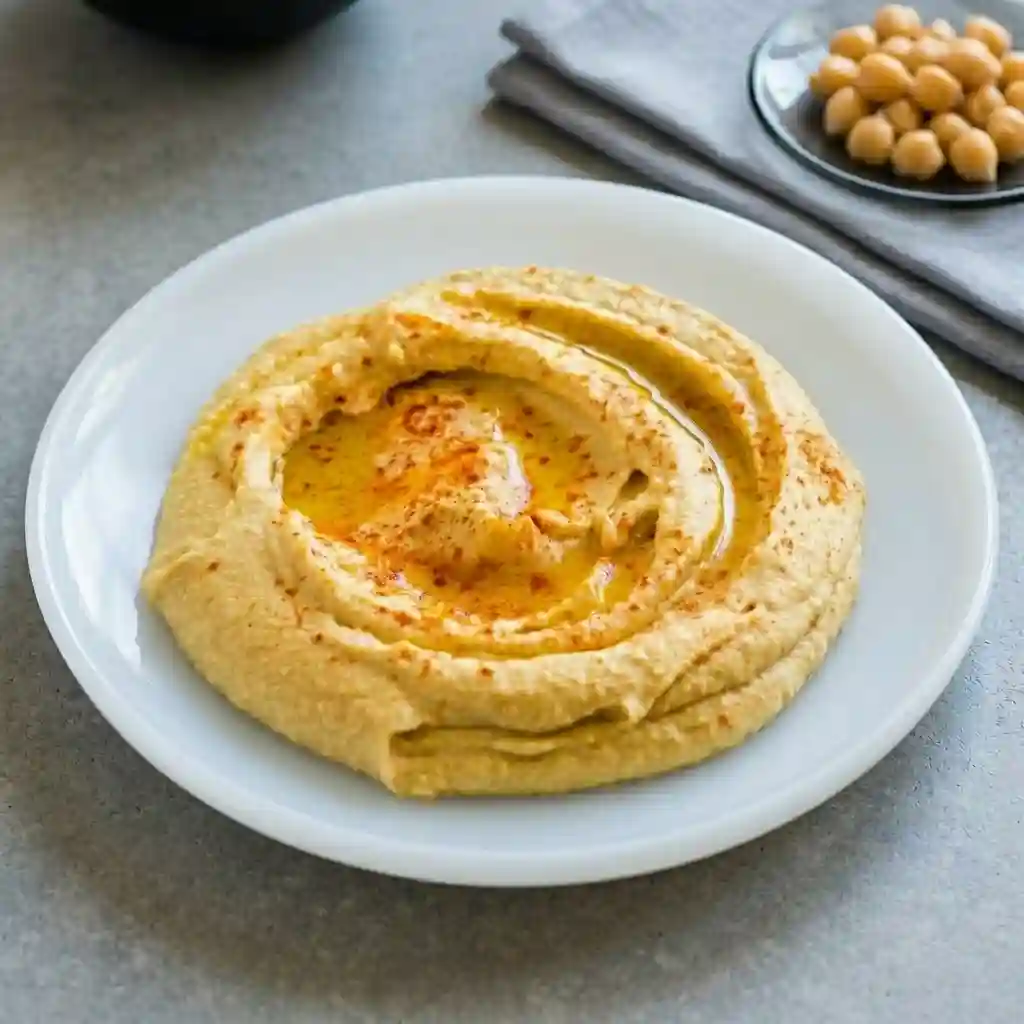
Taste and adjust. Want it brighter? Add a little more lemon. Want it sharper? A little more salt. Then spoon into a bowl, swirl the top, drizzle with olive oil, and finish with paprika, sumac, or Za’atar.
Becky’s best tips for ultra-smooth, flavorful hummus
I’m a big believer in small tweaks that make a big difference, and hummus is the perfect place to practice that “taste, adjust, trust yourself” rhythm.
For smoother hummus (choose your level)
- Quick option: Process longer than you think you need to, and add cold water (or aquafaba) gradually. Time + a slow splash can do a lot.
- Smoother option: Scrape the bowl more often. It sounds silly, but it matters.
- Ultra-smooth option: Remove chickpea skins before blending. It takes extra time, but it does create a noticeably silkier hummus.
Don’t skip cumin (if you want classic hummus warmth)
Cumin is one of those background flavors you don’t always notice until it’s missing. Keep it subtle and it makes the hummus taste “complete.”
Finish matters
That final drizzle of olive oil plus a little paprika, sumac, or Za’atar is what gives you those restaurant hummus vibes at home.
And if your first batch isn’t perfect, you’re still winning. Hummus is forgiving. Blend a bit more. Add a tiny pinch of salt. Another squeeze of lemon. This is the kind of recipe that gets better the more you make it.
Easy Hummus Recipe Variations (5-minute upgrades)
Once you’ve got the classic version down, variations are basically just “add one thing, taste, adjust.”
Roasted Red Pepper Hummus Recipe
Add jarred roasted red peppers (drained well) and blend until smooth. If you want a deeper, smoky vibe, add a pinch of smoked paprika. You may need a small extra squeeze of lemon or pinch of salt to keep the flavor balanced.
Alternatively, for an exciting twist on your hummus experience, consider trying out a Roasted Veggie and Hummus Bowl. This recipe combines the creaminess of hummus with the rich flavors of roasted veggies for an incredibly satisfying meal.
Spicy Jalapeño Hummus Recipe
Add pickled or fresh jalapeño (start with a small amount), then blend. Taste and decide if you want more heat. This is especially good with an extra squeeze of lemon to keep it bright.
Herb-Infused Hummus Recipe
Add a handful of fresh herbs like parsley or cilantro and blend. It turns the hummus greener, fresher, and super snackable. If it tastes a little “flat,” it usually just needs more salt or lemon.
Nutty Twist (or tahini swap)
If you’re out of tahini, you can use sunflower seed butter as a nut-free alternative. You can also use a small amount of almond or cashew butter for a different, slightly sweeter nuttiness. Whichever you choose, plan to tweak lemon and salt so it still tastes balanced.
Optional seasoning blends
- Sumac: tangy and bright
- Za’atar: herby with sesame notes
- Paprika: color and mild warmth
Serving suggestions: turn it into snacks, meals, and party apps
Hummus is one of those fridge staples that can quietly save your day.
Everyday snack plate ideas
- Hummus + sliced cucumbers, tomatoes, and any crisp veggies you like
- Add greens (arugula, romaine hearts, or whatever you’re already washing and prepping)
- Toss on olives, pickles, or a few roasted nuts if you want it to feel more “snack dinner”
Quick appetizer angle
If you need a fast chickpea appetizer situation, hummus is it. Spoon it into a shallow bowl, swirl, olive oil on top, spices, and set out pita chips and veggies. It looks great, and it’s low-stress.
Troubleshooting table
| Problem | Likely Cause | What to Do |
| Hummus too thick | Not enough liquid or not blended long enough | Blend longer and add cold water/aquafaba slowly |
| Hummus too thin | Too much water/aquafaba added too quickly | Blend in more chickpeas if you have them, or let it chill to thicken |
| Grainy texture | Not processed enough, or chickpeas/tahini not fully blended | Keep blending and scrape the bowl more often |
| Too bitter or tahini-forward | Tahini is strong, or balance is off | Add more lemon and salt a little at a time; a drizzle of olive oil can soften it |
| Too garlicky | Garlic is potent (especially raw) | Add more chickpeas and a bit more tahini/lemon to rebalance; chilling also mellows garlic |
Storage tips (and what to do when it thickens)
How to store homemade hummus
Store hummus in an airtight container in the fridge. Store homemade hummus in an airtight container in the refrigerator at 40°F (4°C) or below. Virginia Tech Extension recommends using homemade hummus within 4–5 days. If you want, drizzle a thin layer of olive oil over the surface to help prevent it from drying out. Stir before serving.
Homemade hummus often thickens as it chills. Totally normal.
To loosen it back up, stir in a small splash of cold water or lemon juice. If you want it richer, add a little olive oil too.
Reheating hummus (if you prefer it warm)
Refrigerate hummus promptly after serving. The FDA recommends refrigerating foods that require refrigeration within 2 hours.
You can gently warm hummus:
- Microwave: short bursts, stirring in between
- Stovetop: a small pan on low heat
Either way, stir and add a tiny splash of water and or olive oil to bring back that creamy texture.
A quick “choose your hummus” cheat sheet (so you don’t overthink it)
- If you want the most classic: tahini + lemon + garlic + cumin + an olive oil finish.
- If you want extra creamy: add aquafaba/cold water slowly, process longer, and consider removing chickpea skins.
- If you want bold flavors fast: roasted red pepper, jalapeño, or fresh herbs.
- If you’re out of tahini: sunflower seed butter (nut-free) or a small amount of almond/cashew butter for a nutty twist.
- If you’re hosting: make a hummus board with pita chips, toasted whole-grain bread, and roasted veggies.
Wrap-up: keep it simple, then make it yours
This is the kind of easy hummus recipe that earns a spot in your weekly routine because it’s quick, flexible, and genuinely tastes fresher than store-bought. Make the classic version first, then play with the variations once you know what you love.
If you take one thing from my kitchen in Austin, it’s this: taste as you go, tweak with confidence, and don’t be afraid to riff with spices like sumac or Za’atar.
Make a batch, stash it in the fridge, and give yourself the gift of instant snacks all week.
FAQs
What makes this homemade hummus recipe better than store-bought options?
This homemade hummus achieves a creamy, smooth, and bright lemony flavor by starting with a whipped tahini and lemon base, gradually adding cold water or aquafaba for extra silkiness, and finishing with good quality extra-virgin olive oil. The blending technique ensures it’s not pasty but has a restaurant-style texture and fresh flavor.
Can I use canned chickpeas for this hummus recipe?
Yes! Canned chickpeas work great for this recipe. Just be sure to rinse them well to reduce excess sodium and mellow any canned taste. Peeling chickpeas is optional if you want ultra-smooth hummus, but it's not necessary to make a delicious batch.
What ingredients are essential for making flavorful and creamy hummus?
Key ingredients include chickpeas (the creamy base), tahini (for nutty richness), fresh lemon juice (for brightness), garlic (for savory depth), extra-virgin olive oil (adds richness and smoothness), ground cumin (classic warmth), salt (to enhance flavors), and cold water or aquafaba (to achieve a lighter, creamier texture). Finishing spices like paprika, sumac, or Za’atar add color and that authentic restaurant vibe.
How do I achieve the perfect texture when making hummus at home?
Start by blending tahini with lemon juice first to create a fluffy base. Then, gradually add cold water or aquafaba while running your food processor to loosen the mixture into a silky smooth consistency. Regularly scrape down the sides of the bowl with a rubber spatula to ensure even blending and creaminess.
Is this hummus recipe suitable for special diets?
Absolutely! This homemade hummus is naturally vegan, dairy-free, and gluten-free. If you need it to be gluten-free, simply pair it with gluten-free dippers like vegetables or gluten-free crackers.
What kitchen tools do I need to make this easy hummus recipe?
You’ll need a food processor for the easiest path to classic smooth hummus. A blender can work too but may require more liquid and stopping to scrape. Other helpful tools include a rubber spatula for scraping the bowl often, measuring cups/spoons, an optional citrus juicer for fresh lemon juice, and a small serving bowl for drizzling olive oil and sprinkling spices before serving.
Easy Hummus
Ingredients
Method
- In a food processor, combine the tahini and lemon juice. Process for 1 minute, then scrape the sides and bottom of the bowl. Process for an additional 30 seconds.
- Add olive oil, minced garlic, cumin, and 1/2 teaspoon salt. Process for 30 seconds, then scrape and process again for another 30 seconds.
- Add half of the chickpeas to the mixture. Process for 1 minute. Add the remaining chickpeas and process until thick and relatively smooth, about 1 to 2 minutes.
- With the food processor running, slowly add 2 to 3 tablespoons of cold water or aquafaba until you reach your desired consistency.
- Taste and adjust with more salt or lemon juice as needed.
- Serve with a drizzle of olive oil and sprinkle of paprika, sumac, or Za'atar.