Table of Contents
Table of Contents
A thick, smoky bowl of comfort
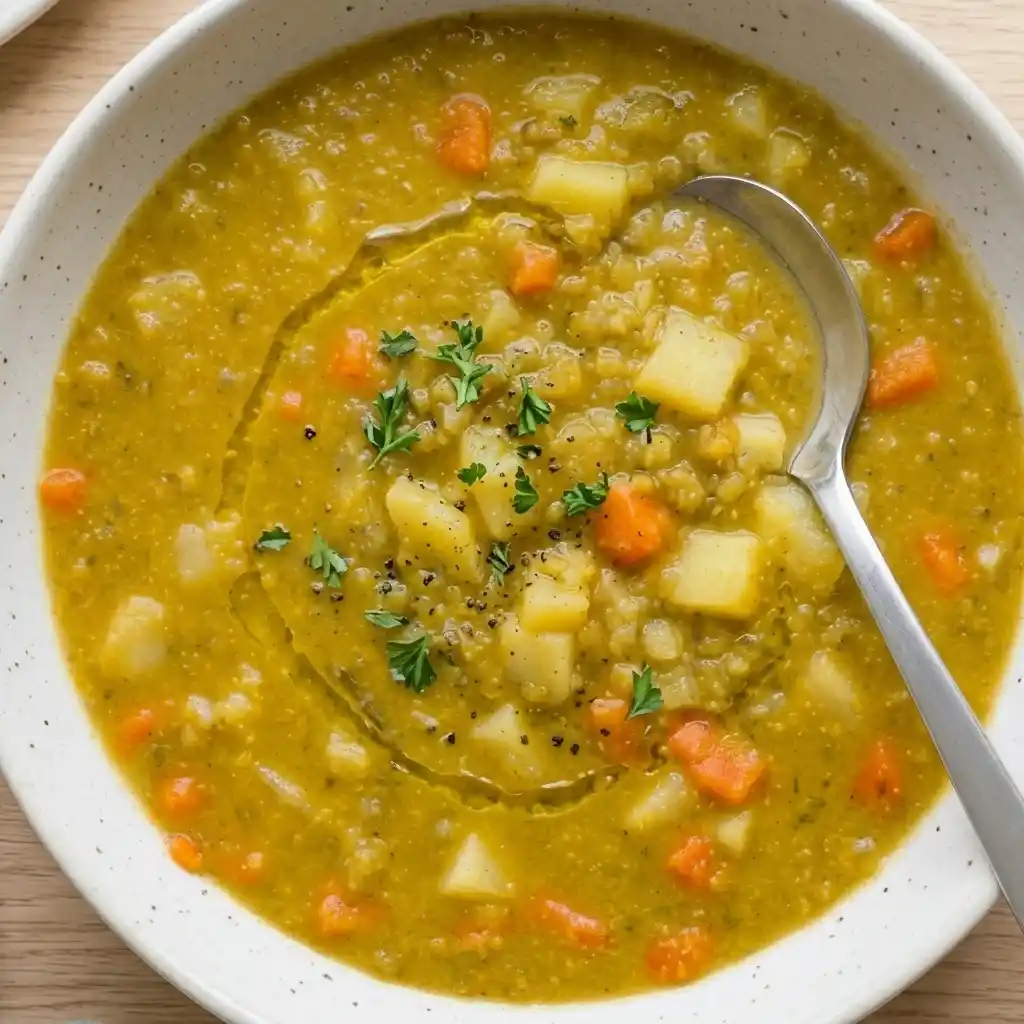
Steam curling up from a bowl of Split Pea Soup is basically my definition of cozy winter meals. It’s thick and velvety, just smoky enough to feel like an old-school classic, and hearty in that stick-to-your-ribs way that makes you want to grab a blanket and a spoon. If you’re into hearty soup recipes that double as healthy comfort food, this one’s about to earn a permanent spot in your rotation.
I’m Becky Masson, a home cook in Austin, Texas, and my heart lives in a warm, scent-filled kitchen. While I’m cooking, my curious cat, Miso, likes to weave by my legs like he’s “supervising” every stir. I fell in love with cooking in my grandmother’s welcoming kitchen, where bubbling stews made everything feel calm and cared for. That comfort is exactly what I’m chasing here, with a one-pot soup that tastes classic and comforting.
Quick snapshot: this is a vegetarian split pea soup made in one pot, meal-prep friendly, freezer friendly, and full of comforting, smoky flavor thanks to a tiny bit of liquid smoke.
Why You’ll Love This Recipe
This soup delivers big comfort with simple ingredients. You start with sweet onion and herbs, then let split peas simmer until they turn creamy and rich all on their own. A small amount of liquid smoke adds a gentle, cozy smoky flavor while keeping the whole pot vegetarian.
Texture-wise, it’s the best kind of thick. The peas break down into a naturally creamy base while the vegetables turn tender and soft so every spoonful feels hearty and satisfying. It’s the sort of dinner that doesn’t need much on the side to feel complete.
It’s also a practical win. Split peas are budget-friendly pantry staples and this soup ends up protein- and fiber-rich in a way that genuinely keeps you full. It works for vegetarians and it’s also for anyone who wants a healthier soup that still feels like comfort food.
And leftovers? Even better. Like a lot of soups, the flavors have time to mingle and the whole thing tastes deeper the next day.
If you're looking for another comforting soup recipe to add to your collection, I highly recommend trying out this Hungarian Mushroom Soup. It's another fantastic option for those chilly winter nights!

Ingredients and smart swaps
For exact amounts and measurements, see the recipe card below.
Split peas (the main event)
Split peas don’t need soaking for this recipe, but they do need a quick sort and rinse. I like to pour them onto a plate first and look for any tiny pebbles or shriveled bits. Then rinse until the water runs mostly clear. That rinse step helps wash away dust and extra starch, so your soup tastes cleaner and cooks more evenly.
Avocado oil (or another neutral sauté oil)
Avocado oil handles heat well and stays neutral, which lets the onion and herbs shine. If you don’t have it, another neutral oil you like for sautéing works just fine. The goal is simply to soften the aromatics without adding a strong flavor.
Liquid smoke (for a smoky flavor)
Liquid smoke is the trick that makes vegetarian split pea soup taste like it has that classic smoky backbone. It’s powerful, so start with what the recipe calls for, then adjust at the end if you want a little more. You can always add more, but it’s tough to undo if you overdo it.
Seasoning (why timing matters)
I like to season in layers. A small pinch early helps wake up the onion and veggies. Then you’ll adjust again toward the end, once the peas fully soften and the soup thickens. Split peas and potatoes can soak up salt, so final seasoning is where the magic happens.
How to make comforting classic split pea soup
This is a one-pot situation with a cozy simmer and just a little stirring to keep things smooth. Expect a mostly hands-off cook time, plus occasional check-ins to make sure nothing sticks to the bottom as it thickens.
Here’s the simple flow (and yes, the recipe card below is your step-by-step authority):
- Sauté the onion until soft and translucent. You want it glossy and tender, not browned. Season lightly early so it starts building flavor right away.
- Add the aromatics and vegetables, then the split peas and liquid. Give everything a good stir so the peas don’t clump.
- Simmer gently, stirring occasionally. As the peas soften, the soup will naturally turn creamy and thick.
- Adjust consistency near the end. If it gets thicker than you like, add a splash of water or broth. Aim for spoonable but still pourable. Remember, split pea soup thickens more as it cools.
- Final seasoning and serve. Remove bay leaves if your recipe uses them, then adjust salt, pepper, and liquid smoke to taste. Serve hot.
Finishing touches are totally up to you. I love cracked black pepper, a pinch of thyme, a drizzle of olive oil, or a handful of crunchy croutons for contrast.

Expert Tips and Tricks
Stir strategy (especially near the end)
As split pea soup thickens, it’s more likely to scorch at the bottom. Stir a little more often toward the end of simmering, and make sure you scrape along the bottom of the pot. If you notice it thickening fast, reduce the heat and stir more frequently.
For an in-depth guide on making classic split pea soup, including variations and tips for perfecting this comforting dish, be sure to check out that resource!
Keep it at a gentle simmer
A rapid boil can reduce the liquid too quickly and make the soup stick before the peas fully break down. You want a calm, steady simmer that slowly turns everything creamy.
Control the texture without stress
If you want ultra-creamy soup, like a Loaded Potato Soup, you can mash some of it with a potato masher right in the pot, or briefly blend a portion and stir it back in. If you love a chunkier bowl, skip blending and just let it simmer until the peas are tender.
If your peas stay firm
Older split peas can take longer. If the peas aren’t soft when you expect them to be, keep simmering and add a splash of water if needed so the pot doesn’t dry out. Time and moisture usually fix it.
It will thicken as it rests
Split pea soup is famous for thickening overnight. When reheating, loosen it with warm broth or water and stir well until it turns silky again.
Recipe Variations and Possible Substitutions
These ideas keep the spirit of the soup, but remember: changes can shift flavor and texture. For exact amounts and the original method, stick to the recipe card below.
Vegan
This soup is already vegan as long as your broth choice and toppings are vegan. If you want a deeper “savory” flavor, try a vegan chicken-style broth (check labels to match your preferences). You might find inspiration in a Chicken Mushroom Soup recipe for flavoring ideas.
Gluten-free
Split pea soup is naturally gluten-free, but broth brands vary. If you cook gluten-free often, it’s worth checking the label on your broth and liquid smoke to confirm they meet your needs.
Extra veggies
You can add diced parsnip for sweetness, chopped mushrooms for extra savory depth, or stir in chopped kale or spinach near the end so it stays bright and tender.
Vegetarian protein add-ins
If you want even more staying power, white beans work nicely here. Lentils also work, but they can thicken the soup faster and change the classic split-pea texture, so expect a denser pot.
Slow cooker adaptation (for “split pea soup slow cooker” searches)
You can adapt this for a slow cooker by sautéing the onion and aromatics first if possible, then adding everything to the slow cooker and cooking on low until the peas break down. Plan to stir when you can, and add water or broth at the end to reach your favorite consistency.
Serving and Pairing Suggestions
This soup loves bread. Crusty bread, garlic toast, cornbread, or warm pita all make it feel like a full, cozy winter meal with basically no extra effort.
For a fresh contrast, serve it with a simple green salad, a cucumber-tomato salad, or quick pickled onions on the side. I’m always happy when there’s something crisp and bright next to a thick, creamy soup.
If you’re feeding a group, a toppings bar is fun and easy:
- Croutons
- Cracked black pepper
- Chopped fresh herbs
- A drizzle of olive oil
- Hot sauce
- Vegan sour cream
It also fits so many moments: meal trains, sick-day comfort, snow-day lunch, or an easy weeknight dinner that makes the whole kitchen smell amazing.
For drinks, keep it simple and cozy. Hot tea is perfect. If you want something cold, try dry hard cider, a crisp white wine, or sparkling water with lemon.
Storage and Reheating Tips
Cool the soup as quickly as you can before refrigerating. I like to transfer it to a shallow container so it drops to room temp faster, then cover and chill.
This soup thickens a lot overnight, which is normal and honestly kind of wonderful.
For reheating on the stovetop, warm it low and slow, stirring often. Add a splash of broth or water to loosen it back into a creamy, spoonable texture. This method is particularly effective if you're dealing with a noodle soup variant, as discussed in this Serious Eats article.
For the microwave, use a microwave-safe bowl, cover loosely, and stir halfway through. Add a little liquid as needed, because the center can get very thick before the edges look hot.
For food safety basics (especially for cooling, storing, and reheating leftovers), the USDA has clear guidance
Conclusion
When I want something comforting, budget-friendly, and genuinely satisfying, this classic vegetarian Split Pea Soup is one of my favorite pots to put on the stove. It’s cozy, smoky, thick in the best way, and it somehow tastes even better after it’s had a night to rest in the fridge.
If you make it, don’t forget the final taste-and-adjust moment. That tiny tweak of salt, pepper, and liquid smoke is what turns a good soup into the kind you’ll crave all winter long.
FAQs
What makes this vegetarian split pea soup recipe so comforting and hearty?
This split pea soup is thick, velvety, and smoky, capturing the essence of classic comfort food. The peas break down into a naturally creamy base while tender vegetables provide a stick-to-your-ribs texture, making it perfect for cozy winter meals.
How does liquid smoke enhance the flavor of this vegetarian split pea soup?
Liquid smoke adds a gentle smoky depth to this classic split pea soup. It's used sparingly to keep the soup vegetarian while delivering that warm, cozy smoked vibe essential for authentic taste.
Can I prepare this split pea soup ahead of time or freeze leftovers?
Yes! This one-pot split pea soup is meal-prep friendly and freezer safe. Leftovers actually taste better after flavors have mingled overnight, making it an excellent option for make-ahead meals or freezing for later enjoyment.
What are some smart ingredient swaps I can make in this split pea soup recipe?
You can use any neutral sauté oil like avocado oil or your preferred mild oil to soften aromatics without overpowering flavors. While liquid smoke is key for smokiness, you can adjust seasoning layers toward the end to suit your taste preferences.
Do I need to soak the split peas before cooking this soup?
No soaking is required for this recipe. However, it's important to sort through the split peas to remove any debris or shriveled bits and rinse them until water runs clear. This helps ensure even cooking and a cleaner-tasting soup.
How do I achieve the perfect texture and consistency for this split pea soup?
Simmer the soup gently with occasional stirring to prevent sticking as peas soften and thicken naturally. Adjust thickness near the end by adding water or broth if needed—aim for a spoonable yet pourable consistency since it thickens more as it cools.
Comforting Classic Split Pea Soup
Ingredients
Method
- Heat the oil in a large pot over medium heat. Add the onions and sauté for 5-8 minutes or until they are translucent. Season with salt and pepper.
- Add the celery, garlic, thyme, bay leaves, and split peas. Mix well and cook for 2 minutes or until the garlic is fragrant.
- Pour in the broth, cover the pot, and let it simmer on medium-low heat for 20-25 minutes, or until the peas start to break down.
- Stir in the potatoes, carrots, and liquid smoke. Continue cooking for another 20-25 minutes until everything is soft and the soup has thickened. If it gets too thick, add up to 2 cups of water to reach your desired consistency.
- Check for seasoning and adjust with more salt and pepper if needed. Remove the bay leaves and serve hot.